Lead storyModelMetaConfirmed
Meta launches Muse Wonder and Muse Wonder Full for AI agents
Meta calls them its most capable models. Muse Wonder is on the Meta Model API and in Muse Code; Muse Wonder Full comes only with a Muse Code subscription.

 AI Compass
The day’s major AI releases, written up and sourced.
Monday 12 October 2026 · 8 launches · the whole day in 11 minutes
Lead storyModelMetaConfirmed
Meta calls them its most capable models. Muse Wonder is on the Meta Model API and in Muse Code; Muse Wonder Full comes only with a Muse Code subscription.
Meta announced both on 12 October and says they are state of the art on agent tasks in personal and professional settings. The model card says both take text, images, video and audio as input, produce text and are not intended for people under 18.
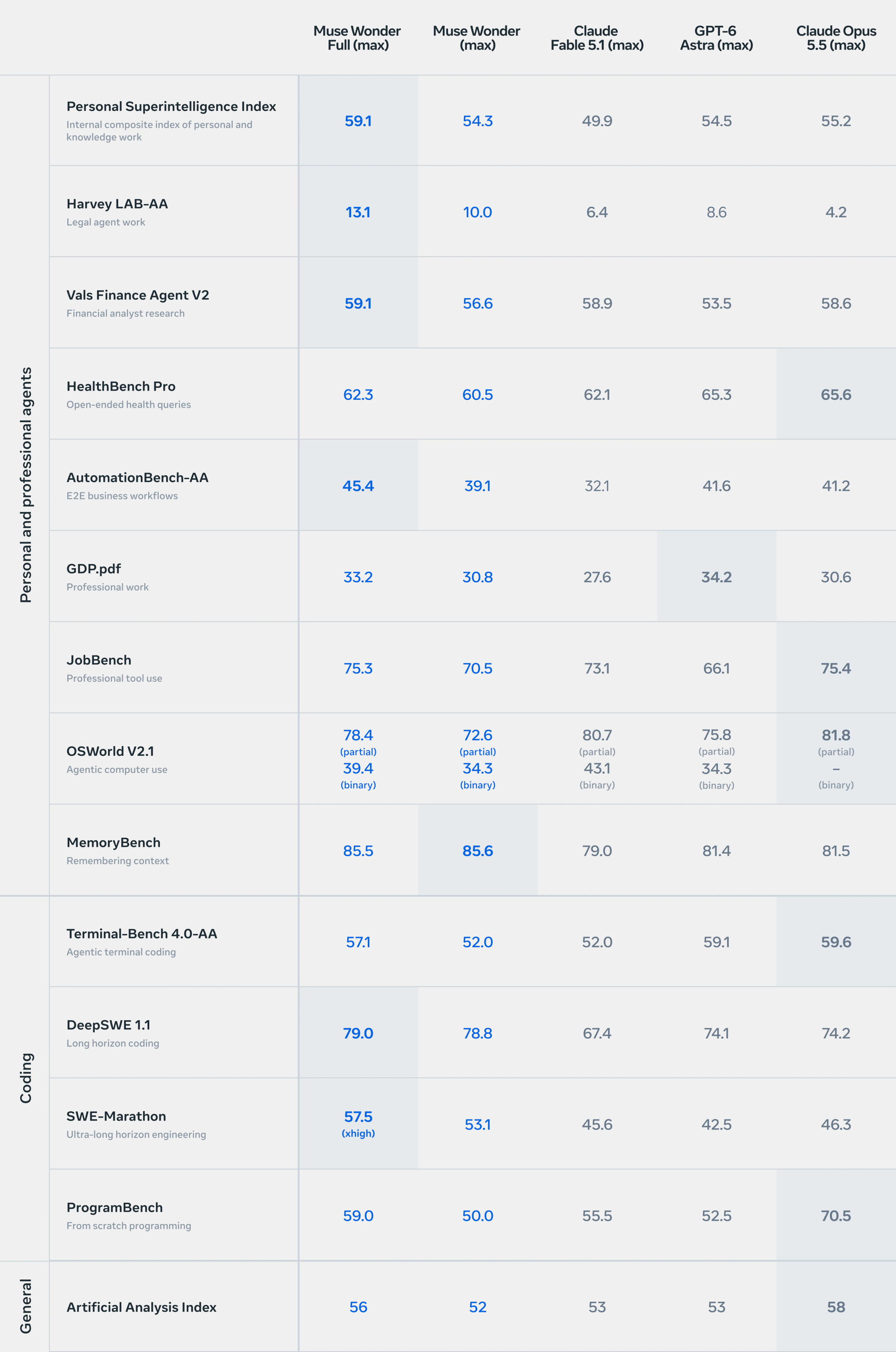
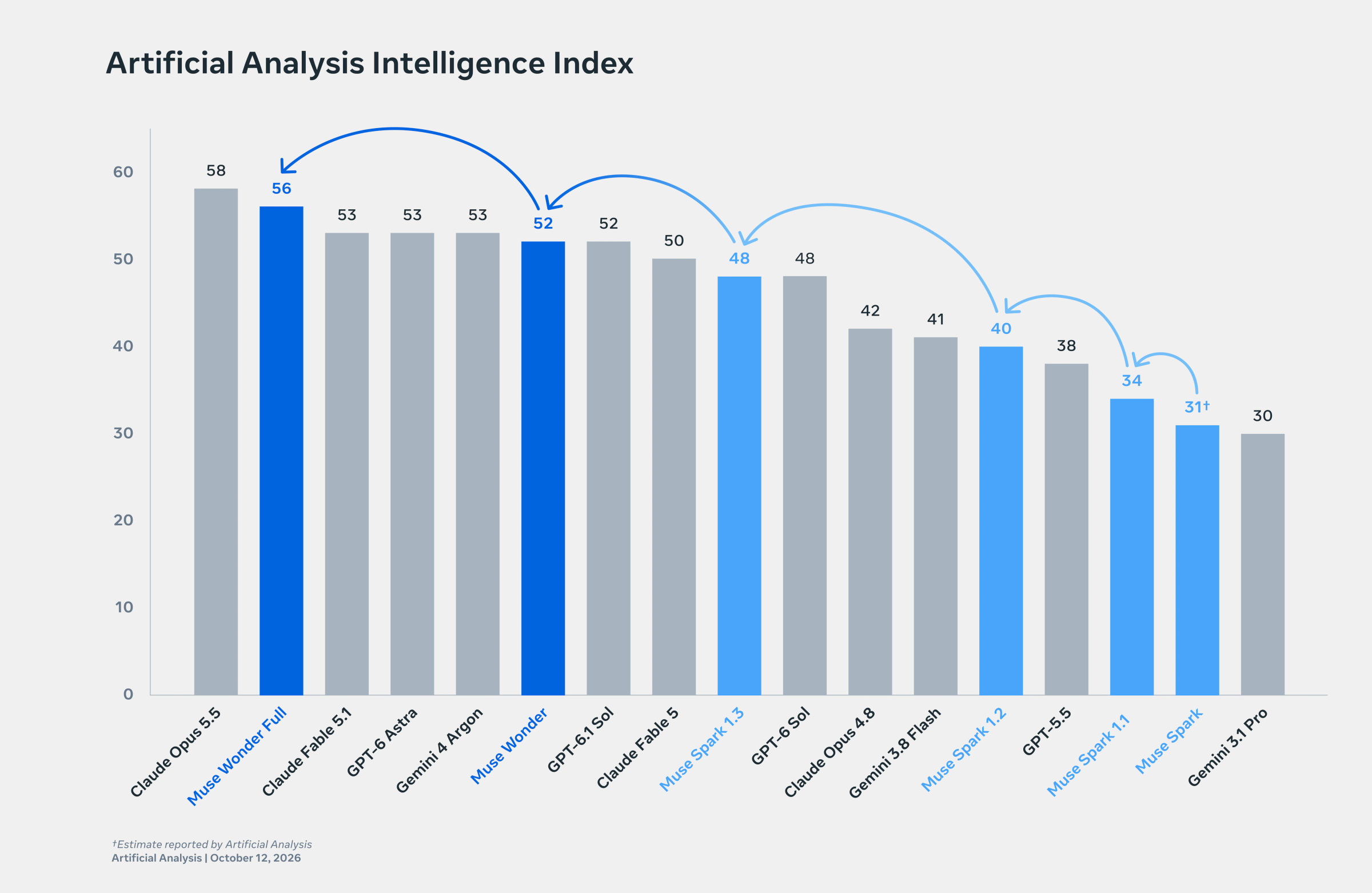
Meta trained both at Prometheus, its gigawatt-scale data centre, and highlights two behaviours: Active Memory, which carries what matters about a person from one conversation to the next, and Active Focus, which keeps the model on difficult goals and has it check with the user before important steps.
On the Meta Model API, Muse Wonder (muse-wonder-1.0) costs $4.00 per million input tokens and $20.00 per million output tokens. Artificial Analysis notes that Muse Spark 1.3 was priced at $1.25 and $4.25.
Both models have a 1M-token context window. Muse Wonder Full (muse-wonder-full-1.0) has no per-token price: it comes with Muse Code, Meta’s multi-agent coding tool for the terminal, on the Power Usage plan at $50 a month or the Maximum Usage plan at $200 a month.
Meta calls Muse Wonder its most aligned model and says it carries Meta’s strongest safeguards against chemical, biological, radiological, nuclear and cyber misuse. Its model card says Meta cannot rule out that the model, without those safeguards, would reach Meta’s high risk threshold for chemical and biological threats; with them, Meta rates it “moderate or lower” in every domain. Meta hasn’t published the full safety report its announcement mentions.
02InfraMicrosoftConfirmed
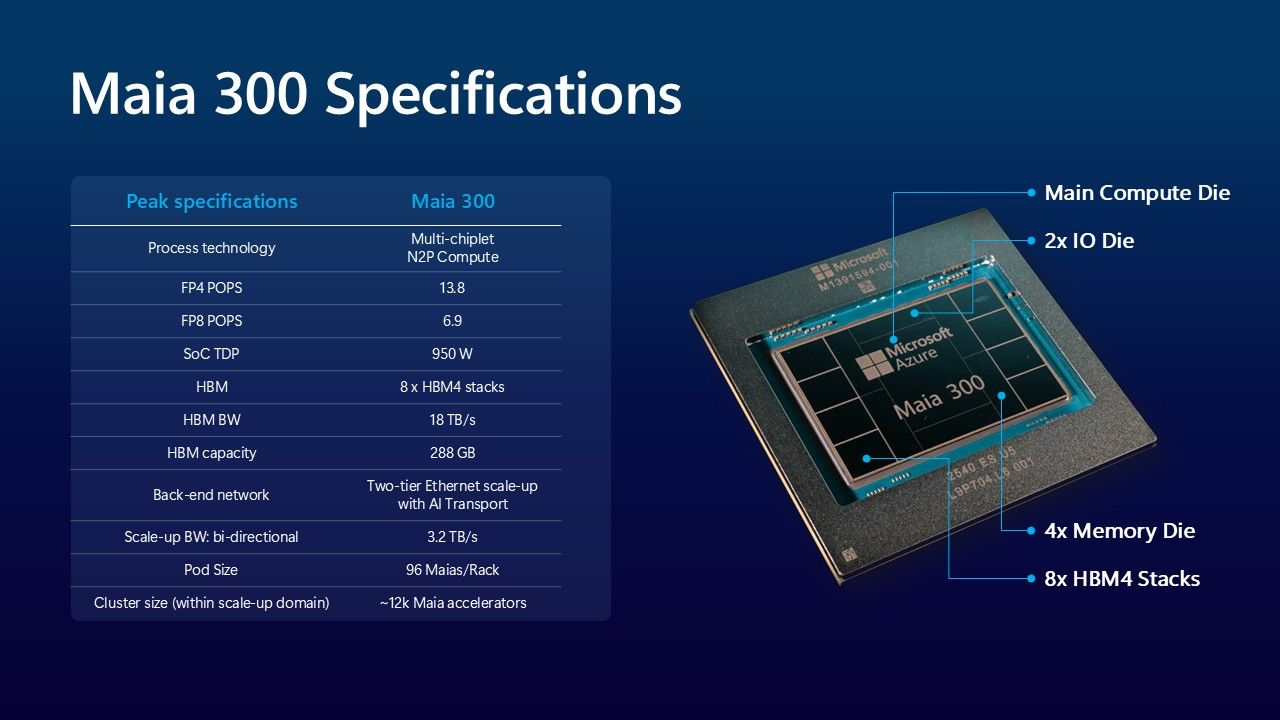
Microsoft expects its third-generation Azure Maia chip, built for inference, to deliver 40% more tokens per megawatt than leading GPU systems.
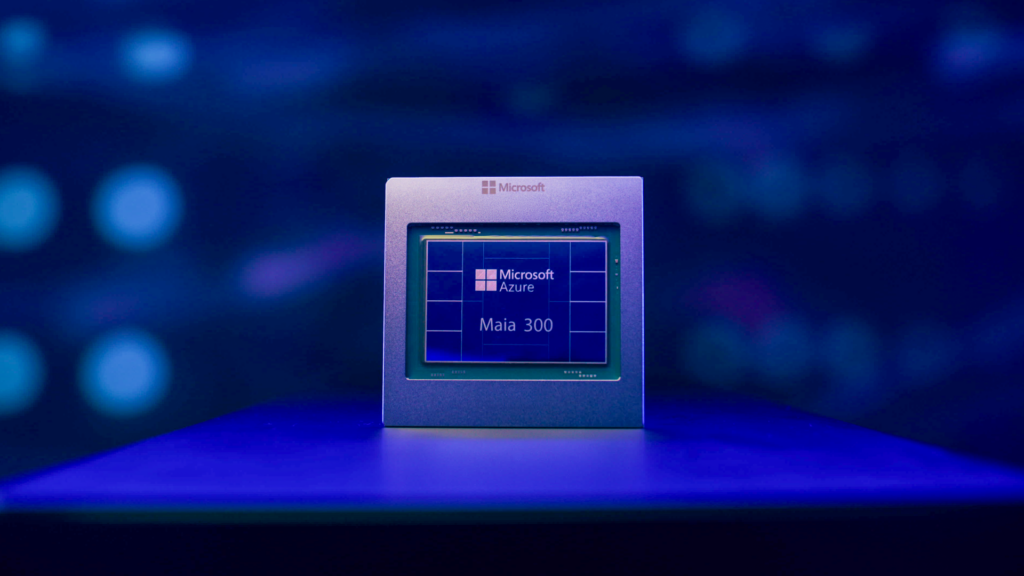
Microsoft has announced Maia 300, the third generation of its Azure Maia AI accelerator, and says it will scale the Maia family to multi-gigawatt deployments starting in 2027, when Maia 300 production deployments also begin. Satya Nadella described it on X as Microsoft’s “biggest bet yet” on its own silicon.
The current chip, Maia 200, is in production and serves Microsoft Copilot; GitHub Copilot and Microsoft Foundry are due to follow by the end of 2026.
Microsoft designed Maia 300 first for inference, the work of running trained models: reasoning over long inputs, chat products that need fast responses and multi-step agent tasks. It expects the chip to deliver 40% more tokens per megawatt than leading GPU-based systems.
Microsoft plans to say more about its AI strategy at Microsoft Ignite 2026, from 17 to 20 November in San Francisco and online.
03ProductSpaceXSIConfirmed
Five tiers run from free to $200 a month, with one pool of Grok model usage shared across the Grok apps, the Grok tab on X and Cursor.
SpaceXSI, which makes Grok, has introduced The X Subscription, one plan that covers Grok, Cursor and X Premium. New customers can sign up, and SpaceXSI says it is rolling the plan out to everyone globally.
The shared usage pool resets every week. SpaceXSI says each plan includes at least twice the coding usage of the comparable Cursor plan when its own models are used. Third-party models stay available in Cursor on Premium and above, paid for at API list prices through top-ups.
Team plans cost the same per seat as Premium, Super and Ultra. SpaceXSI says that is less per seat than the older Cursor Teams plans, with three times more coding usage.
Current SuperGrok, Cursor and X Premium subscribers can keep their plans and prices, or switch and get a prorated refund. The old plans are closed to new sign-ups, and SpaceXSI plans to move remaining customers across, with notice first, but has set no timeline.
04ResearchAnthropicConfirmed
Distillers copy a model’s abilities without its maker’s permission. Anthropic credits a new classifier, tighter limits and bans, and names Zhipu (Z.ai) as one example.

Anthropic calls distillation attacks “covert, industrial-scale campaigns”, often run through networks of fraudulent accounts. Its 12 October research post bases the estimate on early evidence.
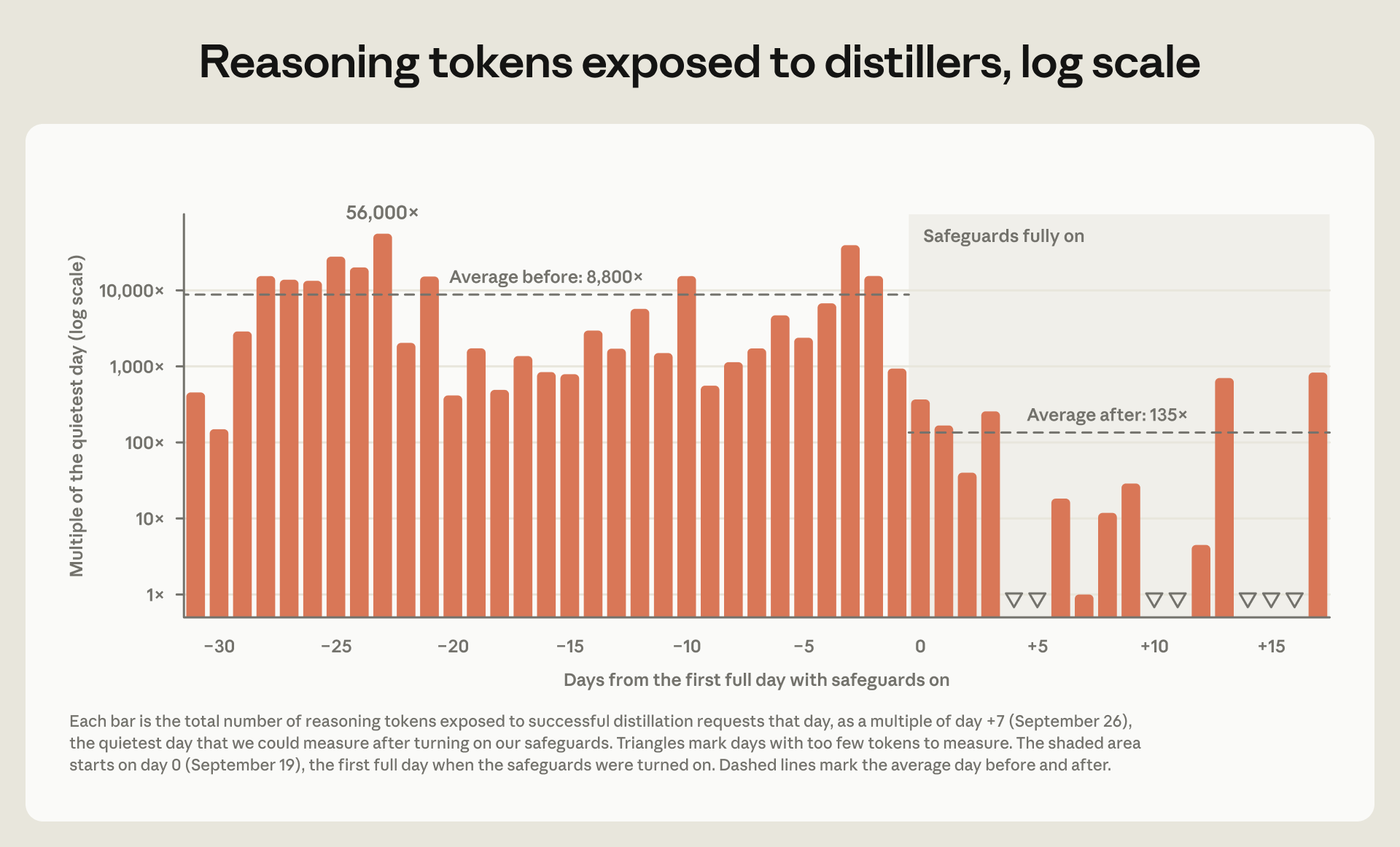
Anthropic says Zhipu (Z.ai) drew on leading US models to build cyber capabilities into GLM-5.3: first Claude Fable 5, then other models once Claude’s cyber safeguards weakened its attacks. Reuters, reporting the post, said Z.ai had not immediately responded when asked for comment.
Anthropic first summarised Claude’s reasoning, which makes its transcripts less useful for distillation.
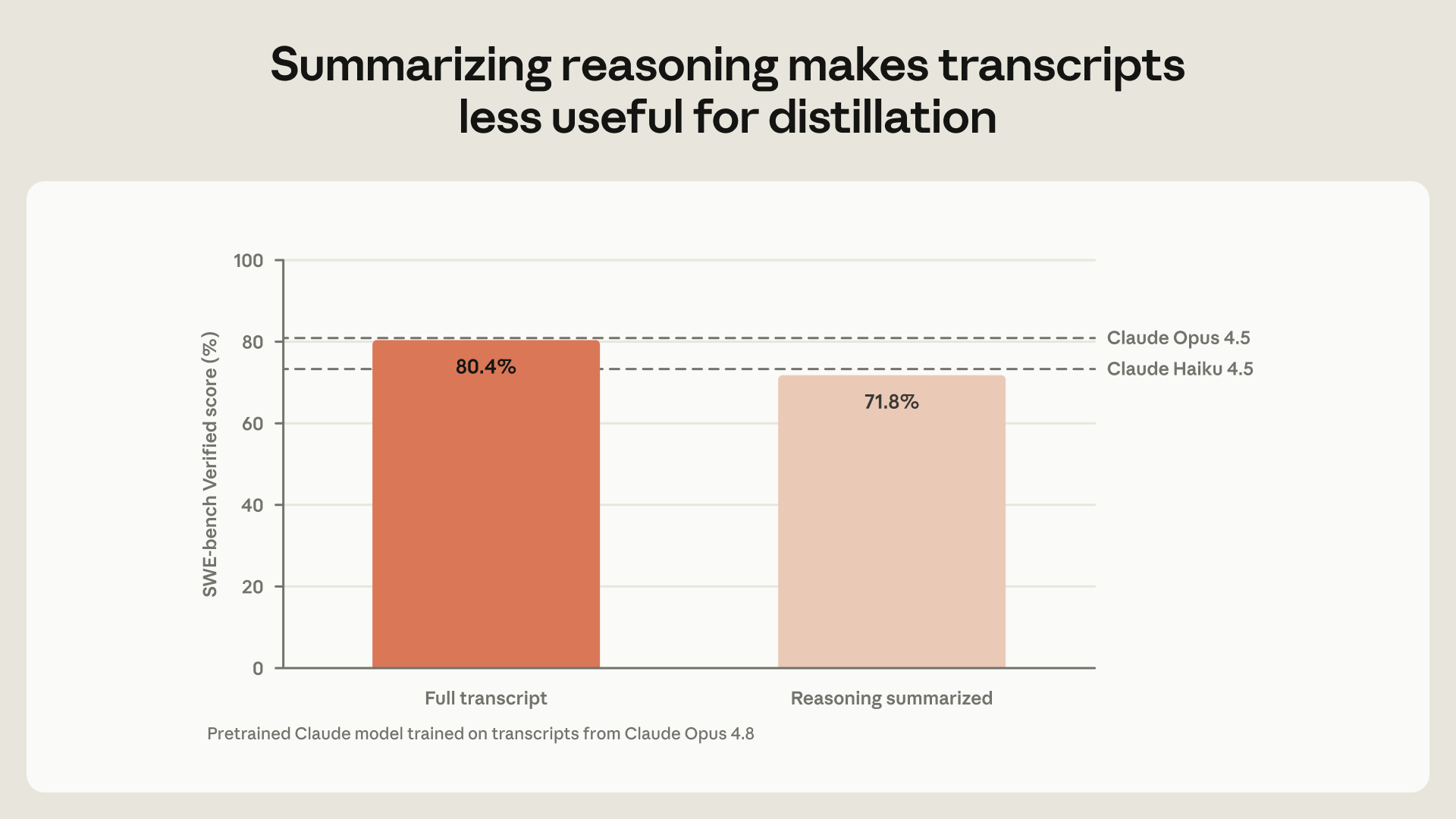
Distillers then tried to make Claude reveal its reasoning in full. The newer measures:
On its most capable generally available models, Anthropic says, the classifier detects every distillation technique it described in a September report, and Anthropic has shut down tens of thousands of distillation accounts. Refusing distillers’ paid traffic has cost it meaningful revenue, and it can’t tell how long the improvement will hold: its defences have not faced a highly sophisticated, sustained attempt to evade them.
05ModelOpenAIConfirmed
Thibault Sottiaux, who leads Codex at OpenAI, announced the change on X. His post is the only source for it.
OpenAI has raised GPT-6.1 Sol’s default context, the amount of text the model can keep in view at once, from 272k to 500k when it is used through Codex or through Work, another OpenAI product. Sottiaux posted the change at 05:15 IST on 12 October.
He wrote that the larger default reduces how often compactions happen and helps with tasks that need a lot of context kept in view. A compaction condenses the earlier part of a long session to make room. He added that OpenAI intends to go higher, without giving a figure or a date.
OpenAI hasn’t published release notes or documentation for the change.
06ModelZ.aiConfirmed
Z.ai reports a 19.2% all-pass rate on Harvey’s Legal Agent Benchmark, 12.5 points above GLM-5.3-Flash.
Z.ai pitches GLM-Legal, which is in beta, at everyday legal work such as reviewing contracts, analysing evidence and compliance. It says the model matches frontier closed-source models on LegalBench and on PLawBench, a test of Chinese legal practice, while being much smaller.
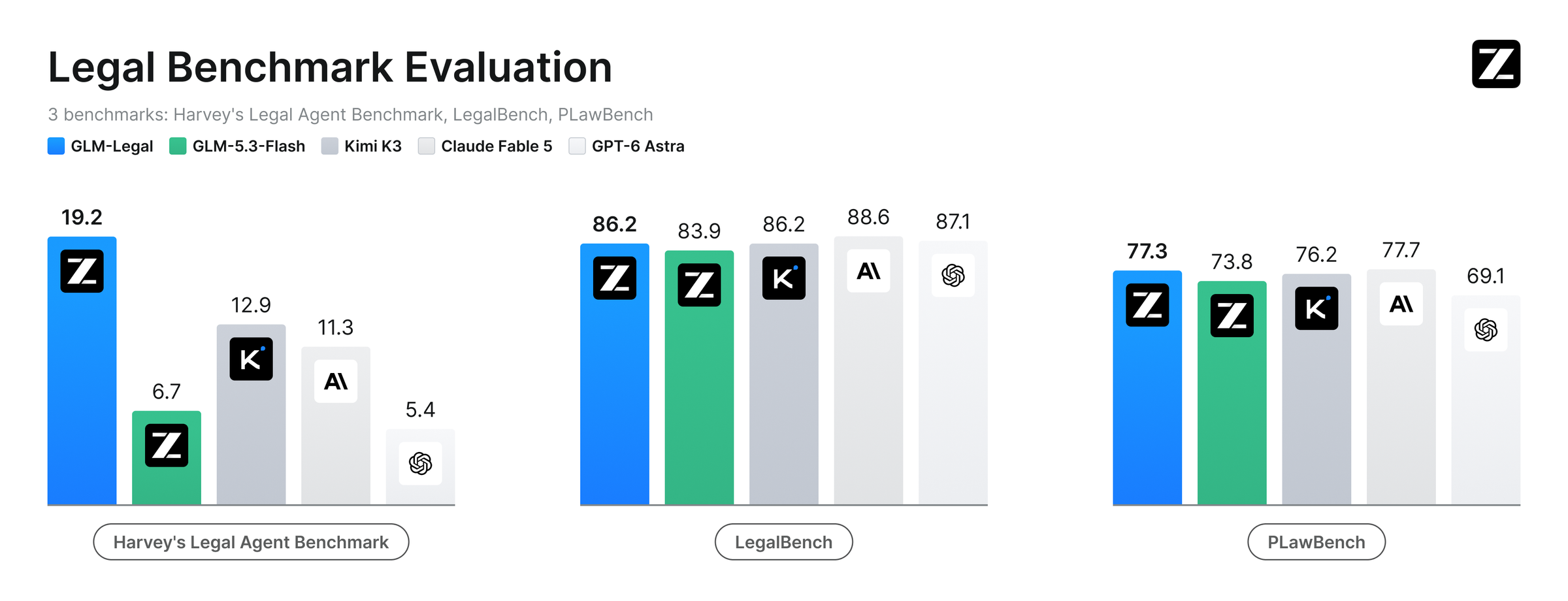
Vals, which tested GLM-Legal independently, ranks it seventh of 79 models on Harvey’s benchmark and 14th of 150 on LegalBench.
Z.ai built the model with extra training on legal material, followed by reinforcement learning, in which the model is rewarded for good results, across tens of thousands of lifelike legal tasks. It says GLM-Legal is coming to AutoClaw, its desktop agent platform, without giving a date. Its examples include a contract review delivered as tracked changes and comments in Word, an analysis of 40 documents from a software project dispute, and a privacy compliance plan for a website launching in Singapore, Malaysia and Indonesia.
Correction, 13 Oct: an earlier version of the benchmark chart’s description said GLM-Legal was close to GPT-6 Astra on PLawBench; it is ahead, at 77.3 against 69.1.
07ResearchQwenConfirmed
Alibaba’s Qwen team moves GPUs between running agent tasks and training as the load shifts, and reports training up to 1.85 times faster than when both share the same GPUs.
Alibaba’s Qwen team has published QwenGyre, a framework for training agents with reinforcement learning, in which a model improves by being rewarded for good results. It targets what the paper calls extreme-long-horizon tasks: jobs in which one run may take hours, with hundreds of exchanges between model and environment and close to 1M tokens. The paper, on arXiv, has 12 authors from Alibaba Token Hub at Alibaba Group, the University of Science and Technology of China and Tsinghua University.
QwenGyre has two core parts. Its Elastic Scheduler shifts GPUs back and forth between training and rollouts as the load changes, without stopping runs already in progress. Rollouts are the runs in which the agent attempts tasks to produce training data. Its Trajectory Processor pieces together agent histories that branch, gives credit for partial progress and strips out repeated paths so training costs stay in check. The framework works with existing agent tools without changing them, and every experiment in the paper used Claude Code 2.1.220.
On Qwen 3.8 2.4T, Qwen’s flagship model, with 700k tokens per rollout, the same number of training steps took 75.42 hours with QwenGyre, against 134.55 hours for an asynchronous baseline and 91.47 hours for a shared-GPU baseline.
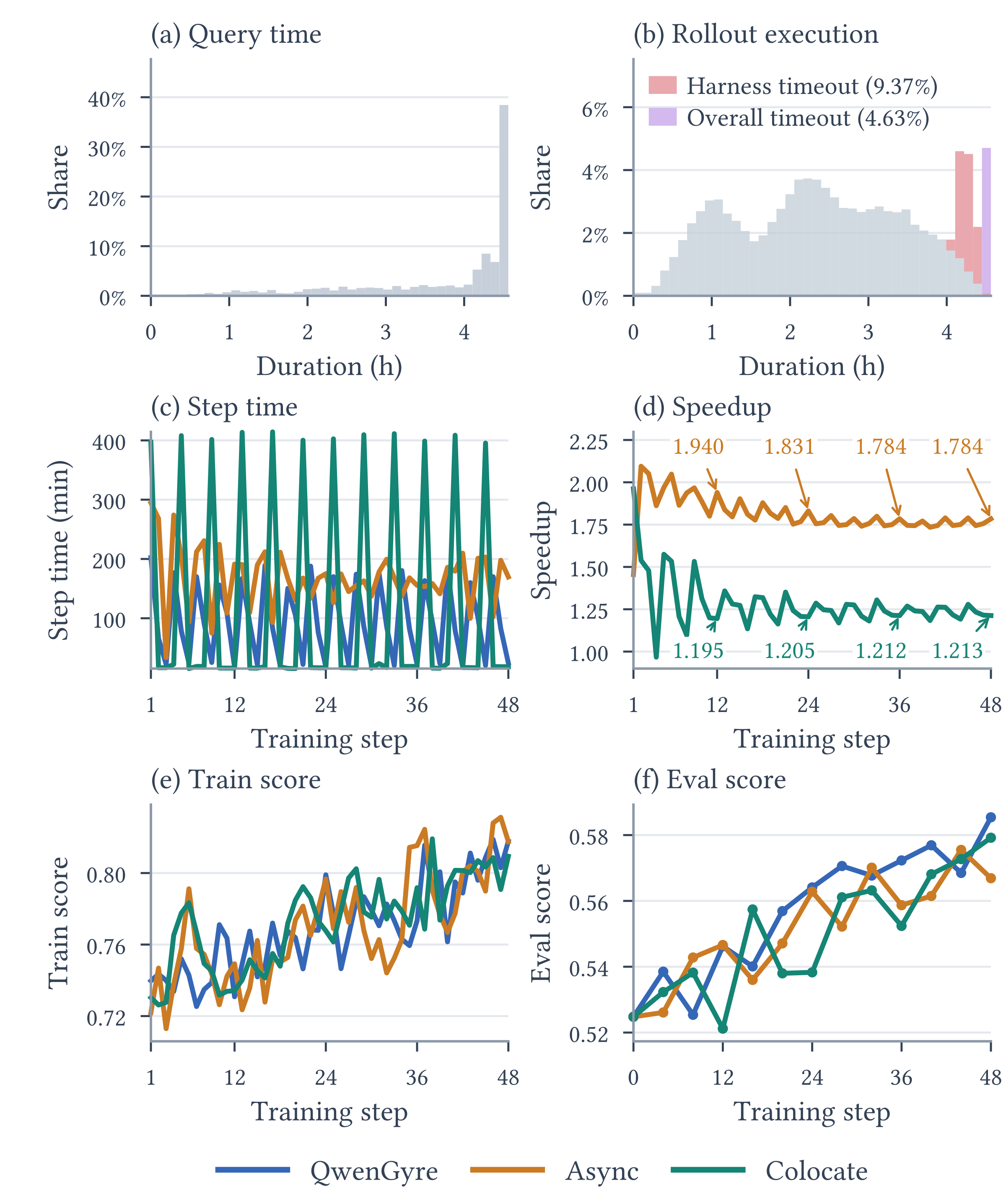
Across all the paper’s setups, QwenGyre ran 1.38 to 1.78 times faster than the asynchronous baseline and 1.21 to 1.85 times faster than the shared-GPU one on equal GPU budgets, while matching their training scores. The paper doesn’t link to a code release.
08Open sourceNVIDIAConfirmed
The C++ and Python library builds and edits the precise solid shapes that CAD software works with, and reads and writes them in OpenUSD. NVIDIA published its first release on 9 October.
USD BRep represents each solid as a boundary representation, or BRep, which describes the solid by the surfaces that enclose it. Those surfaces are built from NURBS, a mathematical way of describing smooth curves and surfaces that CAD software uses. Version 1.0.0 is on GitHub under the NVIDIA-Omniverse organisation and is licensed under Apache 2.0.
The Python package installs with pip install usd-brep and runs on CPython 3.12 on Windows or Linux. OpenUSD comes bundled with it, so it doesn’t need to be installed separately. A heal function repairs BRep definitions in USD files, and the repository includes STEP, IGES and JT models, common CAD file formats, for testing.
The repository’s tools carry the SMLIB name, in files such as smlib_gui.py. A CAD developer posting as @0xca0a, who says it has worked with SMLIB and its team for more than 20 years, described the code on X on 12 October as SMLIB, NVIDIA’s NURBS-based geometry engine, becoming open source. NVIDIA isn’t taking code contributions to the project, though it accepts issues and bug reports.


8 launches from Monday 12 October 2026, edited by .
Spotted an error? Email aiforsuccess.in+compass@gmail.com or tag @ai_for_success on X