

ResearchQwenConfirmed
Story 7 of 8 in the Monday 12 October editionQwen’s QwenGyre framework speeds up training AI agents on hours-long tasks
Alibaba’s Qwen team moves GPUs between running agent tasks and training as the load shifts, and reports training up to 1.85 times faster than when both share the same GPUs.

 Edited by Ashutosh Shrivastava
13 Oct 2026, 14:01 IST · 2 min read

Alibaba’s Qwen team has published QwenGyre, a framework for training agents with reinforcement learning, in which a model improves by being rewarded for good results. It targets what the paper calls extreme-long-horizon tasks: jobs in which one run may take hours, with hundreds of exchanges between model and environment and close to 1M tokens. The paper, on arXiv, has 12 authors from Alibaba Token Hub at Alibaba Group, the University of Science and Technology of China and Tsinghua University.
QwenGyre has two core parts. Its Elastic Scheduler shifts GPUs back and forth between training and rollouts as the load changes, without stopping runs already in progress. Rollouts are the runs in which the agent attempts tasks to produce training data. Its Trajectory Processor pieces together agent histories that branch, gives credit for partial progress and strips out repeated paths so training costs stay in check. The framework works with existing agent tools without changing them, and every experiment in the paper used Claude Code 2.1.220.
On Qwen 3.8 2.4T, Qwen’s flagship model, with 700k tokens per rollout, the same number of training steps took 75.42 hours with QwenGyre, against 134.55 hours for an asynchronous baseline and 91.47 hours for a shared-GPU baseline.
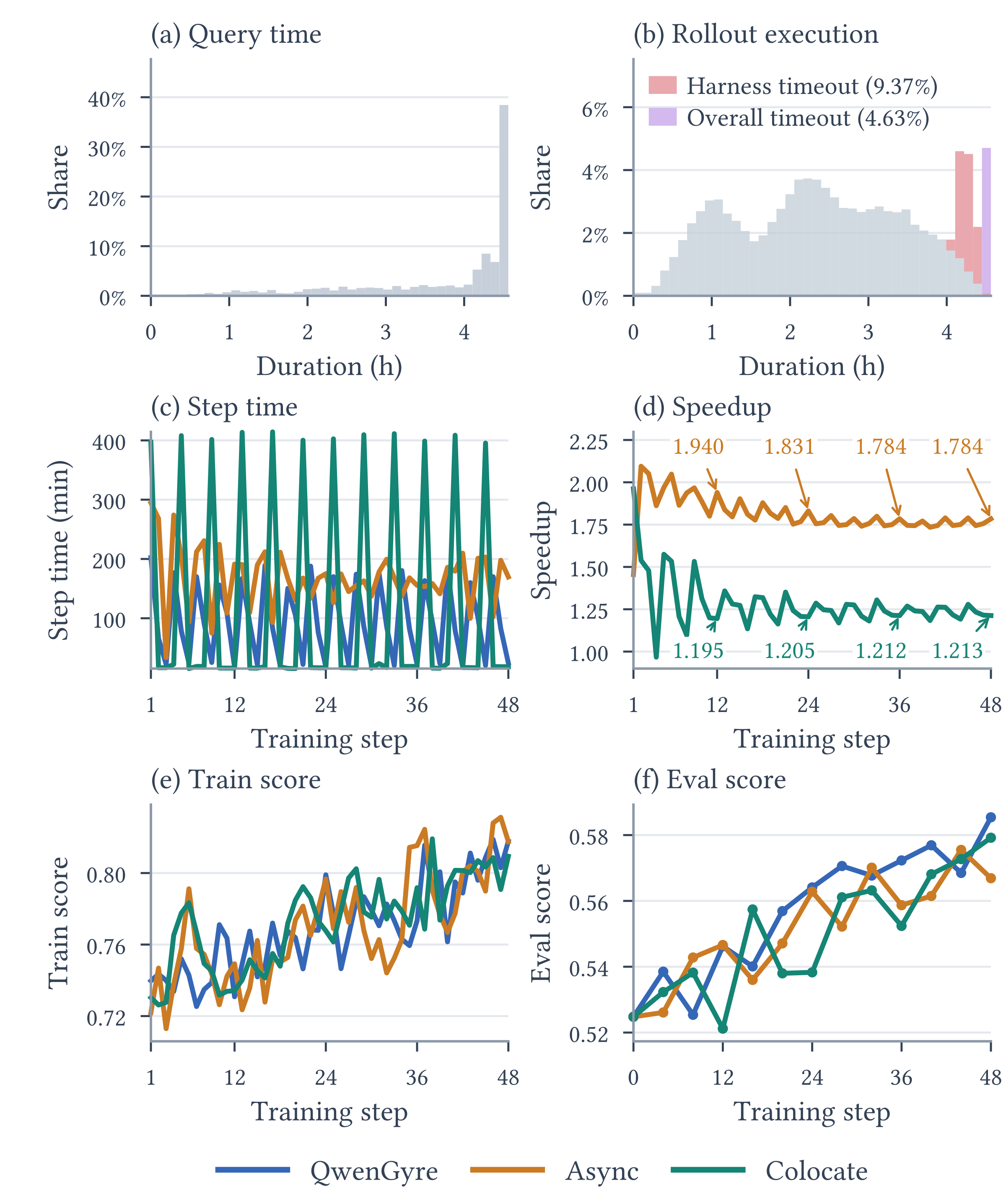
Across all the paper’s setups, QwenGyre ran 1.38 to 1.78 times faster than the asynchronous baseline and 1.21 to 1.85 times faster than the shared-GPU one on equal GPU budgets, while matching their training scores. The paper doesn’t link to a code release.
Sources
- PrimaryQwenGyre: An Elastic Reinforcement Learning Framework for Training XLong-Horizon Agentsarxiv.org · The paper on arXiv
- On X@Alibaba_Qwen on X: introducing QwenGyrex.com
The rest of the day
Read the whole day
01ModelMeta
Meta launches Muse Wonder and Muse Wonder Full for AI agents
Meta calls them its most capable models.
02InfraMicrosoft
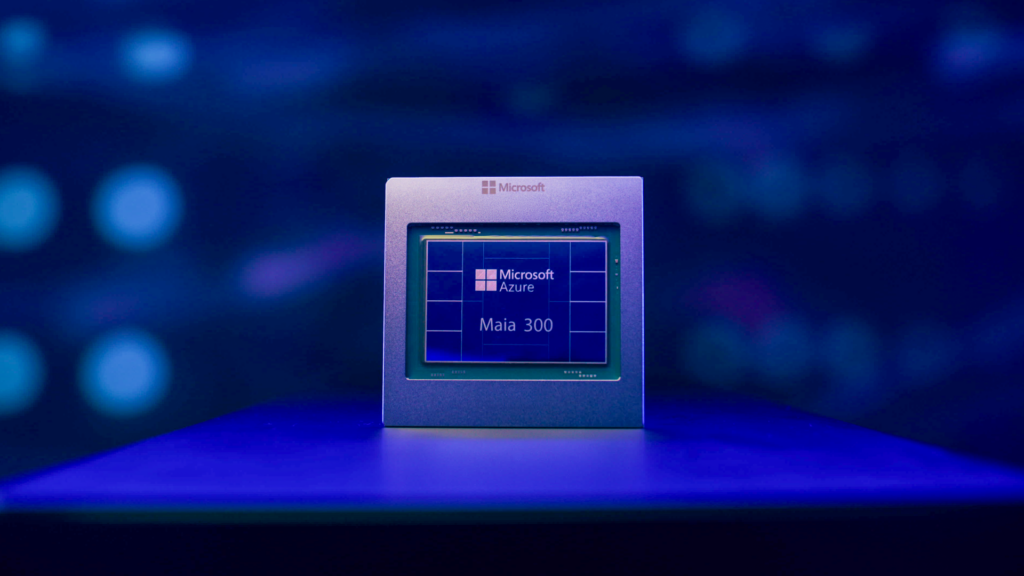
Microsoft unveils Maia 300 and plans multi-gigawatt Maia deployments from 2027
Microsoft expects its third-generation Azure Maia chip, built for inference, to deliver 40% more tokens per megawatt than leading GPU systems.

03ProductSpaceXSI
SpaceXSI bundles Grok, Cursor and X Premium into The X Subscription
Five tiers run from free to $200 a month, with one pool of Grok model usage shared across the Grok apps, the Grok tab on X and Cursor.

04ResearchAnthropic
Anthropic says distillers now get 90 to 99 percent less data out of Claude
Distillers copy a model’s abilities without its maker’s permission.
Spotted an error? Email aiforsuccess.in+compass@gmail.com or tag @ai_for_success on X