

ProductOpenAIConfirmed
Story 4 of 11 in the Thursday 22 October editionOpenAI makes the Decisions API generally available for low-latency classifiers and rubrics
Powered by gpt-6-luna, POST /v1/decisions evaluates up to 400 bounded yes-or-no, multiple-choice or scored rubric questions per request up to 10 times faster than the Responses API, with zero output token charges.

 Edited by Ashutosh Shrivastava
22 Oct 2026, 23:55 IST · 2 min read
OpenAI has made the Decisions API (POST /v1/decisions) generally available on gpt-6-luna. Designed for workloads that need structured judgements rather than free-form prose, the endpoint accepts text, images or native JSON (input_json) and evaluates a batch of independent questions in parallel at up to 10 times the speed of gpt-6-luna through the Responses API.
Decision types and GA additions
Each question in the questions array specifies one of three typed schemas: predicate (returns a boolean outcome when a calibrated probability between 0 and 1 meets a configurable threshold), choice (selects one key from up to 20 options with per-option probability distributions) or score (assigns a 1-indexed integer across 2 to 10 ordered rubric levels, plus an expected value score_ev and level probabilities).
New for general availability are native GPT-Live triggers that fire mid-conversation events during voice sessions without blocking speech, prompt caching on shared input prefixes, image attachments inside per-question instructions, and enterprise compliance controls including Private Link, Zero Data Retention, HIPAA eligibility and US or EU regional processing.
Key numbers
- Batch capacity: up to 400 questions per request (doubled from 200 in public beta) and up to 50 images per request across a 128k context window.
- Input pricing on gpt-6-luna: $0.10 per 1M uncached input tokens and $0.01 per 1M cached input tokens (90% discount), with zero charge for output tokens.
Sources
- PrimaryOpenAI: Build more responsive apps with the Decisions APIopenai.com
- OfficialOpenAI API docs: Decisions guidedevelopers.openai.com
- OfficialOpenAI API Changelogdevelopers.openai.com
- On XOpenAI Developers (@OpenAIDevs) on Xx.com
The rest of the day
Read the whole day
01InfraAnthropic
Anthropic-managed Claude Platform becomes generally available on Google Cloud
Google Cloud customers can now access the full Anthropic-managed Claude Platform, including Managed Agents, Agent Skills and zero-day model launches, while authenticating with Google Cloud IAM and retiring Google Cloud spend commitments.
02Coding agentGoogle
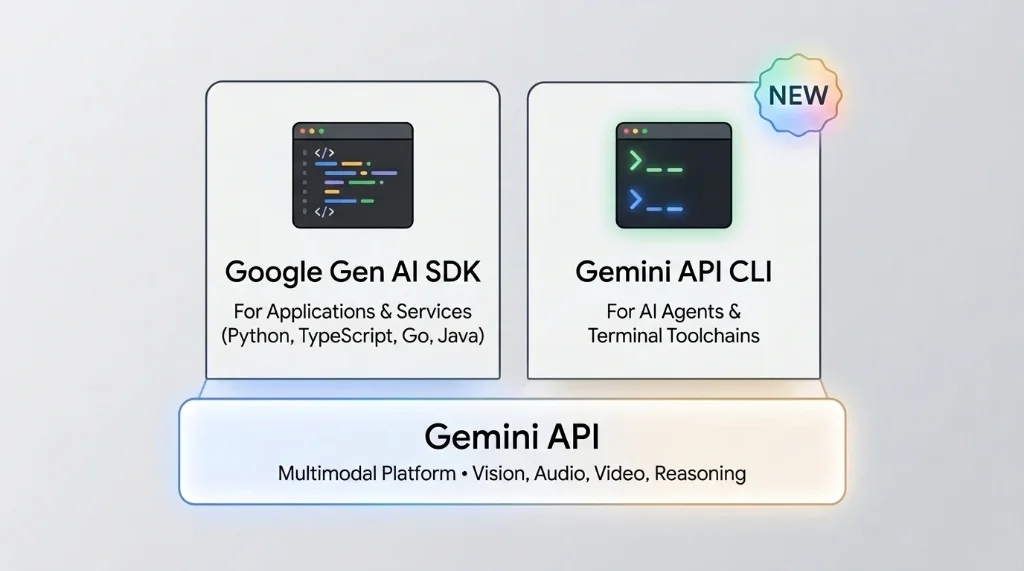
Google releases open-source Gemini API CLI built for coding agents
Published on the Google AI Studio blog on 19 October 2026 and shared on 22 October 2026, the single-binary Rust tool gives coding agents and developers progressive terminal access to Gemini text, image, video, audio, embedding and research APIs without MCP schema overhead.

03CreativeIdeogram
Ideogram launches Ideogram Vector for native text-to-SVG and raster vectorisation
Ideogram’s first native vector model (ideogram-vector-1) generates editable SVG files with clean bezier paths, smooth gradients and sharp typography directly from text prompts or existing raster images in the web app and API.

05InfraGoogle
Google Cloud unveils Agent Compute Engine microVM sandboxes and expanded agent governance
Announced at AGNTCon + MCPCon alongside the open-source Agent Substrate on GKE, Agent Compute Engine uses Google Titanium IPUs and Cloud Hypervisor microVMs to isolate, snapshot and resume stateful AI agents.
Spotted an error? Email aiforsuccess.in+compass@gmail.com or tag @ai_for_success on X