

ModelOpenAIConfirmed
Story 1 of 10 in the Monday 26 October editionOpenAI launches GPT-6.1 Terra with 1.05M context and 50% lower API pricing
Available in ChatGPT Work, Codex and the API as gpt-6.1-terra, the visual-reasoning and computer-use model cuts standard token prices in half compared with GPT-5.6 Terra and GPT-6.1 Sol.

 Edited by Ashutosh Shrivastava
26 Oct 2026, 23:55 IST · 2 min read

OpenAI has released GPT-6.1 Terra, a multimodal model built for visual reasoning, desktop computer use and writing. On 26 October 2026, the model rolled out to Plus, Pro, Enterprise and Edu subscribers in ChatGPT Work and Codex, and to developers in the OpenAI API as gpt-6.1-terra. It supports a 1,050,000-token context window, up to 128,000 output tokens, a 1 June 2026 knowledge cutoff and six reasoning effort levels from none to max through the Responses API.
Standard API pricing is $1 per million input tokens, $0.05 per million cached input tokens and $5 per million output tokens, which is 50% lower than both GPT-5.6 Terra and GPT-6.1 Sol. Standard cache writes cost $1.25 per million tokens for 30-minute retention and $2.50 for 12-hour retention, while prompts exceeding 272k input tokens are billed at twice the input and cache rate and 1.5 times the output rate. Batch and Flex processing cut standard prices by 50%, whereas Fast mode doubles them.
Interactive benchmark charts on the launch page cannot be saved as static images, but across all evaluations GPT-6.1 Terra outperforms GPT-5.6 Terra while running more than three times faster than GPT-6 Astra and GPT-6.1 Sol. On Agents’ Last Exam, medium-effort GPT-6.1 Terra scores 15 percentage points above GPT-5.6 Terra at roughly one-third the cost and matches GPT-6 Astra at one-tenth the price per token; at max effort, it uses less than one-third the tokens of Claude Opus 5.5 at one-fourth the per-token price for roughly nine times lower cost per task. Under OpenAI’s Preparedness Framework, the model meets the Critical cybersecurity threshold.
Key numbers
- Context and output: 1,050,000 input tokens and 128,000 max output tokens
- Standard API price: $1 input, $0.05 cached input and $5 output per million tokens
- Terminal-Bench 4.0: 50.3% at maximum reasoning effort, up from 21.5% on GPT-5.6 Terra
- Internal factuality error rate: 16.7% at low effort (down from 53.6%) and 4.3% at max effort
Sources
- PrimaryOpenAI: Introducing GPT-6.1 Terraopenai.com
- OfficialOpenAI API Docs: GPT-6.1 Terradevelopers.openai.com
- OfficialOpenAI API Pricingdevelopers.openai.com
- OfficialOpenAI Deployment Safety: GPT-6.1 Terra System Carddeploymentsafety.openai.com
- On XOpenAI (@OpenAI) on Xx.com
The rest of the day
Read the whole day
02TrendingAnthropic
Anthropic files Form S-1 with the SEC for a proposed Nasdaq IPO
The public-benefit corporation filed a registration statement with the U.S.

03ModelMirendil
Mirendil unveils Fern 0.1 with a 10M-token context window
Pretrained from scratch on the 0.1T to 0.5T parameter Mirendil-Base model, Fern 0.1 holds up to 23 MB of source code in active context for repository-scale coding and training-log analysis.

04ResearchOpenAI
OpenAI models produce proofs on the Kakeya conjecture, ETH and QCD
Internal reasoning models generated Lean-verified proofs resolving the local smoothing and Kakeya conjectures in all dimensions, refuting the Exponential Time Hypothesis and establishing 4D Yang-Mills and QCD existence.
05Coding agentCursor
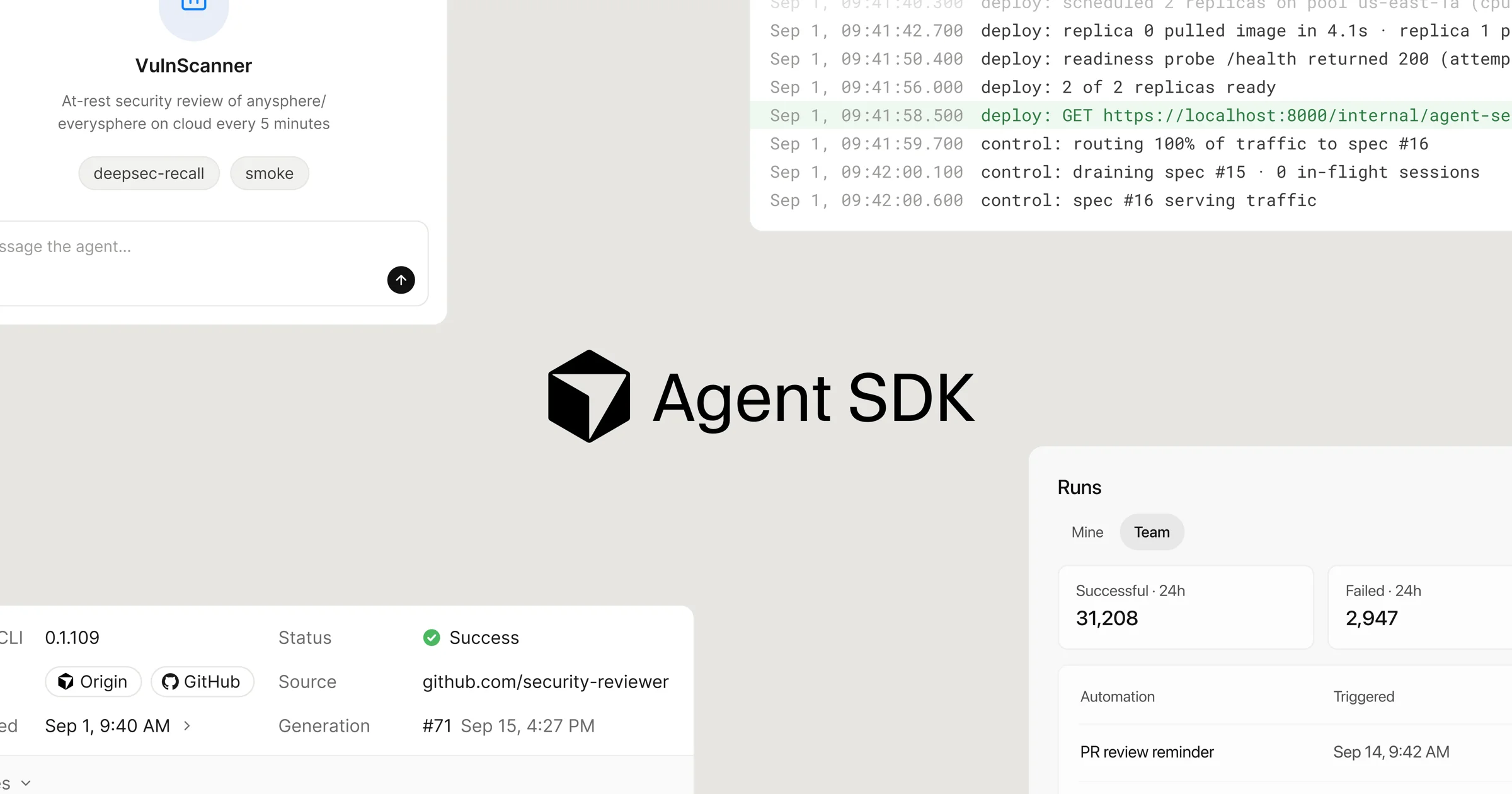
Cursor releases the Agent SDK for defining and deploying agents as code
Announced in a 20 October 2026 blog post and marked generally available in v0.3.0 on 23 October 2026, the TypeScript and Markdown framework exposes the harness behind Bugbot and Security Review.
Spotted an error? Email aiforsuccess.in+compass@gmail.com or tag @ai_for_success on X