

ResearchOpenAIConfirmed
Story 4 of 10 in the Monday 26 October editionOpenAI models produce proofs on the Kakeya conjecture, ETH and QCD
Internal reasoning models generated Lean-verified proofs resolving the local smoothing and Kakeya conjectures in all dimensions, refuting the Exponential Time Hypothesis and establishing 4D Yang-Mills and QCD existence.

 Edited by Ashutosh Shrivastava
26 Oct 2026, 23:55 IST · 2 min read
OpenAI has announced three mathematical, computer science and theoretical physics breakthroughs generated by its internal reasoning models, paired with three different models for academic review across the scientific community.
In harmonic analysis, an OpenAI model produced a proof on 18 October 2026 of Sogge’s 1991 local smoothing conjecture for the Euclidean wave equation in every spatial dimension, using a new auxiliary partial differential equation. Formalised in the Lean theorem prover on 19 October 2026 and published directly to OpenAI’s openai/math GitHub repository, the result implies both the Kakeya conjecture and Stein’s restriction conjecture in all dimensions, generalising the 2025 three-dimensional Kakeya proof by Wang and Zahl.
In computational complexity, OpenAI’s models disproved the Exponential Time Hypothesis (ETH), a foundational conjecture regarding Boolean satisfiability (SAT) hardness, with the refutation verified in Lean on 17 October 2026. OpenAI published the natural-language writeup and Lean proof (lean/docs/378.md), formed a working group led by Russell Impagliazzo, Ramamohan Paturi and Ryan Williams, and committed to funding an open academic conference. In constructive quantum field theory, the models produced existence proofs in four dimensions for pure Yang-Mills theory (part of the Clay Millennium Prize problem) on 9 September 2026 and for interacting quantum chromodynamics (QCD) and a grand unified completion of the Standard Model on 18 September 2026, building on Balaban’s renormalisation approach. A physics working group led by Nobel laureate David Gross alongside Michael Douglas, Arthur Jaffe, Igor Klebanov and Nikita Nekrasov is writing up those results before public release.
Sources
- PrimaryOpenAI: Building scientific understanding with academic communitiesopenai.com
The rest of the day
Read the whole day
01ModelOpenAI
OpenAI launches GPT-6.1 Terra with 1.05M context and 50% lower API pricing
Available in ChatGPT Work, Codex and the API as gpt-6.1-terra, the visual-reasoning and computer-use model cuts standard token prices in half compared with GPT-5.6 Terra and GPT-6.1 Sol.

02TrendingAnthropic
Anthropic files Form S-1 with the SEC for a proposed Nasdaq IPO
The public-benefit corporation filed a registration statement with the U.S.

03ModelMirendil
Mirendil unveils Fern 0.1 with a 10M-token context window
Pretrained from scratch on the 0.1T to 0.5T parameter Mirendil-Base model, Fern 0.1 holds up to 23 MB of source code in active context for repository-scale coding and training-log analysis.
05Coding agentCursor
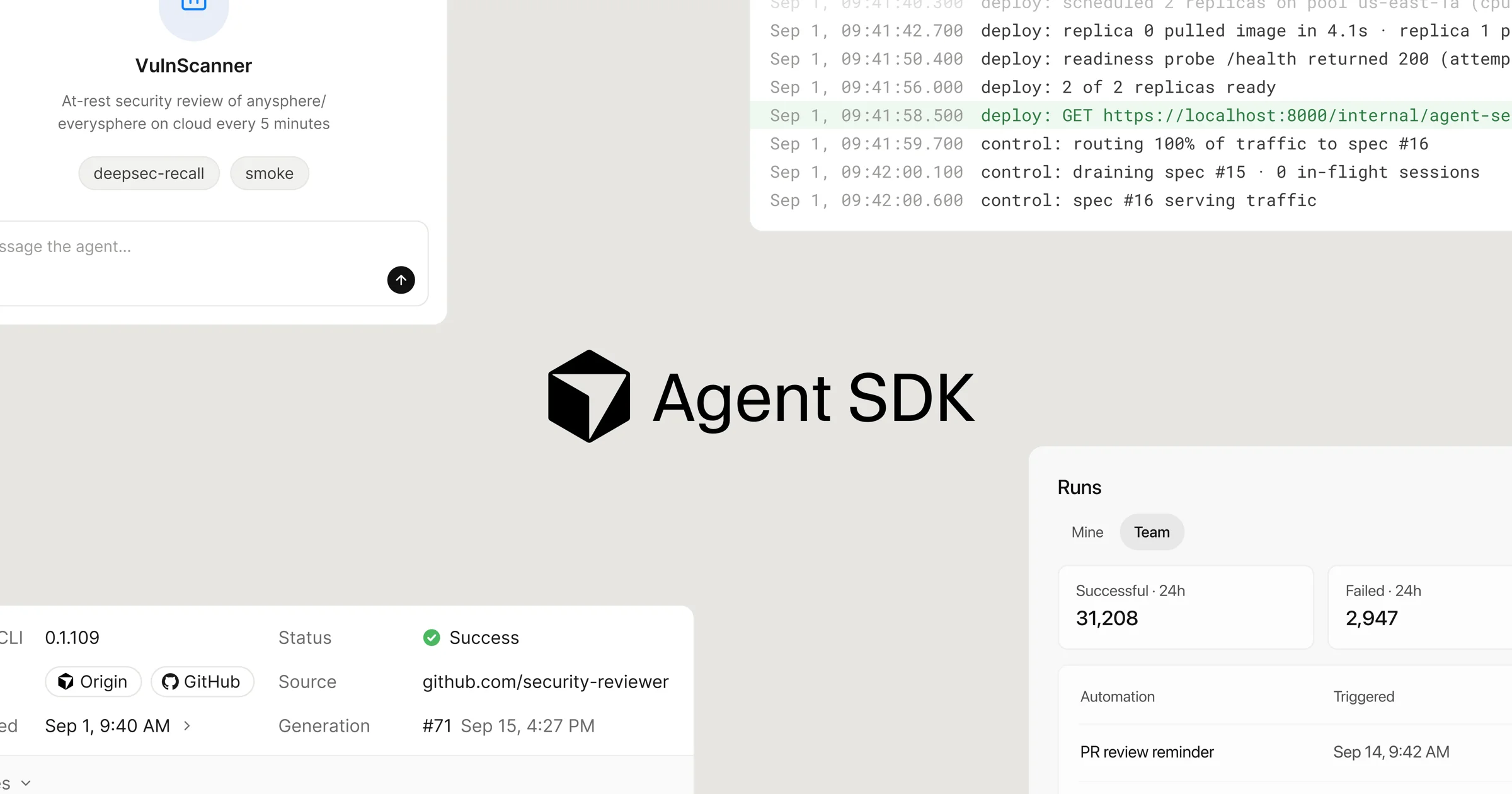
Cursor releases the Agent SDK for defining and deploying agents as code
Announced in a 20 October 2026 blog post and marked generally available in v0.3.0 on 23 October 2026, the TypeScript and Markdown framework exposes the harness behind Bugbot and Security Review.
Spotted an error? Email aiforsuccess.in+compass@gmail.com or tag @ai_for_success on X