


Open sourceSarvam AIConfirmed
Story 3 of 12 in the Tuesday 3 November editionSarvam AI open-sources Sarvam Prism for 44 ms single-pass enterprise decisions
Built on Sarvam 105B under the Apache 2.0 licence, the calibrated decision model scores candidate options in one forward pass on a single NVIDIA B200 GPU.

 Edited by Ashutosh Shrivastava
4 Nov 2026, 09:30 IST · 2 min read

Sarvam AI released Sarvam Prism on 3 November 2026 under the Apache 2.0 licence, introducing an open-weight System One decision model fine-tuned with LoRA on its Sarvam 105B-10B mixture-of-experts base. Rather than generating tokens autoregressively, Prism reads a state, a question and candidate options within a 131,072-token window in one forward pass and outputs calibrated probabilities through a lightweight scoring head.
A split attention mask reads the state and question bidirectionally while isolating each option until the final answer token, adding roughly 3 points on the Jev Decision Index and running attention 2.6 times faster above 2,048 tokens. Label-smoothed cross-entropy and Brier losses keep actual mistakes below predicted uncertainty at 90% confidence (2.2% actual versus 3.3% expected in English), while canonical option sorting eliminates answer flips across 2,000 shuffled prompts (0.0%, versus 10.3% for Perplexity Decider v1.2). Converting weights to FP8 (106 GB on disk, 120 GB VRAM), grouping 128 experts into one kernel and capturing a CUDA Graph cut median latency from 664 ms on two 16-bit B200 GPUs to 44 ms on one B200, 15.1 times faster.
Sarvam renders its benchmark charts interactively in HTML rather than static images, ranking Prism first under 100 ms across 25 tested decision models. Hosted API access is live on Sarvam Indus; per-request API pricing was not printed.
Key numbers
- 71.8 average score at 44 ms (67.0 Jev, 65.9 Artificial Analysis recreation, 82.5 Indian languages), ahead of Perplexity Decider v1.2 (68.0 at 117 ms) and Jev 1.14 (64.5 at 196 ms).
- 78.5% accuracy judging 700 agent traces in roughly 0.5 s per run, versus 70.7% in 2.5 s for Claude Haiku 5.5.
- 89.0% accuracy on a 5,517-question cybersecurity guardrail benchmark, ahead of Clef (84.5%) and Jev 1.14 (78.6%).
Sources
- PrimarySarvam Prism: a decision model built on Sarvam 105Bsarvam.ai
- Officialsarvamai/prism model card on Hugging Facehuggingface.co/sarvamai
- OfficialSarvam Prism API documentationdocs.sarvam.ai
The rest of the day
Read the whole day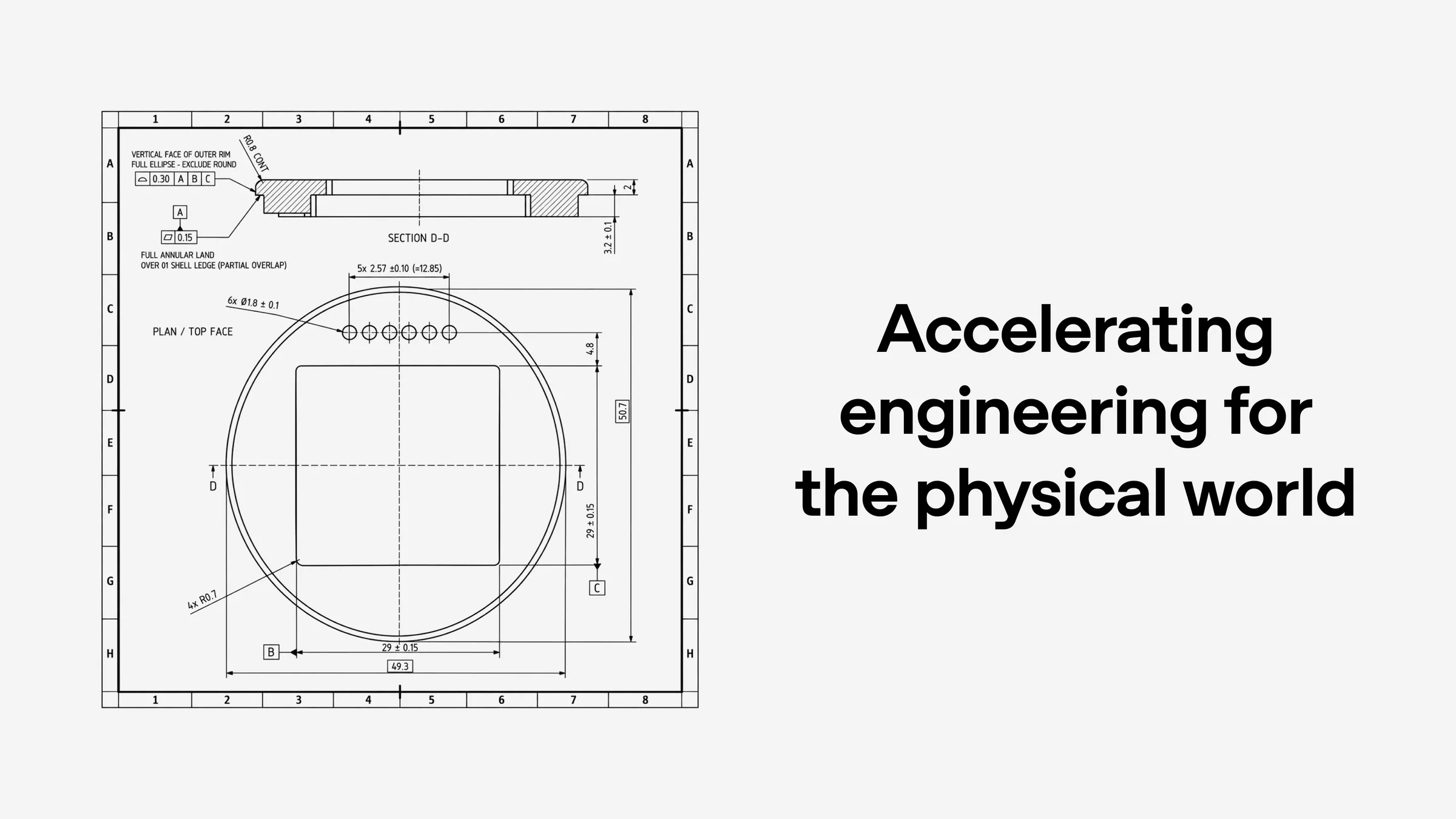
01ProductOpenAI
OpenAI details physical hardware engineering with GPT-6 Astra and BenchCAD 2.0
Two OpenAI engineers designed a working handheld Codex voice prototype with GPT-6 Astra in under a week, while an internal model reached 0.875 on BenchCAD 2.0.

02ProductGoogle
Google Labs expands its Dreambeans personalised storytelling app to India
Adults aged 18 and over in India can generate daily visual story cards on Android, iOS and the web across 14 languages using selected Google app context.
04ModelOpenRouter
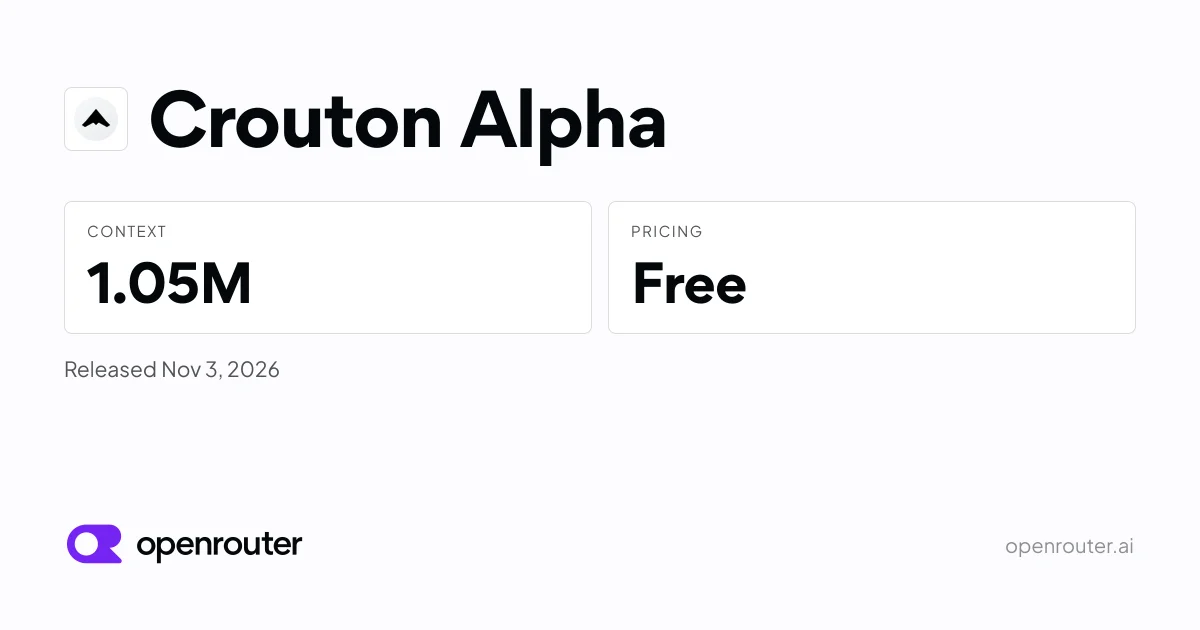
OpenRouter launches free 1M-context multimodal stealth model Crouton Alpha
Released on 3 November 2026 under stealth/crouton-alpha, the undisclosed provider’s reasoning model accepts text, image, audio, video and file inputs with zero prompt logging.

05ProductPerplexity
Perplexity Computer launches automated Shopify, Klaviyo and Meta ad workflows
Connecting to 27 commerce, ad, email and analytics tools, the e-commerce suite automates competitor audits, creative generation, media buying and storefront landing pages.
Spotted an error? Email aiforsuccess.in+compass@gmail.com or tag @ai_for_success on X