

ResearchGoogleConfirmed
Story 1 of 10 in the Thursday 15 October editionGoogle shows magic state cultivation working on its Willow quantum chip
In a paper published in Science, Google’s researchers show their 2024 filtering method producing purer magic states, a costly resource that useful quantum computers depend on.

 Edited by Ashutosh Shrivastava
16 Oct 2026, 10:47 IST · 2 min read
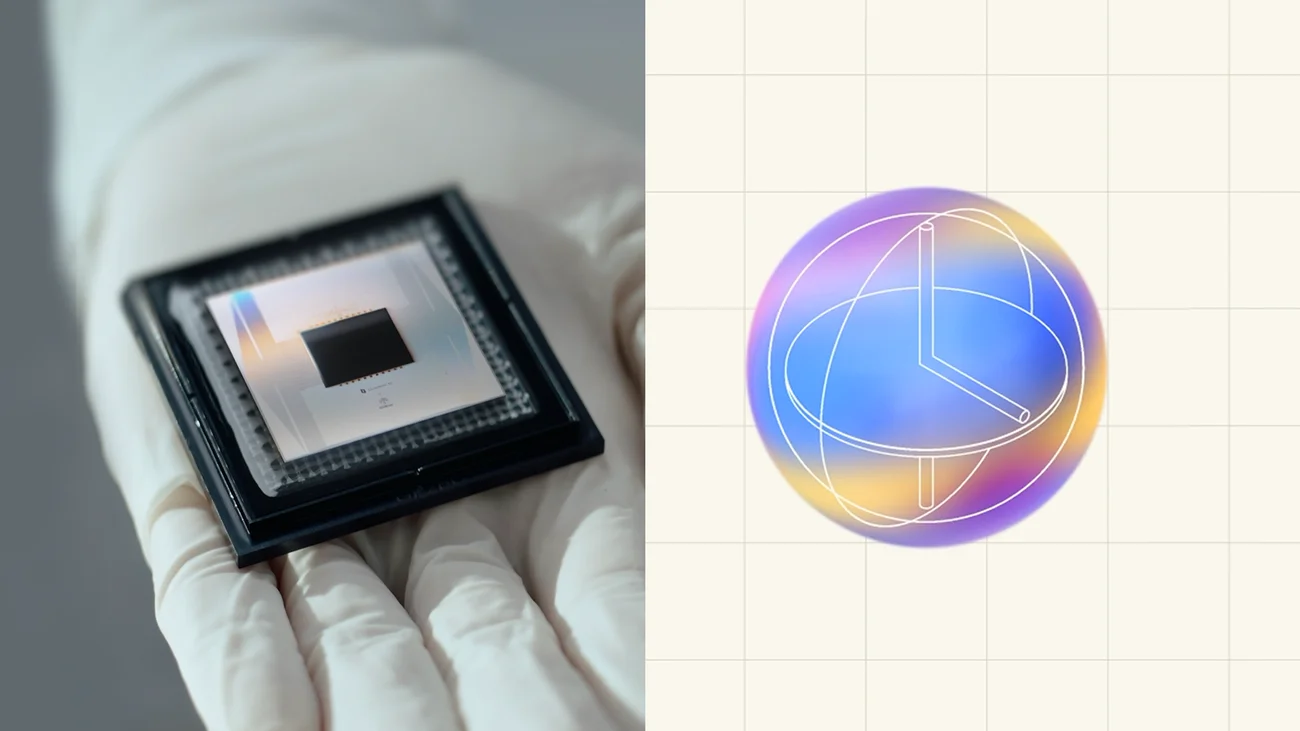
Google’s Quantum AI team has shown that magic state cultivation works in practice on its Willow processor. The experiment was published in Science on 15 October 2026, and Google says it is the first time the method has run on physical hardware.
A universal quantum computer, one able to run any quantum program, needs certain operations that are usually made by consuming special inputs called magic states. Each one is gone once used, and making them with few errors is expensive: Google cites estimates that up to 95% of a quantum computer’s capacity could go into producing them.
Cultivation, designed in 2024 by Google’s Craig Gidney, Noah Shutty and Cody Jones, works like a filter. A noisy state is placed in a small patch of the chip, rounds of coordinated measurements check it for errors, and flawed attempts are thrown away. The state that survives is purified while it grows into a larger, usable encoding.
On Willow, cultivated states had about 40 times fewer errors than states prepared without cultivation, and the team reached a logical fidelity of 99.99% for the magic states known as T-states, a record. The paper puts the fidelity at 0.9999 or better while keeping 8% of attempts.
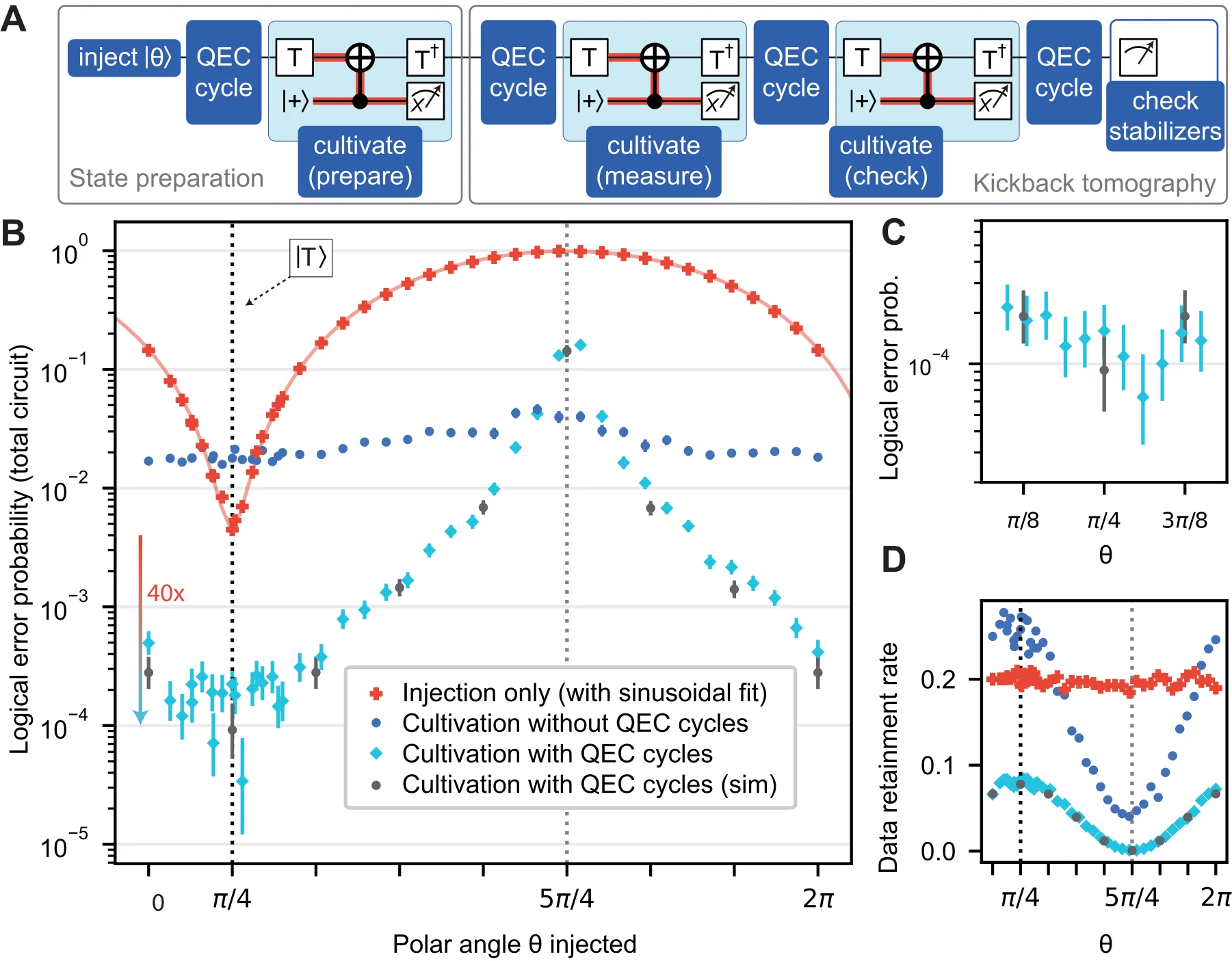
Getting there took new engineering. Noise from drifting electrical equipment and temperature changes in the lab had made the team’s usual benchmark unreliable, so it added extra control and devised a new benchmark that uses cultivation to measure itself.
The team also moved a purified state from one kind of error-correcting code, a colour code, into a larger surface code, a more established scheme. Google says cultivation still has to be shown at a larger scale before it is practical, and that many technical challenges remain.
Sources
- PrimaryBringing the magic: Google breaks open a bottleneck in quantum computingblog.google · Google announcement, 15 October 2026
- OfficialMagic state cultivation on a superconducting quantum processorscience.org · The paper in Science, published 15 October 2026
- OfficialarXiv:2512.13908, Magic state cultivation on a superconducting quantum processorarxiv.org · Preprint of the paper, 15 December 2025, with Figure 3
- On X@GoogleQuantumAI on X: magic state cultivation works in practice on Willowx.com · Google Quantum AI’s launch post
- On X@sundarpichai on X: magic state cultivation on physical hardware for the first timex.com
The rest of the day
Read the whole day
02Open sourceMeta
Meta releases Muse Spark Open, an 816B-parameter open-weight model
Developers can download the weights of Meta’s coding and agent model under a licence with limited commercial terms, and Meta says two Mac Studios can run it.

03ModelNVIDIA
NVIDIA releases Nemotron 3.5 Super VL and Bolt open models for agents
Super VL, a 120B model that also reads images and documents, targets always-on enterprise agents, while Bolt fits a 74B model into 24GB of memory for RTX PCs and DGX Spark.

04Open sourceStepFun
StepFun releases open weights for Step 5 Preview, a 600B agent model
The model, which StepFun says is particularly strong at finance work, can be used commercially for free, with extra terms for device makers and the largest products and model sellers.

05Coding agentCognition
Cognition launches Devin Oncall to investigate production alerts and incidents
The on-call version of Cognition’s Devin agent, now generally available, triages alerts and bug reports and joins incident channels to help engineers find the root cause.
Spotted an error? Email aiforsuccess.in+compass@gmail.com or tag @ai_for_success on X