

ResearchAnthropicConfirmed
Story 3 of 6 in the Saturday 17 October editionAnthropic’s Claude finds five NIST curve seeds came from timestamps, not hashes
In a 16 October 2026 post, Anthropic says an internal research model showed in under half an hour that the unexplained seeds of five NIST elliptic curves came from a C library random number generator seeded by the clock.

 Edited by Ashutosh Shrivastava
18 Oct 2026, 09:39 IST · 2 min read
ECDSA, the most widely used elliptic-curve signature standard, was adopted by NIST in 2000 in FIPS 186-2. Its curves are partly defined by seed values that the NSA supplied without explanation, which fed years of suspicion that they could hide backdoors, and a bounty for whoever found the seeds’ origin.
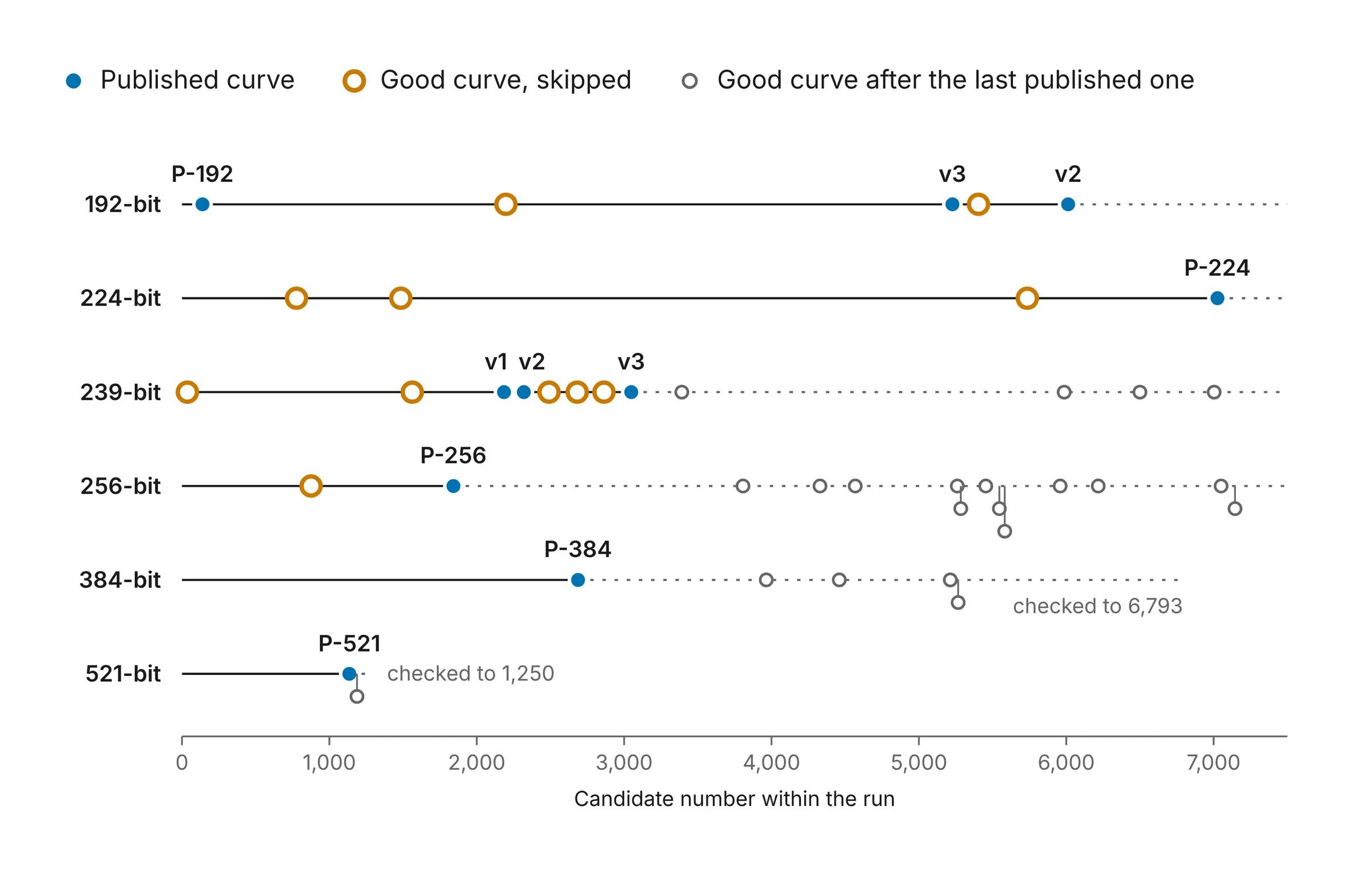
An Anthropic employee asked an internal research model how the seeds were made, without pointing it to the rumoured clue that they were hashes of a humorous phrase. In under half an hour, Claude showed that the P-192, P-224, P-256, P-384 and P-521 seeds came from lrand48, the C library’s random number generator, seeded with Unix timestamps, readings of the computer clock, from May 1997 to April 1998.
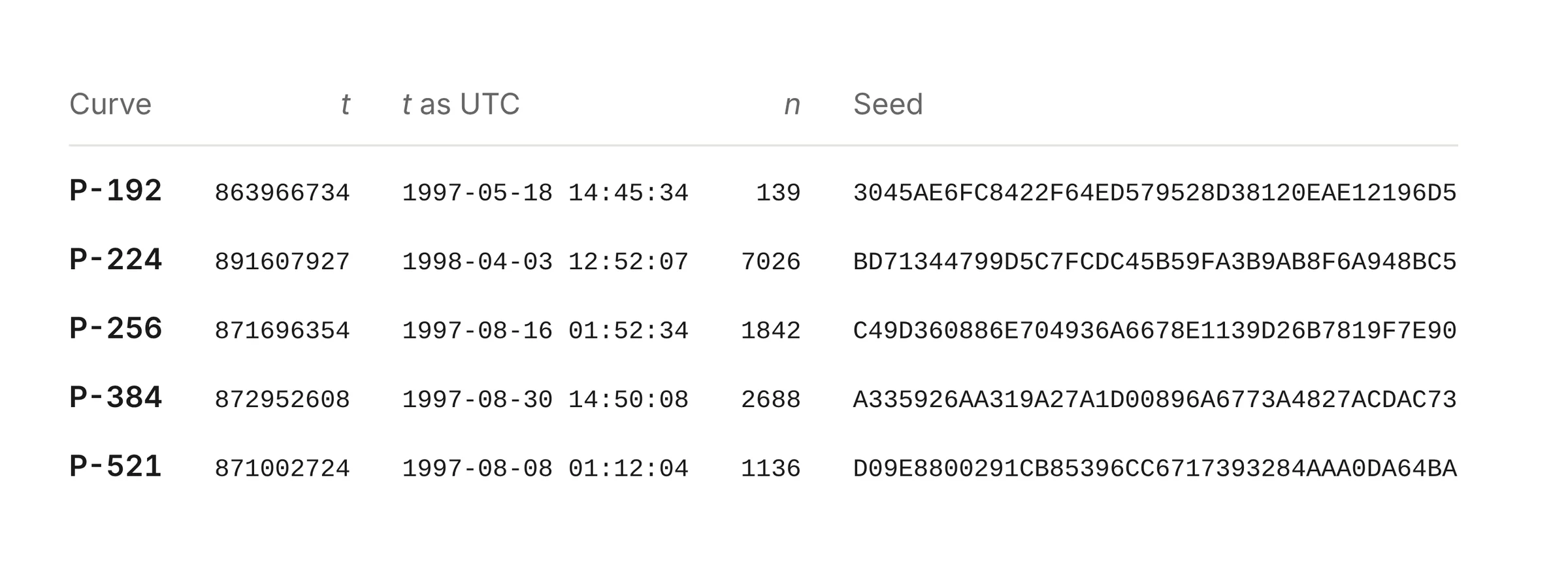
Claude spotted a pattern in the seeds’ top bits, recovered the generator’s hidden state and checked that each recovered state regenerates all 160 bits of its seed, which does not happen by chance. It also explained the base points, the fixed point every public key on a curve is derived from, of P-192 and five ANSI X9.62 example curves.
Anthropic says this is not a break of, attack on or weakness in ECDSA, and that a simple, reproducible method makes deliberately weakened curves much less plausible. The $36,864 bounty will go to the Internet Security Research Group.
The seed of the binary curve B-163 and the base points of P-224, P-256, P-384 and P-521 remain unexplained, and Anthropic doesn’t know why some runs passed over workable curves.
Sources
- PrimaryClaude reveals ECDSA curve originsanthropic.com · Anthropic Frontier Red Team post, 16 October 2026, with code to reproduce
The rest of the day
Read the whole day
01Open sourceDeepSeek
DeepSeek releases DeepSeek-V4.1-Flash-1017 with MIT-licensed open weights
DeepSeek says the minor update to DeepSeek-V4.1-Flash does better on reasoning, coding, agent and vision tests while finishing tasks faster with shorter outputs, and it now serves every Flash request in DeepSeek’s API.

02ProductOpenAI
OpenAI rolls out ChatGPT Slides for presentations teams edit together
Listed in ChatGPT’s release notes on 16 October 2026, Slides builds a deck from a conversation, files or an outline, and lets teammates edit it at the same time.

04InfravLLM
vLLM speeds up Kimi K3 to 842 tokens per second on NVIDIA GB300 GPUs
Merged into vLLM on 16 October 2026, the opt-in code, developed by NVIDIA, makes Kimi K3 generate text 1.5 to 2 times faster in several tested setups on GB300 GPUs.

05Coding agentOpenCode
OpenCode says a breach tied to a distillation attack hit 1.4% of Console users
The affected users had linked outside AI providers, and OpenCode says it has emailed all of them and is working with Anthropic, OpenAI and Google on a fix.
Spotted an error? Email aiforsuccess.in+compass@gmail.com or tag @ai_for_success on X