

Coding agentArtificial AnalysisConfirmed
Story 11 of 11 in the Thursday 22 October editionArtificial Analysis launches Coding Agent Index v2.0 across 290 tasks
The updated index weights Cognition’s FrontierCode v1.1, Laude Institute’s Terminal-Bench 4.0 and Scale AI’s revised SWE-Atlas-QnA-AA equally, with Claude Opus 5.5 in Claude Code leading at 61.7.

 Edited by Ashutosh Shrivastava
22 Oct 2026, 23:55 IST · 1 min read

Artificial Analysis released Coding Agent Index v2.0, evaluating model-and-harness combinations across 290 tasks weighted equally across Cognition’s FrontierCode v1.1 (100 tasks, replacing DeepSWE v1.1), Laude Institute’s Terminal-Bench 4.0 (66 tasks) and Scale AI’s revised SWE-Atlas-QnA-AA (124 tasks, graded by GPT-6 Luna xhigh). Claude Opus 5.5 (max) in Claude Code leads at 61.7 ($11.42 average cost per task), followed by Claude Sonnet 5.5 in Claude Code (59.3) and Muse Wonder Full in Muse Code (58.9).
Sources
- PrimaryArtificial Analysis: Coding Agents overviewartificialanalysis.ai
- On XArtificial Analysis (@ArtificialAnlys) on Xx.com
The rest of the day
Read the whole day
01InfraAnthropic
Anthropic-managed Claude Platform becomes generally available on Google Cloud
Google Cloud customers can now access the full Anthropic-managed Claude Platform, including Managed Agents, Agent Skills and zero-day model launches, while authenticating with Google Cloud IAM and retiring Google Cloud spend commitments.
02Coding agentGoogle
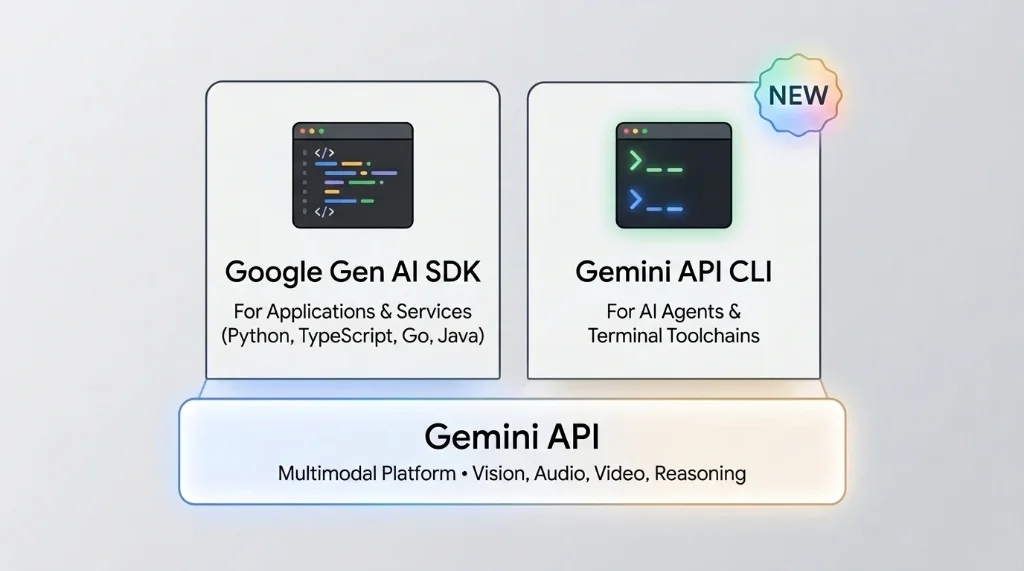
Google releases open-source Gemini API CLI built for coding agents
Published on the Google AI Studio blog on 19 October 2026 and shared on 22 October 2026, the single-binary Rust tool gives coding agents and developers progressive terminal access to Gemini text, image, video, audio, embedding and research APIs without MCP schema overhead.

03CreativeIdeogram
Ideogram launches Ideogram Vector for native text-to-SVG and raster vectorisation
Ideogram’s first native vector model (ideogram-vector-1) generates editable SVG files with clean bezier paths, smooth gradients and sharp typography directly from text prompts or existing raster images in the web app and API.
04ProductOpenAI
OpenAI makes the Decisions API generally available for low-latency classifiers and rubrics
Powered by gpt-6-luna, POST /v1/decisions evaluates up to 400 bounded yes-or-no, multiple-choice or scored rubric questions per request up to 10 times faster than the Responses API, with zero output token charges.
Spotted an error? Email aiforsuccess.in+compass@gmail.com or tag @ai_for_success on X