

ResearchMicrosoftConfirmed
Story 8 of 11 in the Thursday 22 October editionMicrosoft AI publishes MAI-DxO sequential diagnosis study in Science and open-sources SDBench
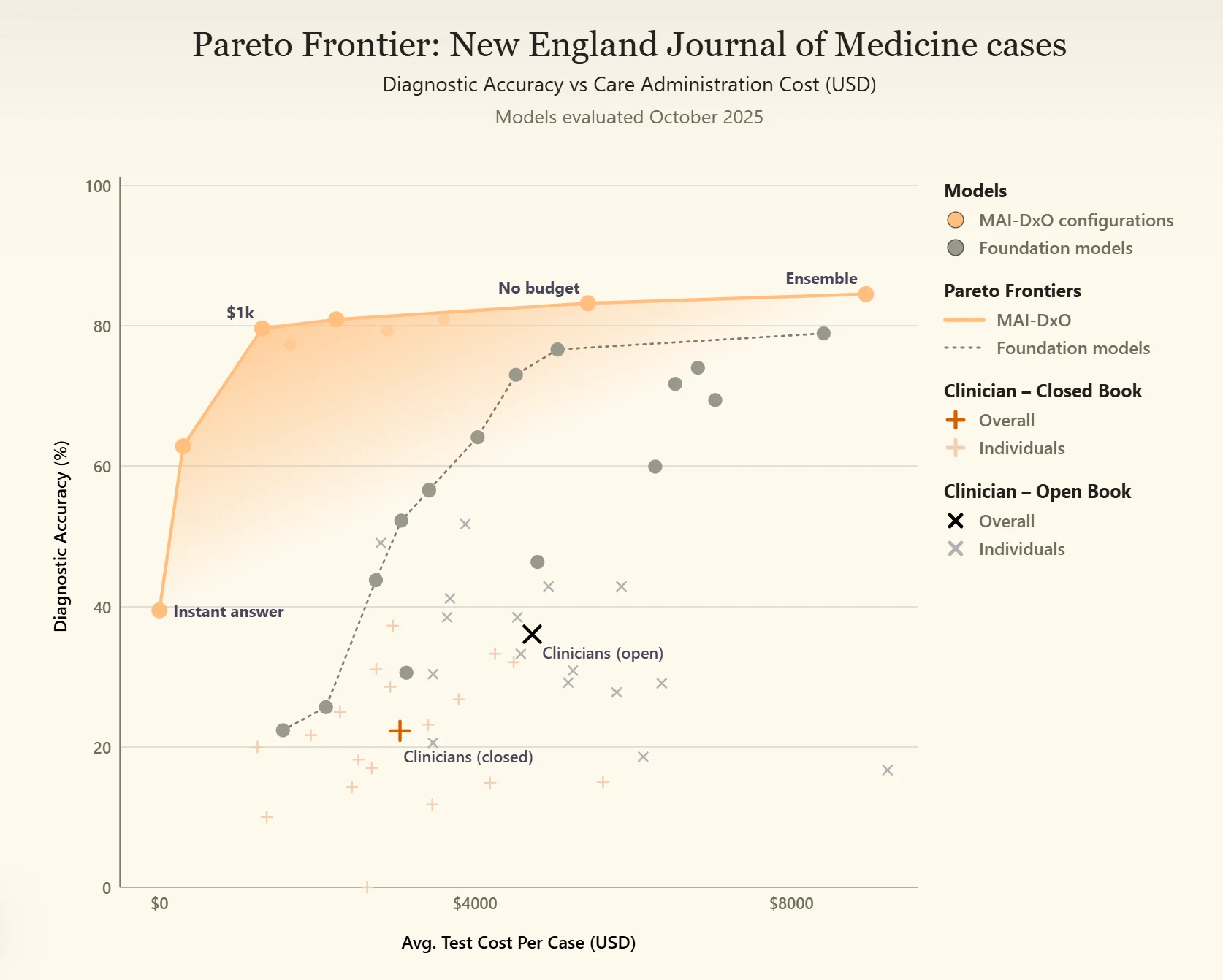
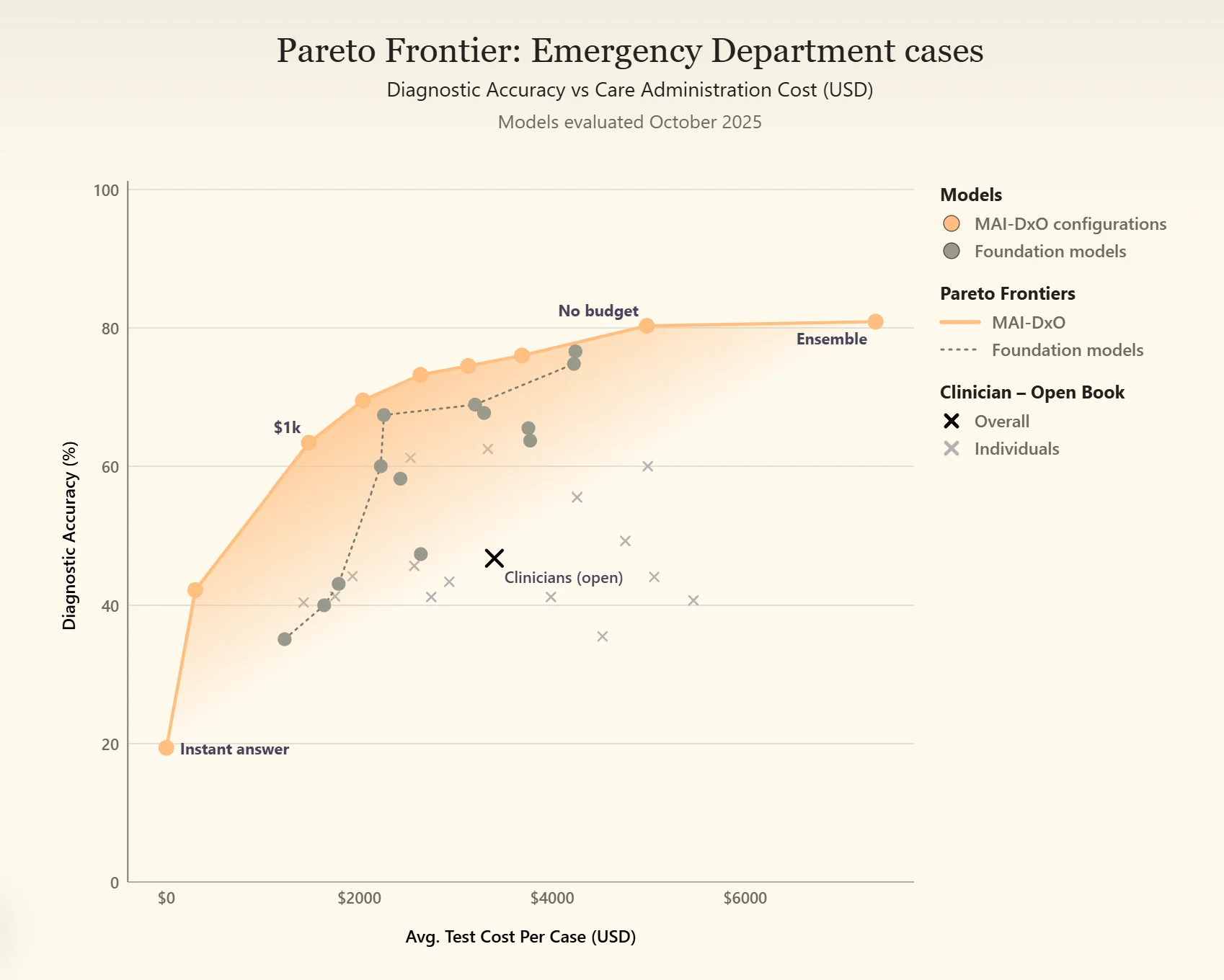
Simulating a panel of debating physicians that balances diagnostic value against test spend, the Microsoft AI Diagnostic Orchestrator reached 83% accuracy on complex New England Journal of Medicine cases and 80% on emergency department cases.

 Edited by Ashutosh Shrivastava
22 Oct 2026, 23:55 IST · 2 min read

Microsoft AI has published peer-reviewed studies of the Microsoft AI Diagnostic Orchestrator (MAI-DxO) in Science (doi:10.1126/science.aeh7930) and BMJ Digital Health and AI, alongside the open-source Sequential Diagnosis Benchmark (microsoft.github.io/sdbench).
Multi-agent debate and cost control
Unlike static medical benchmarks such as USMLE where all patient findings are handed to a model at once, SDBench forces diagnostic systems to start from an initial complaint, ask follow-up history questions and order laboratory or imaging tests sequentially while tracking cumulative US healthcare test costs.
MAI-DxO wraps frontier language models in a structured virtual panel of five specialist roles: hypothesis generation, test selection, devil’s-advocate challenge, cost stewardship and quality checklist review. Across rounds of chain-of-debate reasoning, the panel updates a differential diagnosis and weighs expected information gain against the dollar cost of each test before committing to a final diagnosis.
Clinical evaluation next steps
On 304 New England Journal of Medicine (NEJM) clinicopathological cases, MAI-DxO achieved 83% diagnostic accuracy compared with 22% for 21 practising US and UK physicians working without reference materials (3.7 times as accurate) and 36% for physicians with textbooks and internet search (2.3 times as accurate); a cost-constrained configuration reached 81% at less than half the test spend. Microsoft AI is now launching a prospective clinical study with Beth Israel Deaconess Medical Center in Boston.
Sources
- PrimaryMicrosoft AI: Building Towards Medical Superintelligencemicrosoft.ai
- OfficialScience: Sequential diagnosis with language modelsscience.org
- OfficialGitHub Pages: Sequential Diagnosis Benchmark (SDBench)microsoft.github.io
- On XMustafa Suleyman (@mustafasuleyman) on Xx.com
The rest of the day
Read the whole day
01InfraAnthropic
Anthropic-managed Claude Platform becomes generally available on Google Cloud
Google Cloud customers can now access the full Anthropic-managed Claude Platform, including Managed Agents, Agent Skills and zero-day model launches, while authenticating with Google Cloud IAM and retiring Google Cloud spend commitments.
02Coding agentGoogle
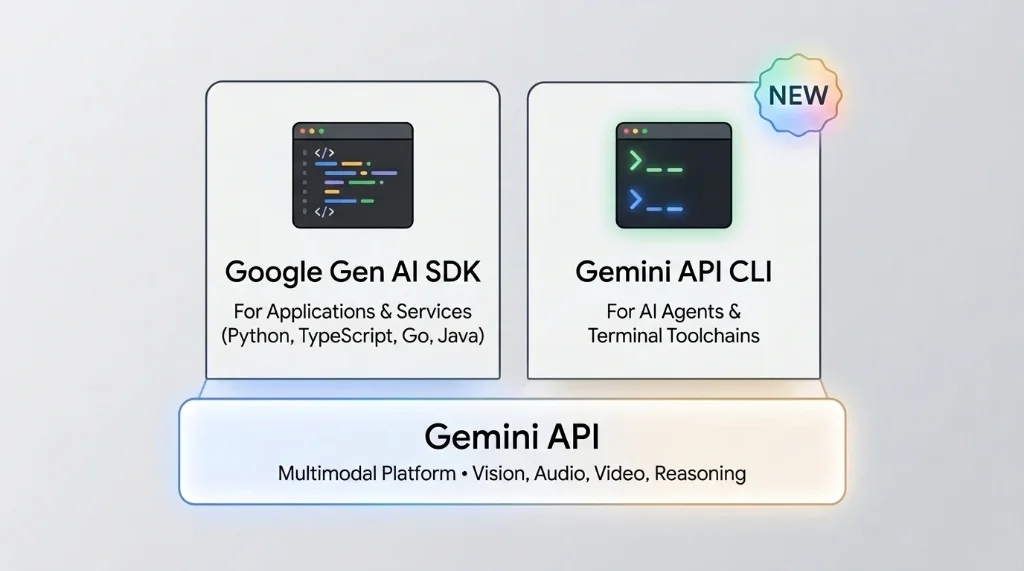
Google releases open-source Gemini API CLI built for coding agents
Published on the Google AI Studio blog on 19 October 2026 and shared on 22 October 2026, the single-binary Rust tool gives coding agents and developers progressive terminal access to Gemini text, image, video, audio, embedding and research APIs without MCP schema overhead.

03CreativeIdeogram
Ideogram launches Ideogram Vector for native text-to-SVG and raster vectorisation
Ideogram’s first native vector model (ideogram-vector-1) generates editable SVG files with clean bezier paths, smooth gradients and sharp typography directly from text prompts or existing raster images in the web app and API.
04ProductOpenAI
OpenAI makes the Decisions API generally available for low-latency classifiers and rubrics
Powered by gpt-6-luna, POST /v1/decisions evaluates up to 400 bounded yes-or-no, multiple-choice or scored rubric questions per request up to 10 times faster than the Responses API, with zero output token charges.
Spotted an error? Email aiforsuccess.in+compass@gmail.com or tag @ai_for_success on X