

InfraOpenAIConfirmed
Story 6 of 9 in the Monday 2 November editionOpenAI details Pando Git backend serving nearly 1 PB a day to Codex agents
Published on 2 November 2026, OpenAI’s custom distributed Git storage engine replaces global reference locks with per-branch causal consistency and trims median monorepo push latency by almost five times.

 Edited by Ashutosh Shrivastava
3 Nov 2026, 09:45 IST · 2 min read
OpenAI engineering published the architecture of Pando on 2 November 2026, detailing how it rebuilt internal Git hosting after parallel Codex coding agents pushed reliability on its legacy monorepo backend below 90%. Conventional replicated Git servers serialise reference updates through three-phase commits or a shared write-ahead log, turning millions of short-lived agent branches into a global lock bottleneck and inflating reference advertisements past 100 MiB.
Pando separates immutable packfiles in horizontally scalable blob storage from per-branch metadata logs enforced under causal consistency rather than global linearisability. When a developer or Codex worker pushes to a feature branch, Pando advertises only a designated trunk branch so clients upload thin deltas, keeping median push packfiles below 20 KiB and 99th-percentile pushes under 3 MiB. Fetch traffic reads immutable cached packfiles directly, hitting local disk caches on more than 99% of requests.
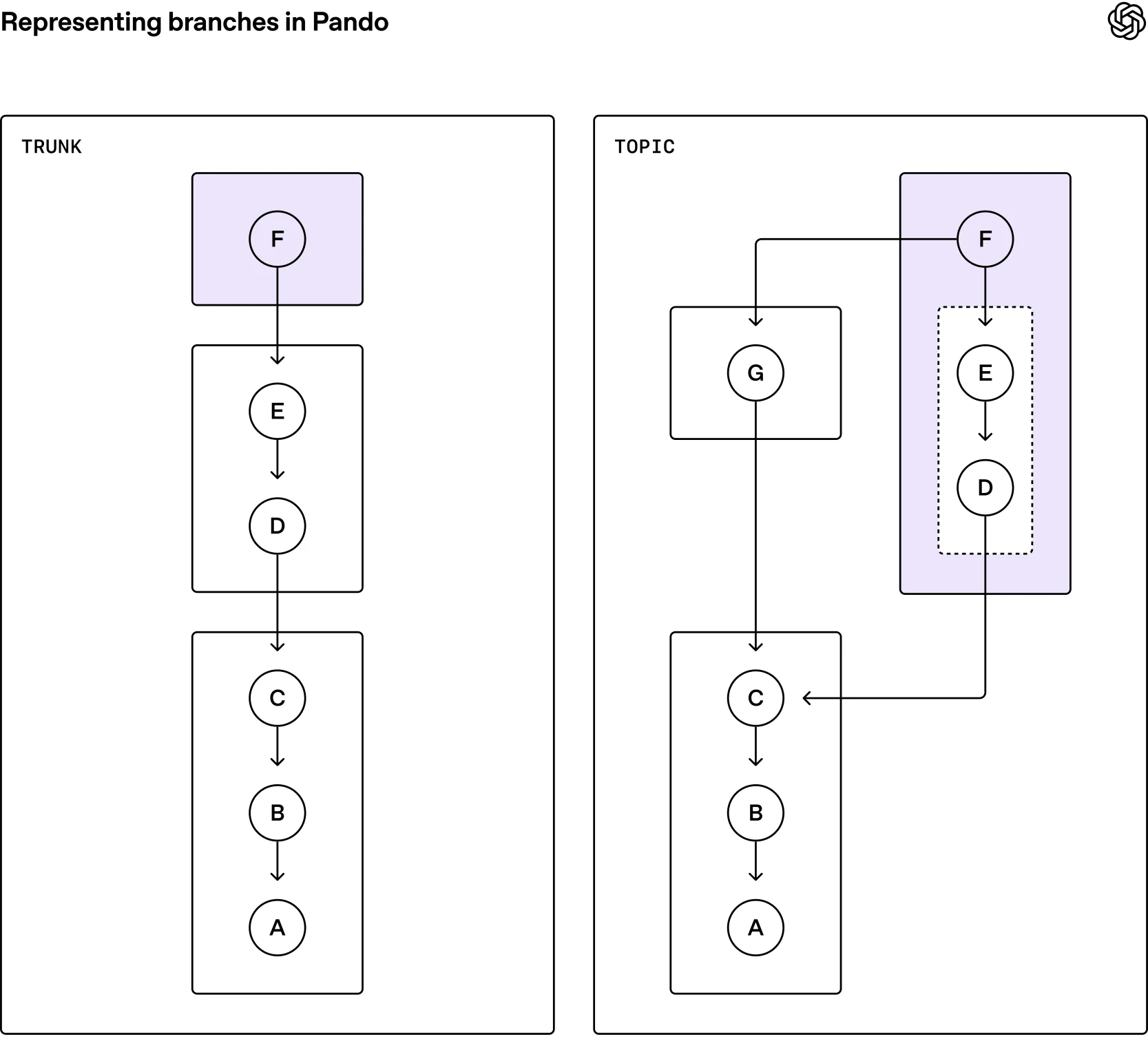
OpenAI has contributed client-side patches including parallel pack indexing and explicit force-with-lease object negotiation upstream to Git, while keeping the Pando server infrastructure internal.
Key numbers
- Nearly 5 times lower median Git push latency (roughly an 80% reduction).
- Nearly 1 PB of Git data served per day, peaking above 57 TB in a single hour.
- Under 20 KiB median push packfile size and under 3 MiB at the 99th percentile.
- Over 99% local disk cache hit rate on packfile fetches.
Sources
- PrimaryScaling Git at OpenAI engineering postopenai.com
- On XOpenAI Developers Pando announcement on Xx.com
The rest of the day
Read the whole day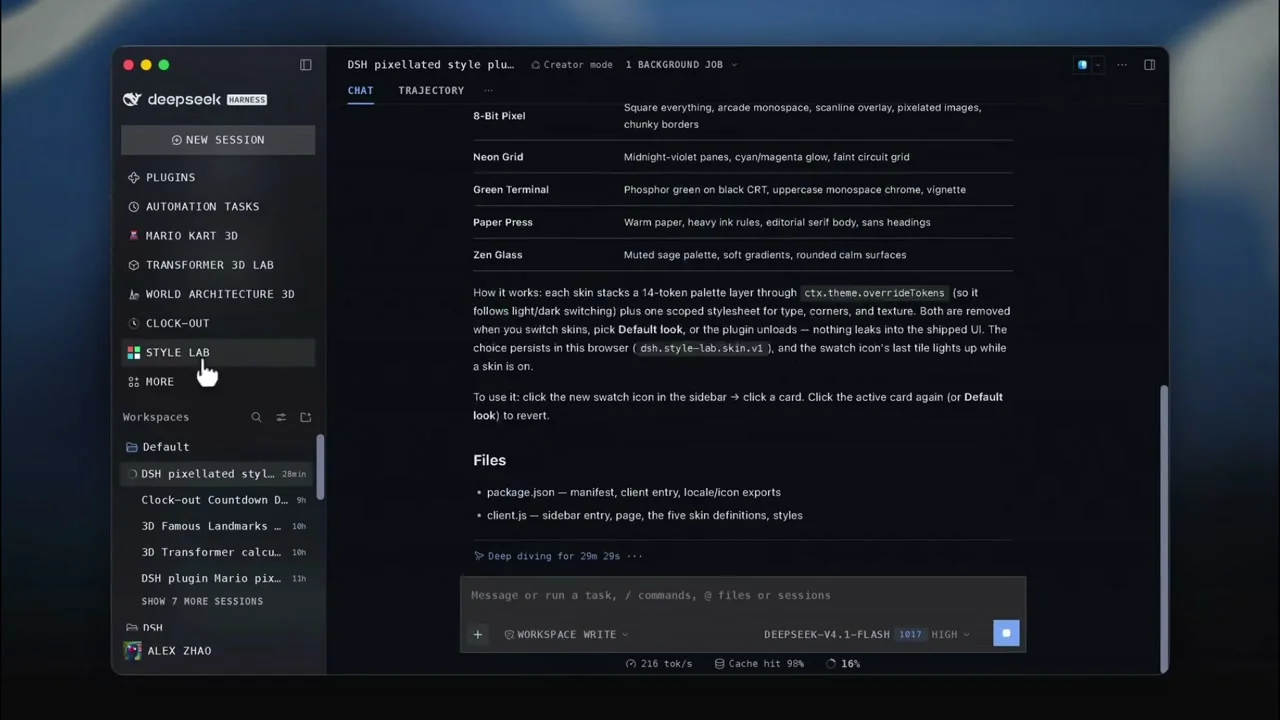
01Coding agentDeepSeek
DeepSeek Harness adds Creator Mode for building live UI plugins in chat
Announced on 2 November 2026, the fourth session mode in DeepSeek’s MIT-licensed desktop and local web agent harness generates, lints, themes and hot-installs custom interface plugins inside an active workspace.

02Open sourceDeep Principle
Deep Principle releases Hydrogen-1.0 open-weight model for chemistry and materials
Built on Z.ai’s GLM-5.3 and released under the MIT licence on 2 November 2026, Hydrogen-1.0 pairs laboratory notebook trajectories with reinforcement learning across molecular, materials and life-science workflows.
03ResearchOpenAI
OpenAI introduces LifeVal to test AI agents on everyday household and civic tasks
Grounded in government time-use diaries and a survey of 3,995 people, the evaluation published on 2 November 2026 measures browser use, computer use and connectors across seven personal-life domains.

04ModelMeituan
Meituan launches LongCat-2.5 with 1.6T parameters and discrete visual tokens
Detailed in a 1 November 2026 technical report and opened on the LongCat API on 2 November 2026, the Mixture-of-Experts model activates roughly 48B parameters per token across text and native-resolution images.
Spotted an error? Email aiforsuccess.in+compass@gmail.com or tag @ai_for_success on X