


ResearchIntologyConfirmed
Story 10 of 12 in the Tuesday 3 November editionIntology benchmarks its Locus autonomous R&D system across molecular drug discovery
Under matched GPU budgets, Locus outperformed Codex, Claude Code and Boltz-2.1 baselines across bespoke property prediction, low-data IC50 potency adaptation and antibody binder design.

 Edited by Ashutosh Shrivastava
4 Nov 2026, 09:30 IST · 2 min read

Intology published an evaluation on 3 November 2026 applying its autonomous AI R&D platform Locus to three computational drug-discovery problems marked by small noisy datasets and costly simulations: molecular property prediction from scratch, low-data small-molecule potency adaptation and in silico antibody binder workflow design. Locus proposes hypotheses, runs parallel GPU experiments and updates its search strategy from validation feedback.
On a proprietary molecular property task where single-molecule CPU simulations take hours, Locus autonomously generated nearly 1 million simulation-labelled synthetic molecules and scaled custom architectures to billions of parameters, clearing the held-out test error target where Codex (GPT-6 Astra High) and Claude Code (Opus 5.5 Max) fell short. Adapting Boltz-2 across six ChEMBL IC50 targets (BChE, CYP19A1, EGFR, MAO-B, MAP4K1 and PLK4) under a 12 H100 GPU-hour cap per run, Locus achieved a 0.622 mean Spearman rank correlation on structurally and temporally held-out ligands, ahead of Codex (GPT-6 Astra Max, 0.569), Claude Code (Opus 5 Max, 0.450) and the closed Boltz-2.1 API (0.225), with smaller validation-test generalisation gaps.
On in silico antibody binder design scored by OpenDDE ipSAE (run with GPT-5.6 Sol High after biological safety classifiers blocked Opus and GPT-6 Astra), Locus improved BoltzGen/Boltz-2 and ESMC/ESMFold2 pipelines without fine-tuning weights, reaching 0.797 mean top-two ipSAE on ESM targets (0.758 Codex, 0.704 ESMFold2) and matching ESMFold2’s full-pool peak in 16.7% of the candidate budget (6 times more candidate-efficient). Intology’s 12 evaluation charts are rendered interactively in HTML; wet-lab validation and commercial pricing were not announced.
Sources
- PrimaryAutomating AI R&D for Molecular Discoveryintology.ai
The rest of the day
Read the whole day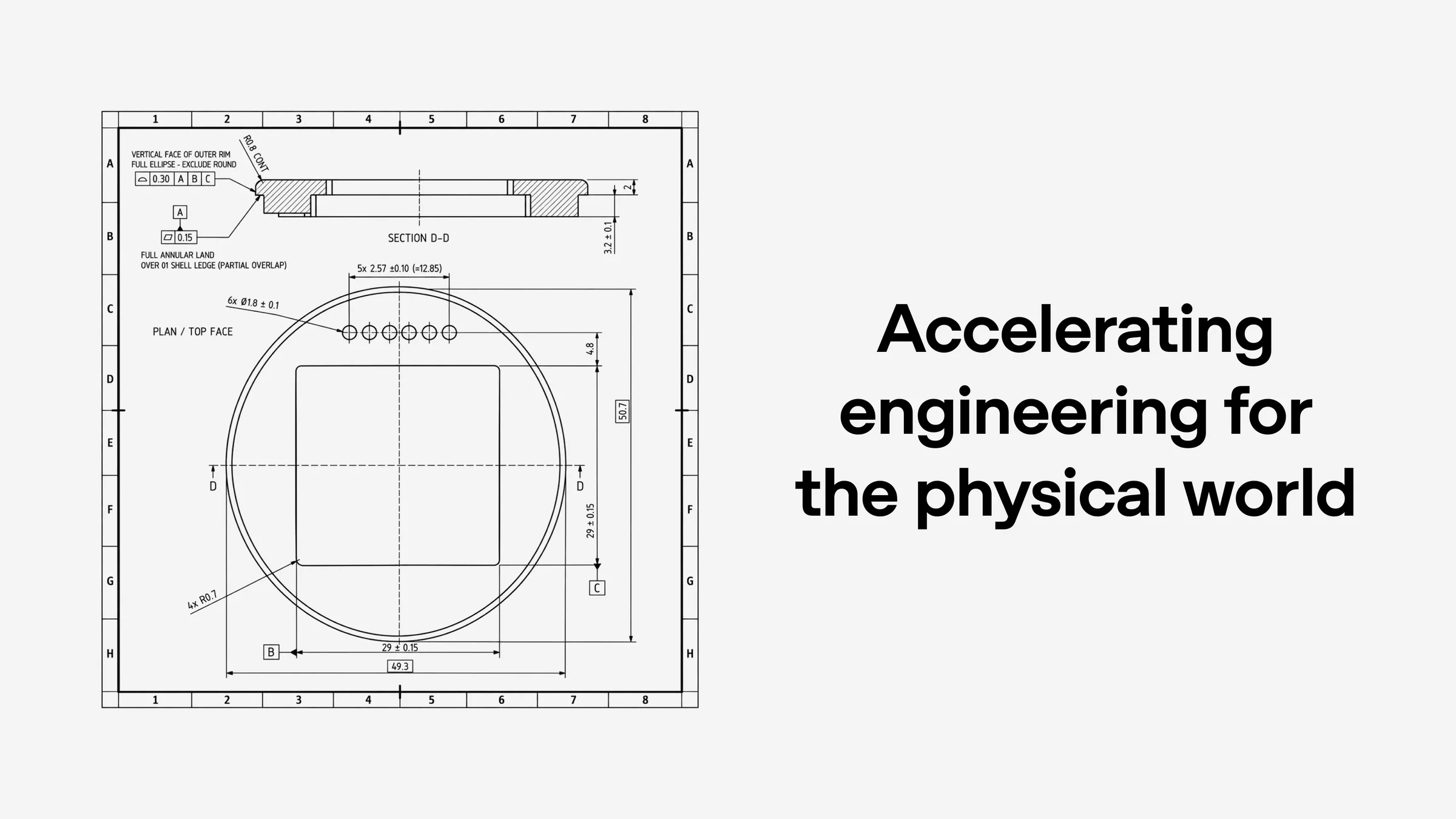
01ProductOpenAI
OpenAI details physical hardware engineering with GPT-6 Astra and BenchCAD 2.0
Two OpenAI engineers designed a working handheld Codex voice prototype with GPT-6 Astra in under a week, while an internal model reached 0.875 on BenchCAD 2.0.

02ProductGoogle
Google Labs expands its Dreambeans personalised storytelling app to India
Adults aged 18 and over in India can generate daily visual story cards on Android, iOS and the web across 14 languages using selected Google app context.

03Open sourceSarvam AI
Sarvam AI open-sources Sarvam Prism for 44 ms single-pass enterprise decisions
Built on Sarvam 105B under the Apache 2.0 licence, the calibrated decision model scores candidate options in one forward pass on a single NVIDIA B200 GPU.
04ModelOpenRouter
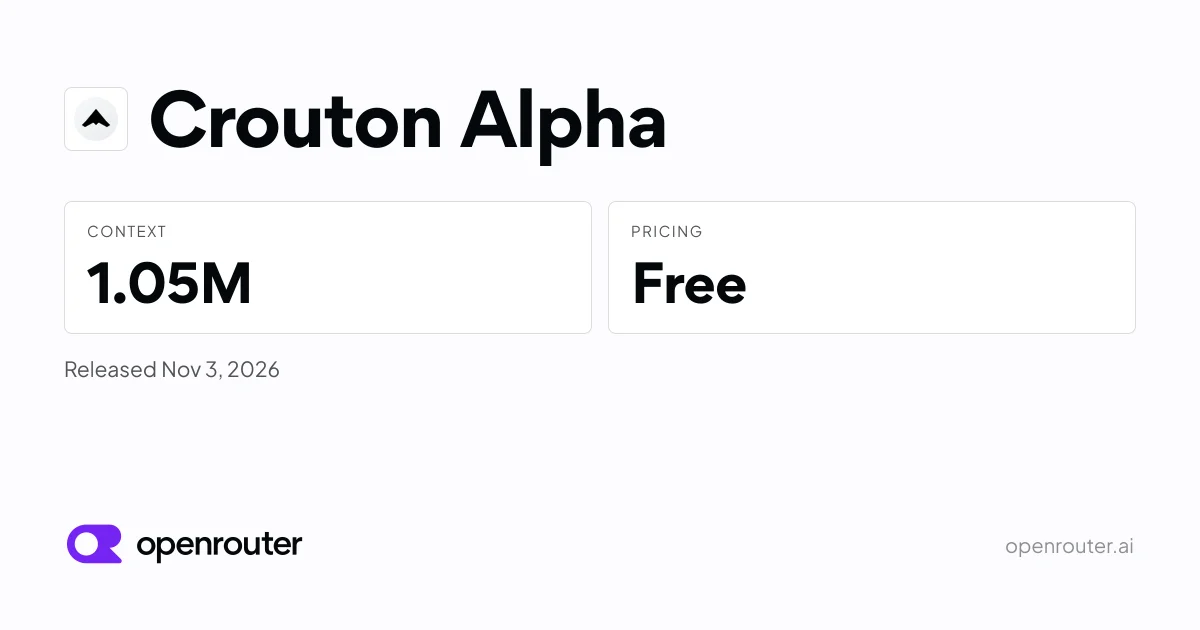
OpenRouter launches free 1M-context multimodal stealth model Crouton Alpha
Released on 3 November 2026 under stealth/crouton-alpha, the undisclosed provider’s reasoning model accepts text, image, audio, video and file inputs with zero prompt logging.
Spotted an error? Email aiforsuccess.in+compass@gmail.com or tag @ai_for_success on X