RoboticsSkild AIConfirmed
Story 7 of 14 in the Monday 9 November editionSkild AI releases Steel GPU rigid-body physics solver for the open-source Newton engine
Integrated into Newton 1.8 RC with a companion WebGPU browser runtime, Steel groups varied robot morphologies on GPU warps to run 3.8 times faster than NVIDIA PhysX.

 Edited by Ashutosh Shrivastava
10 Nov 2026, 09:50 IST · 1 min read
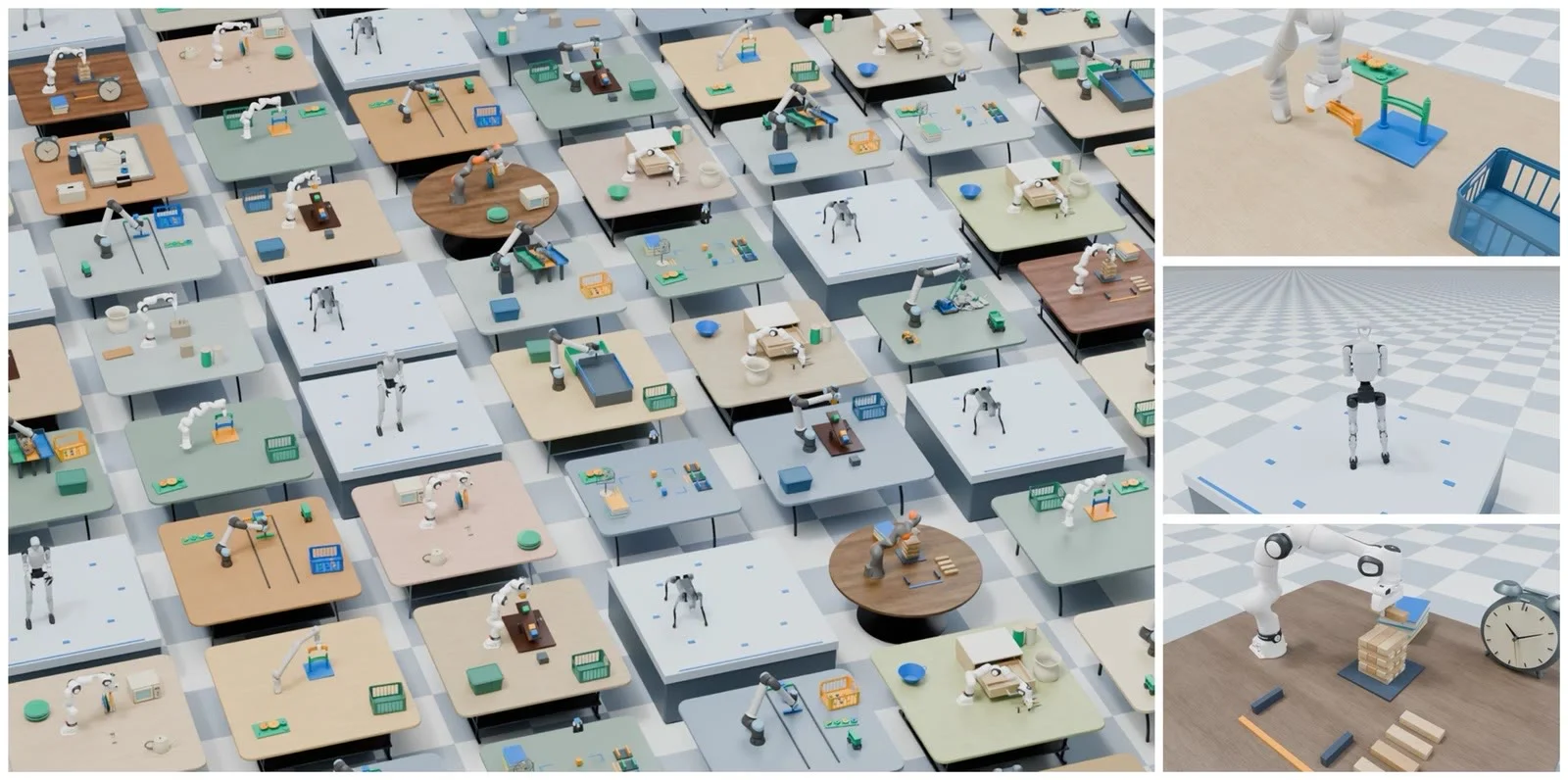
Skild AI released Steel (Scalable Throughput-optimized Engine for Embodied Learning) on 9 November 2026 as a GPU rigid-body dynamics solver inside Newton 1.8 Release Candidate, the open-source physics engine co-developed by NVIDIA, Google DeepMind and Disney Research under the Linux Foundation. Traditional GPU simulators run fastest when thousands of parallel environments contain identical robots and identical object counts, but stall under warp divergence when training generalist policies across mixed arms, hands, quadrupeds and humanoids.
Heterogeneous batching and throughput
Steel eliminates that bottleneck by grouping articulations with matching joint counts across disparate scenes and dynamically routing narrow-phase collision contacts per environment. Skild AI also coupled the rigid-body solver with Material Point Method (MPM) sand, finite-element cloth and deformable cables, alongside an interactive steel-webgpu solver that runs directly in web browsers. Skild AI’s 20-task benchmark chart is rendered in HTML on its blog rather than as a static image: across 20 heterogeneous robotics environments, Steel reaches 3.8 times the geometric-mean simulation throughput of NVIDIA PhysX, compared with 2.9 times for MuJoCo Warp.
Sources
- PrimarySteel: High-Throughput Heterogeneous Physics for Embodied AIskild.ai
- OfficialNVIDIA CoRL robotics simulation announcement featuring Skild AIblogs.nvidia.com
- On XSkild AI (@SkildAI) Steel release thread on Xx.com