The new voice model is in SpaceXSI’s Voice Agent API at the same per-minute price as Grok Voice 2.0, and already runs in Tesla cars and Starlink’s call centres.
Image: SpaceXSISpaceXSI’s launch image for Grok Voice 3.0
Lead storySpaceXSI’s Grok Voice 3.0 tops Artificial Analysis’s speech-to-speech index
Edited by Ashutosh ShrivastavaStory 1 of 7 · 2 min read
SpaceXSI, which makes Grok, released Grok Voice 3.0 on 14 October and announced it on X at 22:34 IST. It is a speech-to-speech model: it hears a caller’s voice and answers in speech, for uses such as customer support lines. SpaceXSI calls it the world’s most intelligent speech-to-speech model and says it replies in under one second.
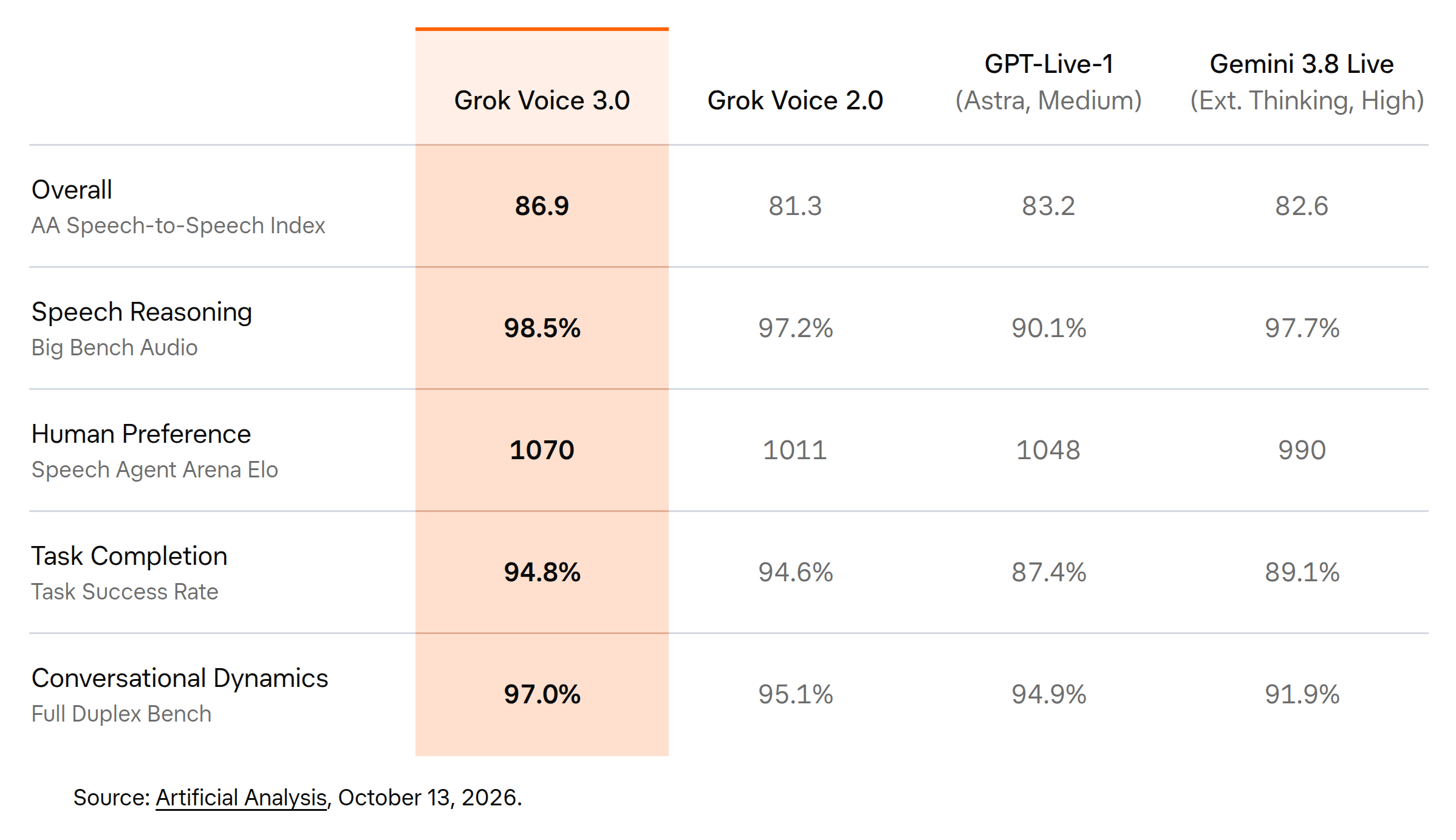
In Artificial Analysis’s independent tests, Grok Voice 3.0 ranks first on the Speech-to-Speech Index with 86.9. The index blends four measures: reasoning over speech, τ-Voice, and which model people prefer and how often it finishes the task in blind head-to-head calls.
Artificial Analysis results as published by SpaceXSI, with data from 13 October 2026Image: SpaceXSI
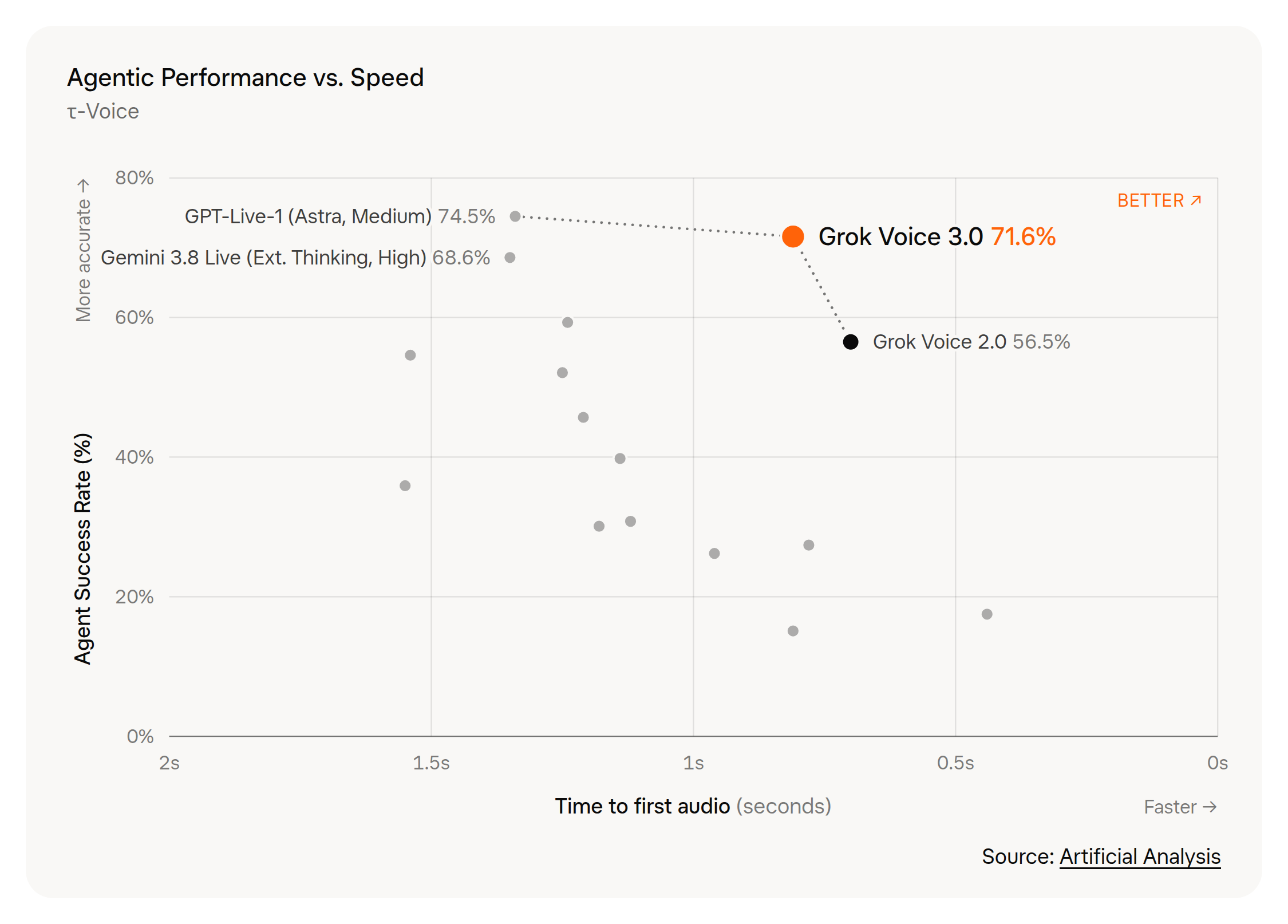
τ-Voice tests an agent on support calls with background noise, interruptions and a range of accents. GPT-Live-1 (Astra) still scores higher on it, but SpaceXSI says Grok Voice 3.0 comes close at 40% lower latency.
τ-Voice success rate against time to first audio, from Artificial AnalysisImage: SpaceXSI
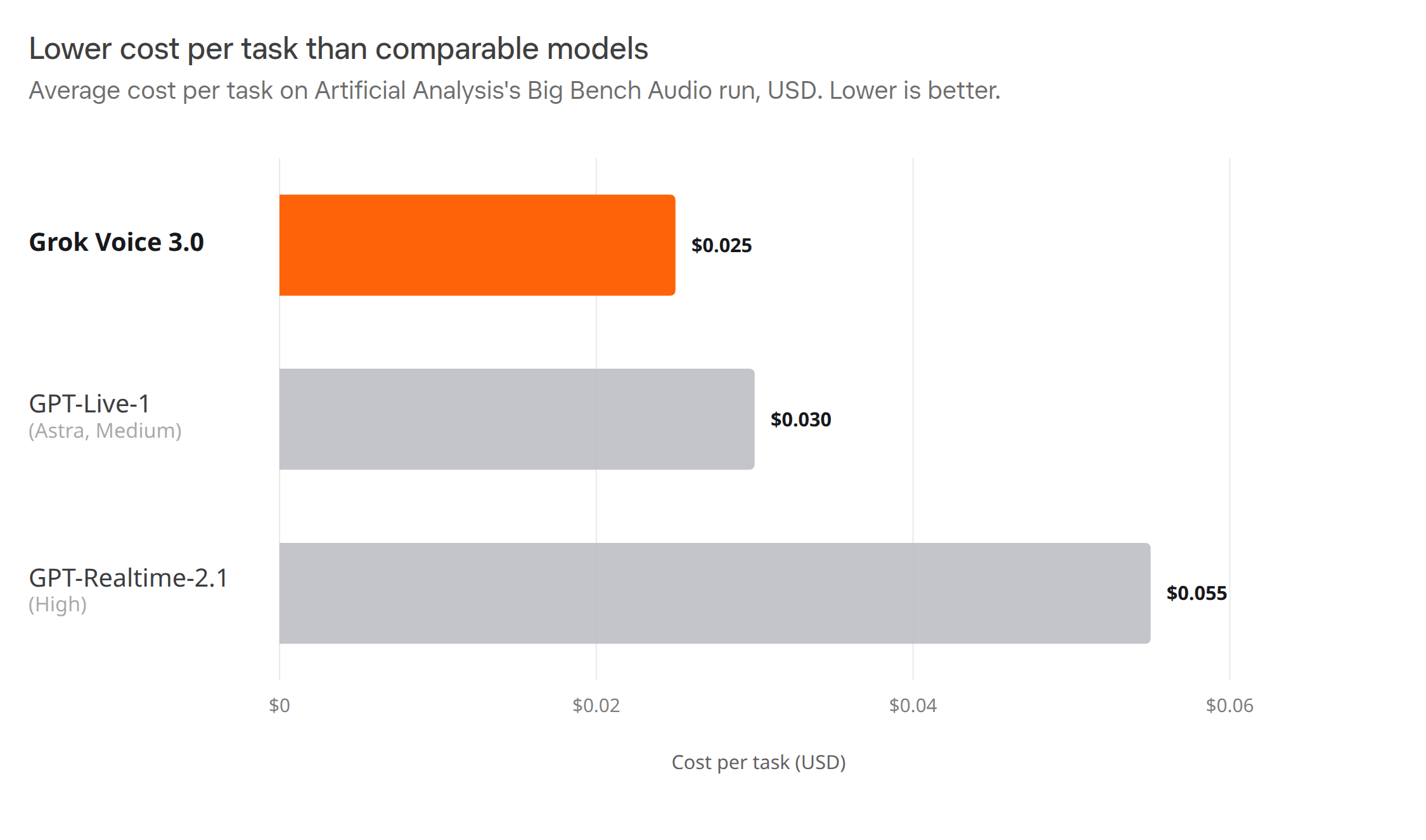
Artificial Analysis also puts its average cost per task below GPT-Live-1 (Astra, Medium) and GPT-Realtime-2.1. On EVA-Bench, ServiceNow’s benchmark for enterprise voice agents, SpaceXSI reports the highest accuracy score, 74%.
Cost per task on Artificial Analysis’s Big Bench Audio run, in US dollarsImage: SpaceXSI
In use
SpaceXSI says the model handles millions of conversations a day in Tesla cars, where drivers use it hands-free, and it powers the voice mode of Grok Bot. Starlink’s call centres take 20,000 calls a day with Grok Voice: roughly 70% are resolved without a person stepping in, and one in four sales calls closes with a purchase on the call.
Price
Grok Voice 3.0 costs $0.08 a minute ($4.80 an hour) in the Voice Agent API, the same as Grok Voice 2.0, which SpaceXSI’s pricing page now lists as deprecated. Apps that call grok-voice-latest get Grok Voice 3.0 without any code change.
Anthropic has reworked the Claude Code desktop app for developers who keep many coding sessions going side by side. Its @ClaudeDevs account announced the change on X at 00:31 IST on 15 October. Anthropic says new sessions now open much faster, a job can be divided among several sessions, and the status of each one stays in view.
The video in the post shows the new layout. The sidebar sorts sessions under Needs input, Working and Completed, so a session waiting for an answer stands out, and sessions move between the groups as their state changes. Sessions that share out a larger task sit indented under the session they came from. A new-session screen lists the user’s projects, offers an environment picker and has one box to describe a task or ask a question.
Anthropic hasn’t published release notes or a blog post for the update, and the post gives no version number or rollout details.
Meta built an internal coding scaffold, a tool that writes and runs analysis code, on Muse Spark 1.3 and Muse Wonder, the model it introduced on 12 October. Medical researchers in fields such as cardiology and infectious disease used it for four weeks to brainstorm hypotheses, write and run all the code and draft manuscripts, keeping every scientific decision for themselves. It could reach public data and a licensed database of five million de-identified electronic health records.
The ten manuscripts range from sports medicine to oncology. One, a case series on the fungus Cladophialophora bantiana, found 21 patients with it in brain or lung samples. Each paper had feedback from peers, a biostatistician’s review and summaries from independent experts Meta contracted. Participants reported up to ten times their usual productivity in the best cases.
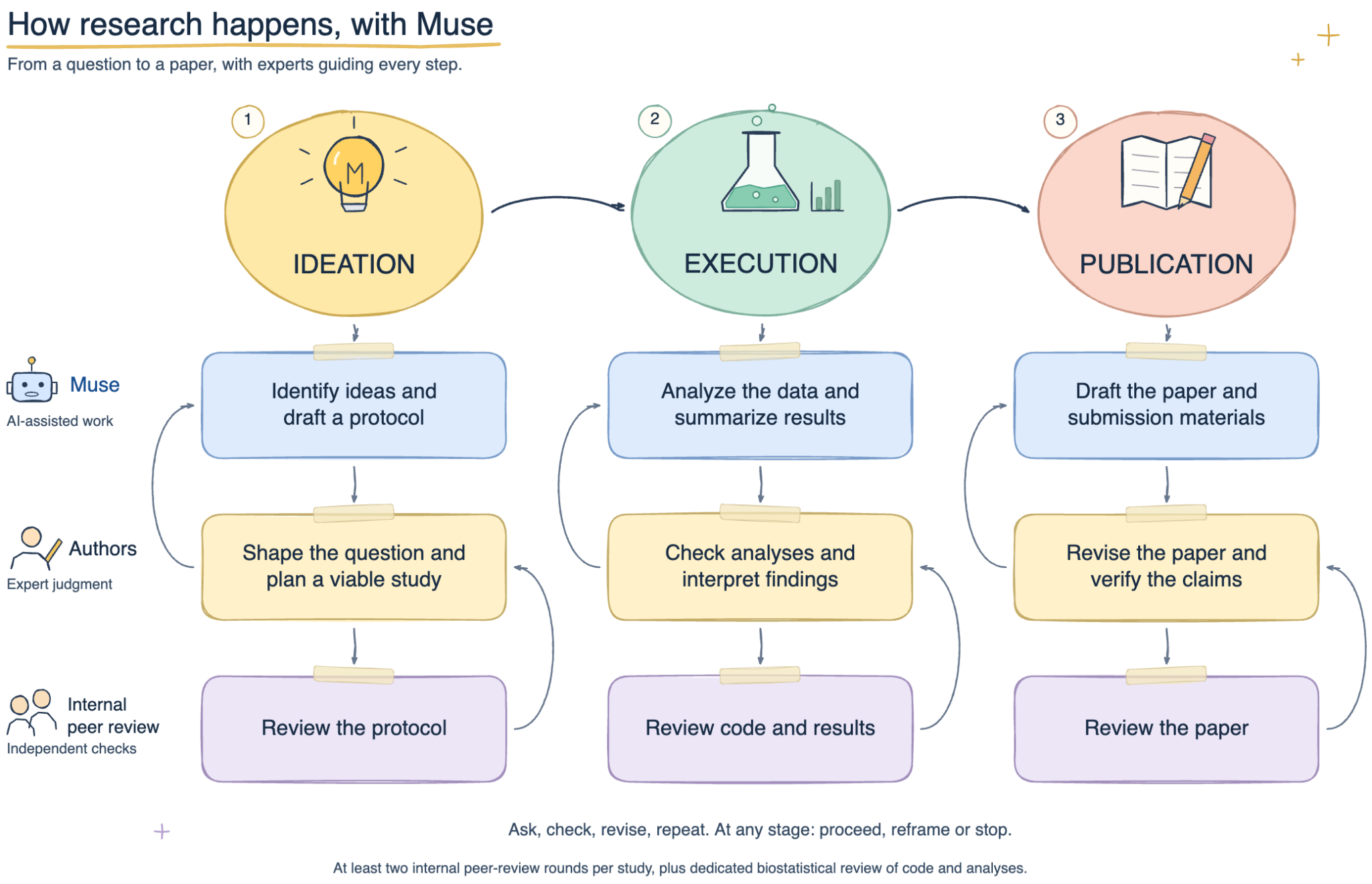
Figure 1 of the researchers’ report, on how Muse, the authors and reviewers split the workImage: Meta
What the researchers found
In a report Meta hosts, the researchers call the system fast but unevenly reliable. At times it was confidently wrong with nothing to warn a reviewer, and more than once it said data was missing when it was in the dataset. It put mortality from Staphylococcus aureus bacteremia, a bloodstream infection, at 1%; an infectious disease doctor knew published studies report closer to 30%, which led to an audit of how deaths were recorded.
The studies are retrospective, using existing records only. Meta says future work on larger datasets could produce hypotheses to test in prospective trials. It hasn’t said whether researchers outside the project will get the tool.
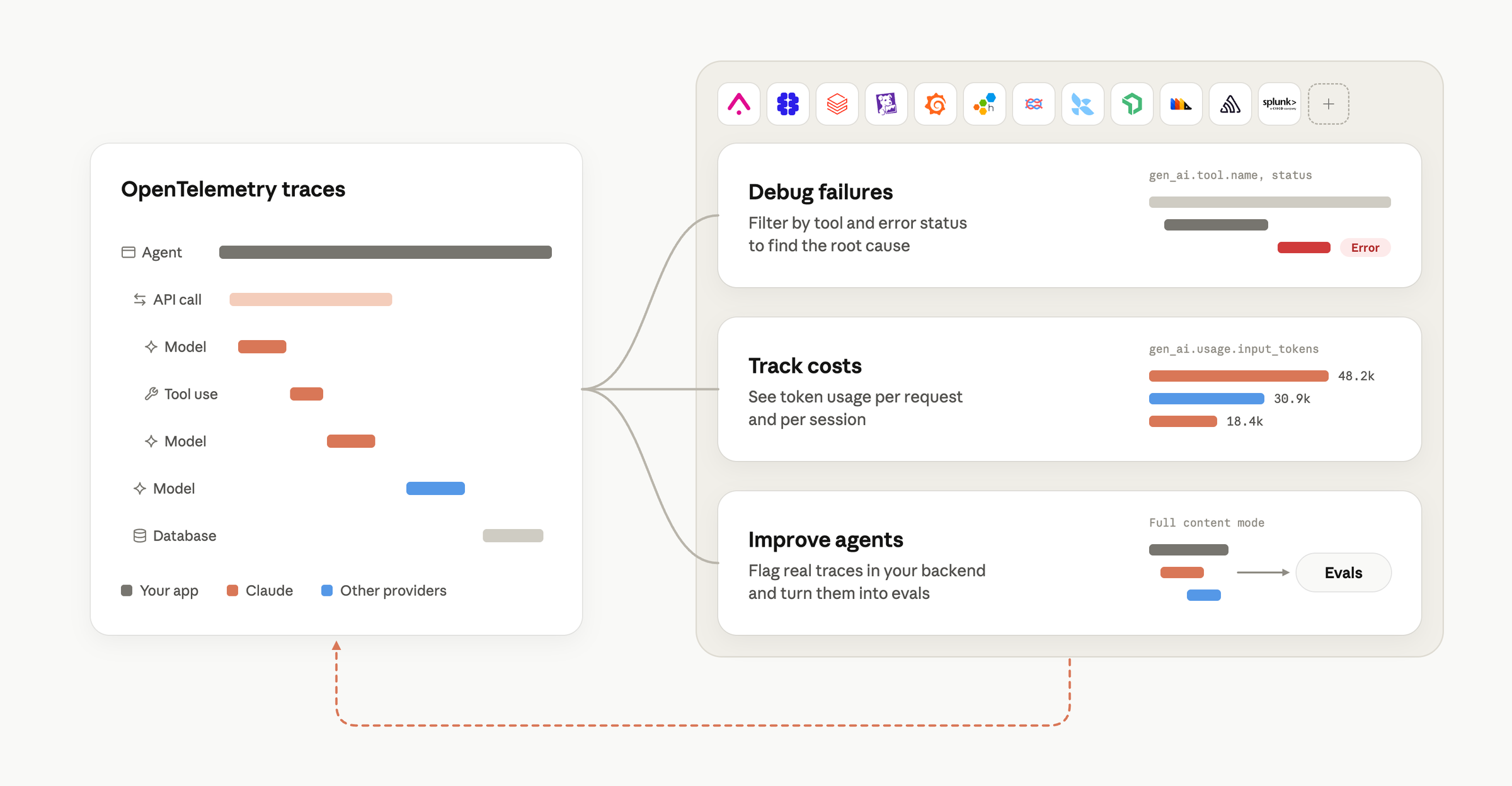
Anthropic opened the public beta on 14 October. OpenTelemetry is a vendor-neutral standard for monitoring data: each request produces a trace, made of spans, one for every step such as a model call or a tool use. Because Claude’s spans use OpenTelemetry’s naming conventions for generative AI, tools that follow them recognise the data with no extra configuration.
There are two ways to collect traces. An admin adds a destination in the Claude Console, and the API sends spans for Messages API requests and for each Claude Managed Agents turn, model run and server tool. The Claude SDK, in Python, TypeScript, C#, Go, Java, PHP and Ruby, adds spans for tools the application runs itself.
Anthropic’s diagram of how Claude Platform traces reach observability toolsImage: Anthropic
By default, spans carry IDs, timing, status, token counts and the names of agents and tools. A Full content mode adds prompts and responses, but organisations with HIPAA, FERPA or K-12 restrictions get only metadata at Console destinations.
Anthropic lists 12 partner tools, including Datadog, Grafana Cloud, Honeycomb, New Relic and Sentry, and any tool with a standard OTLP endpoint works. API tracing runs on the Claude Platform and Claude Platform on AWS. Delivery is best effort, so Anthropic points to its Usage API for complete usage counts. Neither the announcement nor the docs mention a charge.
OpenAI notified developers on 14 October that five GPT-4 series snapshots will be removed from its API on 14 January 2027. Its deprecations page names gpt-6-luna as the replacement for all five, and fine-tuned versions of these models shut down on the same date as their base models.
GPT-4o: gpt-4o-2024-08-06 and gpt-4o-2024-11-20
GPT-4o mini: gpt-4o-mini-2024-07-18
GPT-4.1: gpt-4.1-2025-04-14
GPT-4.1 mini: gpt-4.1-mini-2025-04-14
That gives three months’ notice. The same page sets a minimum of six months for generally available models, unless safety or compliance concerns require a faster timeline, and the notice doesn’t say why this one is shorter.
An earlier batch goes first: on 23 October 2026, OpenAI removes gpt-4o-2024-05-13, gpt-4.1-nano and the older gpt-4 and gpt-4-turbo snapshots, announced on 22 April 2026. Developers can check a model’s shutdown_date field through the List models endpoint, and OpenAI says some may be able to arrange dedicated capacity through its sales team to keep using a model after it shuts down.
Sources
PrimaryDeprecationsdevelopers.openai.com · OpenAI API docs, notice dated 14 October 2026
06InfraNVIDIAConfirmed
NVIDIA commits $250 million of computing to UK research on AI agent safety
The five-year donation of computing access, $50 million a year, will be hosted in the UK by NVIDIA Cloud Partners once providers and terms are agreed.
NVIDIA announced the commitment on 14 October. The donation is computing access worth $50 million a year for five years, set aside for research on the safety and security of AI agents, software that carries out tasks on its own.
Most of it goes to the wider UK AI safety and security research community. Part supports three groups: BOLD, the British Open-Ended Learning and Discovery Lab led by the University of Oxford; SOFAIR, the Science of Fundamental AI Research Lab led by UCL, which explores open source AI architectures; and Imperial College London, whose work includes safety engineering and robotics.
UK-based NVIDIA Cloud Partners will host the computing in the UK, but NVIDIA says provider selection, technical architecture and commercial terms are still to be agreed. The research will cover secure agents, open-model security and defences against real-world threats, including work with NVIDIA’s OpenShell runtime software and its Sentry reference design.
The same day, NVIDIA announced planned investments in five UK startups: Boltz, Foresight, Hiverge, Prima Mente and Riverlane.
OpenAI says an ex-employee copied files on an unreleased device and rejoined Apple
In a court filing on 14 October, OpenAI says a former employee, who joined it from Apple and went back after six months, sent over a hundred highly confidential files about at least one unreleased OpenAI device to his personal accounts, including images and engineering data. OpenAI says it understands he presented its product plans to Apple’s senior leadership. The filing names neither the employee nor the device.