

ResearchAnthropicConfirmed
Story 6 of 9 in the Tuesday 20 October editionAnthropic says Claude designed binders against scorpion neurotoxins
An internal Claude model designed protein binders for five scorpion neurotoxins. Anthropic is releasing the lab measurements, and it does not claim an antivenom.

 Edited by Ashutosh Shrivastava
21 Oct 2026, 10:22 IST · 2 min read
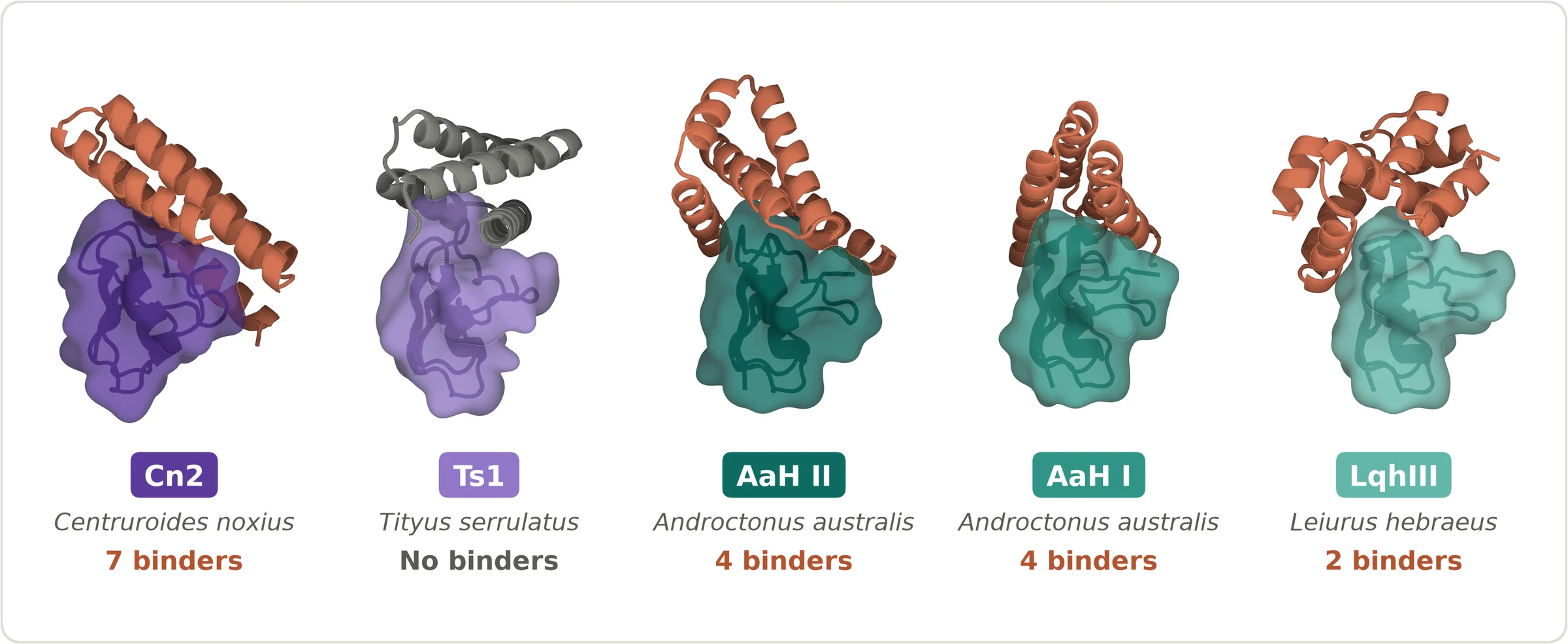
On 20 October 2026 Anthropic reported that an internal research model, running inside Claude Science, designed protein binders against scorpion neurotoxins. A binder is a small protein meant to attach tightly to a target. The five toxins were Cn2, Ts1, AaH I, AaH II and LqhIII. The designs were aimed at the part of each toxin that latches onto sodium channels in nerve cells. Anthropic cites 1.2 million stings or more a year, and more than 3,250 deaths, mostly among children.
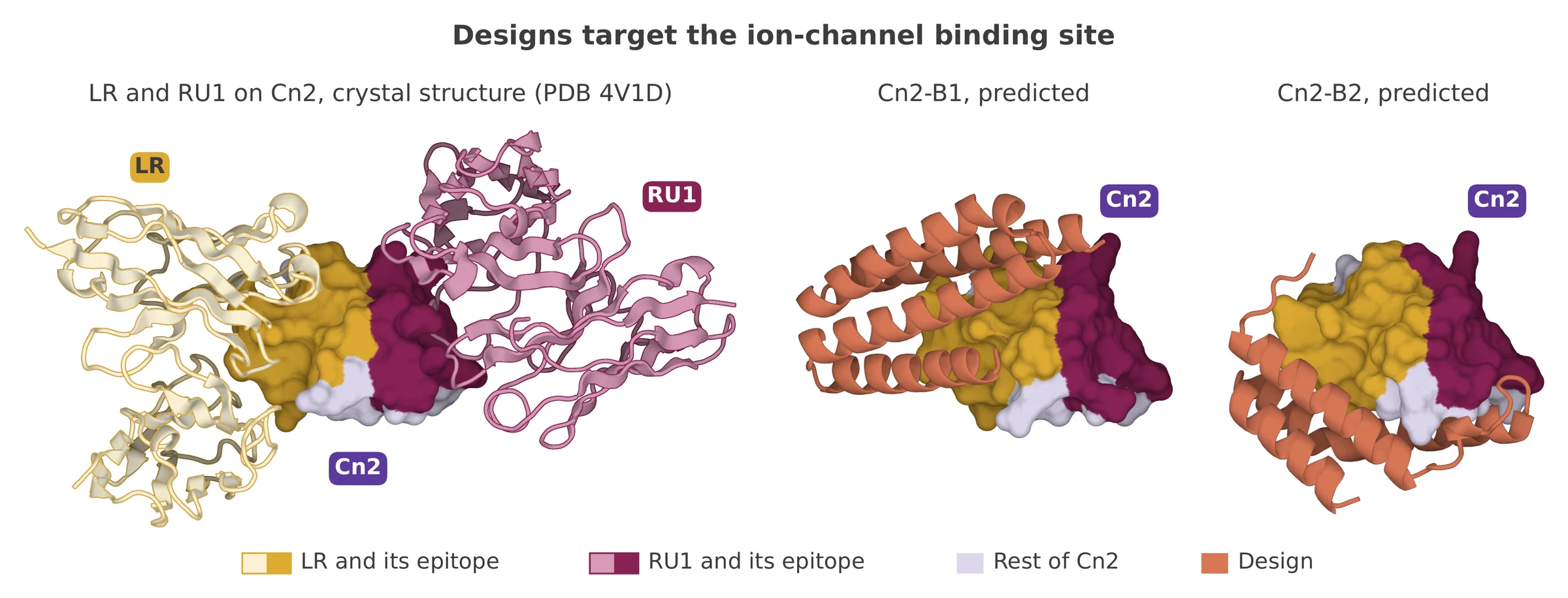
Claude picked the toxin structures and the amino-acid positions to grip, and used 12 design tools. It worked mostly on its own for 64 hours, with four follow-up prompts from the team. Adaptyv Bio and Twist Bioscience then made the designs and measured binding. A design counted only if it bound in every replicate, every measurement was 1 µM or tighter, and it did not stick to an unrelated human protein. LqhIII was tested only at Adaptyv Bio.
Seventeen designs met that bar, each against a single toxin. None of the designs aimed at more than one toxin met it for more than one. Anthropic has not tested whether any binder stops the toxin in cells or in animals, so it does not claim an antivenom. Its two strongest Cn2 binders, Cn2-B1 and Cn2-B2, bound in the single-digit nanomolar range and competed with an antibody, LR, that has been reported to protect mice from Cn2. Anthropic is releasing all 211 tested designs and their binding data.
Sources
- PrimaryHow Claude designed protein binders against scorpion neurotoxinsanthropic.com · Research post, 20 October 2026
- On X@AnthropicAI on X: scorpion neurotoxin bindersx.com · Anthropic’s post linking the research write-up
The rest of the day
Read the whole day
01Open sourceDeepSeek
DeepSeek open-sources DeepInfer, the stack behind V4.1-Flash
DeepInfer is the inference framework behind DeepSeek’s production service, released under Apache 2.0, with a separate library for turning API requests into tokens.

02ModelMistral AI
Mistral AI’s Voxtral 3 runs listening, tools and speech as one pipeline
Voxtral 3 is a family of speech-to-text and text-to-speech models plus a voice agent SDK, on Mistral’s API or arranged for a company’s own machines.

03ModelElevenLabs
ElevenLabs adds Eleven Realtime v1 Mini and Max for voice agents
Mini is the default speech-to-speech model and Max handles harder instructions.

04ProductPerplexity
Perplexity Computer can now run fully local on Apple silicon Macs
The model, the harness and the task can all run on the Mac.
Spotted an error? Email aiforsuccess.in+compass@gmail.com or tag @ai_for_success on X