Built on the Gemini family, Genie 4 generates interactive 3D simulations on the fly with natural-language steering, native audio and multi-agent dialogue.
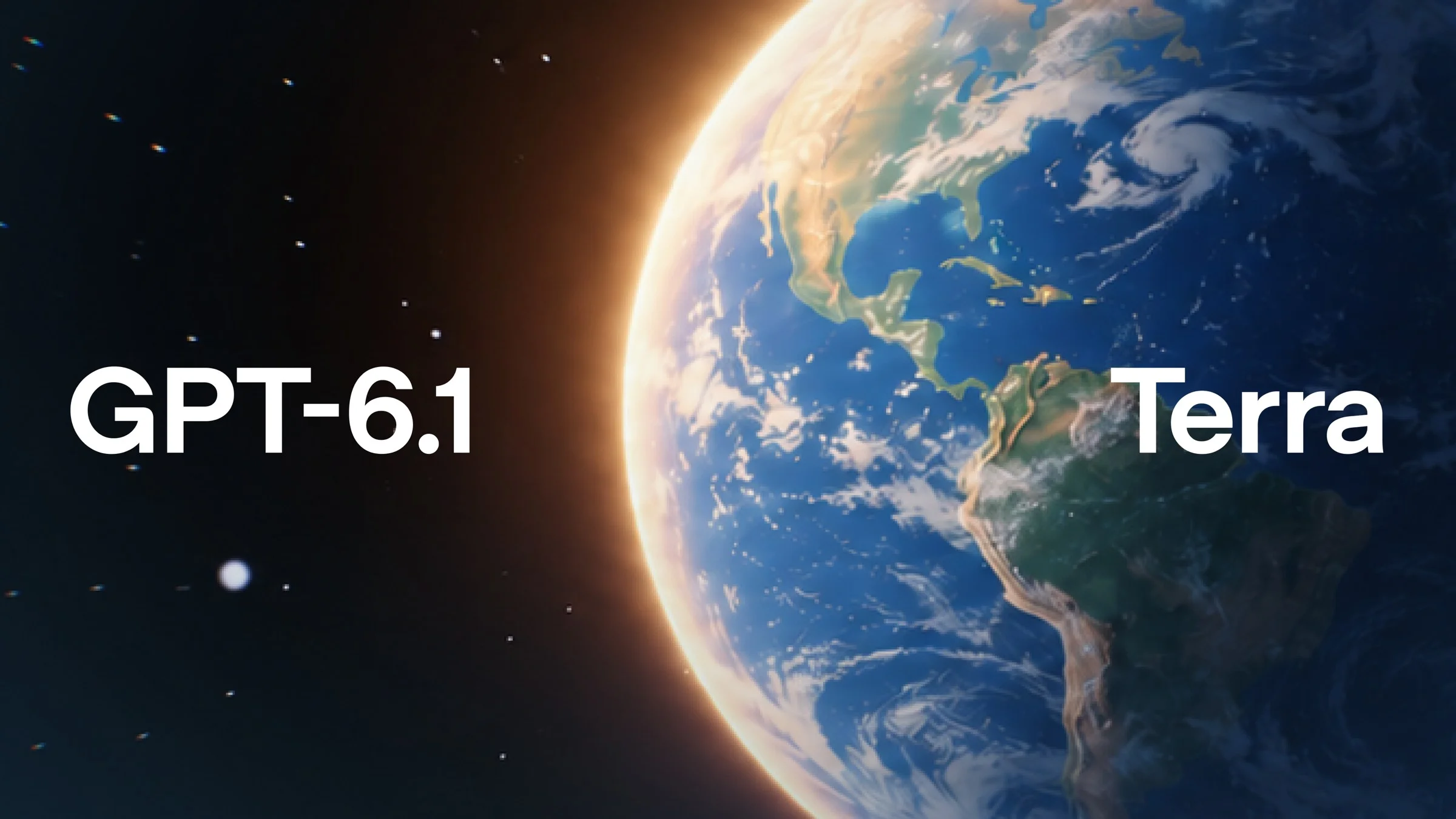
Google DeepMind has introduced Genie 4, a foundation world model designed for real-time interactive simulation. Built on the Gemini model family, Genie 4 generates dynamic, physics-consistent 3D interactive environments on the fly with real-time natural language steering. Users can modify terrain, atmospheric conditions, physical constants and character behaviour through continuous prompt streams.
Unlike earlier world models that operated purely on visual frame-by-frame dynamics, Genie 4 incorporates native audio generation, ambient acoustics and multi-agent spoken dialogue directly into the simulation stream. The system synthesises reactive sound effects and spatial acoustics that match physical events inside the simulated space without relying on external text-to-speech or audio synthesis pipelines.
Steering operates through keyboard, gamepad or continuous spoken instructions, allowing a participant to direct autonomous agents and environment dynamics simultaneously. The architecture runs at interactive frame rates by combining compressed spatiotemporal latent dynamics with fast autoregressive decoding, maintaining visual and physical consistency across extended multi-minute interaction loops.
Google is rolling out Genie 4 as a research preview to trusted testers. The company confirmed that access will expand to Google AI Ultra subscribers within Project Genie, with programmatic access opening to early access partners through the Gemini API and Google AI Studio via an application waitlist.
Liquid AI has released the Liquid Foundation Model 3 (LFM3) family under open weights, comprising six 2-billion-parameter-class models spanning text, vision, audio, omni-modal processing, and two specialised decision models (d1-2B and d1-Omni-2B). Built on LFM3-1.7B-Base and pre-trained on 22 trillion tokens of curated multimodal data, the architecture replaces quadratic self-attention with dynamic continuous-time state representations.
The base model outperforms the prior LFM2.5-2.6B release across standard reasoning benchmarks while reducing parameter count by 35%. LFM3-1.7B scores competitively against larger open models on instruction following and mathematical problem-solving while operating with substantially lower compute overhead. The post-trained decision variants incorporate reinforcement learning loops tailored for multi-step agent actions and structured tool use.
The models support a 256k-token context window, require approximately 1 GB of memory in 4-bit quantisation, and can run inference and parameter-efficientfine-tuning on a single consumer GPU or high-end mobile chipset. Weight checkpoints, model cards and inference recipes are published on Hugging Face under the Liquid Community Licence.
inclusionAI, the open-source AI division of Ant Group, has published model weights for Ling-3.1-flash-1019 and Ling-3.1-flash-base on Hugging Face under the permissive MIT licence. The model employs a Mixture-of-Experts architecture containing 560 billion total parameters with 25 billion active parameters per token, paired with a native 1-million-token context window for long-horizon task execution.
The update introduces revised routing mechanisms and expanded synthetic pretraining datasets across multilingual corpora, coding repositories and technical literature. On the Artificial Analysis Intelligence Index v4.3.2, Ling-3.1-flash-1019 achieved an overall score of 44, up from 41 for the prior checkpoint.
The model card reports benchmark gains on practical agentic evaluations, with AA-Briefcase rising from 1400 to 1524 Elo points and AutomationBench-AA improving from 62% to 68%. Inference is supported in major open-source serving engines including vLLM and SGLang, with FP8 and INT4 quantisation recipes available immediately.
Baidu has open-sourced Unlimited OCR 2, a 3-billion-parameter multimodal vision-language model specialised for document layout analysis, structured table extraction and text recognition across extended document lengths. Checkpoints and source code are published on GitHub and Hugging Face under the MIT licence for unrestricted research and commercial deployment.
The model introduces Shifted Recursive Sliding Window Attention (SR-SWA), which reduces computational complexity from quadratic to linear relative to document length. The attention mechanism enables the model to parse continuous document scans spanning hundreds of pages without truncation or loss of global structural context across sections.
Alongside the model weights, Baidu released MarathonDocBench, an evaluation benchmark tailored for ultra-longmulti-page financial reports, legal filings and technical manuals. The benchmark tests extraction fidelity across complex cross-page tables, nested hierarchies and multi-column document structures, demonstrating significant accuracy improvements over standard sliding-window OCR architectures.
Microsoft has introduced MAI-Image-2.7, its latest image-editing foundation model, rolling out in preview across Microsoft AI Playground, LMSYS Arena and Artificial Analysis. In initial community testing, MAI-Image-2.7 achieved an Arena Edit score of 1,470 Elo points, placing it third overall and second among proprietary AI labs.
Artificial Analysis reported that MAI-Image-2.7 improves upon MAI-Image-2.6 across all 10 evaluated use cases and all seven editing action categories, particularly in object insertion, text modification and stylistic consistency. Text-to-image generation is scheduled for a future release.
Concurrently, Microsoft announced the general availability of MAI-Image-2.6 and MAI-Image-2.6-Flash within Azure AI Foundry. The flagship 2.6 model supports multi-reference image editing using up to five source images, high-precision typographic rendering and output resolutions up to 1.5K, while MAI-Image-2.6-Flash is optimised for latency-critical and high-throughput production workloads in enterprise pipelines.
Anthropic has detailed its initial scientific milestones across six biopharma collaborations, including BigHat Biosciences, Bristol Myers Squibb, Divergence Labs, Enveda Biosciences, Generate Biomedicines and The Column Group. The collaborations test the application of Claude reasoning models to molecular biology and preclinical research pipelines.
In protein engineering with BigHat, Claude-guided design yielded target-binding molecules with binding affinities more than ten times tighter than baseline computational designs. At Enveda Biosciences, deploying custom Claude agents to extract and cross-referencenatural-product chemistry reduced literature review cycles by 89%.
Alongside the partnership results, Anthropic announced its acquisition of Mithril Medicine, a computational biotechnology company developing targeted small-molecule therapeutics for rare facioscapulohumeral muscular dystrophy (FSHD). The acquisition marks Anthropic’s first direct move into running proprietary therapeutics discovery programmes alongside its model-licensing business, expanding its biotechnology research team with dedicated laboratory assets.
Anthropic has published a research preprint titled “A 2^o(n) Time Algorithm for 3-SAT”, authored by Claude with human research co-authors, accompanied by a complete Lean 4 formalisation in the anthropics/formal-math GitHub repository. The paper presents a deterministic algorithm capable of counting 3-SAT solutions in 2^O(n log log n / sqrt(log n)) asymptotic runtime, directly contradicting the widely held Exponential Time Hypothesis (ETH).
The Exponential Time Hypothesis conjectures that 3-SAT requires 2^Omega(n) time in the worst case, serving as a cornerstone for conditional lower bounds across theoretical computer science. Anthropic stated that the core structural reduction was discovered during autonomous mathematical exploration by an internal Claude research model.
The authors emphasised that the result is strictly asymptotic and does not provide practical speedups for finite SAT instances. The Lean 4 formalisation allows mathematicians and complexity theorists to inspect every inductive step of the reduction independently, establishing complete machine-checked validity across the formalised mathematical assertions.
Cursor has added an Annotate feature to its integrated design mode within the Cursor browser. Annotate allows developers to inspect web application user interfaces directly, click or drag bounding boxes across individual DOM elements, draw freehand diagrams or directional arrows over components, and attach targeted instructions to visual elements.
The tool automatically packages element selectors, computed CSS styles and annotated screenshots into the coding agent’s prompt context. When an agent receives an annotated task, it inspects the visual feedback alongside the repository source tree to construct targeted layout diffs.
The browser environment also includes built-in responsive viewport controls to test and annotate layouts across mobile, tablet and desktop breakpoints before generating code diffs. The feature is available immediately across Cursor desktop clients for individual and enterprise users.
Harmonic has expanded its Aristotle automated mathematical verification engine to support the C programming language and Verilog hardware description code. Aristotle automatically inspects source code, derives candidate invariant specifications, and generates machine-checked formal proofs or counterexample traces in the Lean theorem prover.
In C, Aristotle verifies functional correctness, buffer safety and the absence of undefined behaviour. In Verilog, it checks control-path liveness and safety invariants as well as datapath equivalence across synthesis passes.
The service is available through a self-serve, consumption-based pricing model and integrates directly into GitHub Actions and GitLab CI to evaluate pull requests automatically. Developers can establish mathematical proofs of correctness for critical systems code without writing manual proof scripts, catching architectural defects prior to tape-out or compiler optimisation passes.
LMSYS Arena has expanded its Agent Mode evaluation suite with live Connectors for third-party developer and enterprise services, including Vercel, Linear, GitHub, Supabase, Notion, Gmail, Google Drive and Google Calendar.
The update allows researchers and developers to benchmark agentic models on realistic multi-step tasks across real software infrastructure rather than simulated mock environments. Models are evaluated on their ability to manage credentialed tool calls, resolve API errors and complete complex multi-system workflows without human intervention.
Connectors are configured through authenticated developer sessions, with sandboxed project workspaces ensuring safe execution during evaluation runs. Benchmark rankings for connected agents will appear on the public Arena leaderboard as evaluation volume expands across participating developer teams.
OpenAI has added official iCloud Mail and iCloud Calendar plugins to ChatGPT across web, desktop and iOS on all plans. The integration allows Apple users to query emails, view and create calendar events and draft replies using end-to-end OAuth without third-party tools.
Anthropic has finalised a OneGov agreement with the US General Services Administration (GSA), establishing a 40% discount on Claude Enterprise, Claude for Government and the Claude API for federal, state, local, tribal and territorial agencies with no minimum spend commitments. The pricing applies immediately through the GSA Multiple Award Schedule.