


ResearchOpenAIConfirmed
Story 4 of 13 in the Wednesday 25 November editionOpenAI drops nine math proofs on matrix multiplication, FFT and LP
Apache 2.0 github.com/openai/math update adds Families 379 and 380 with Lean checks claiming omega equals 9/4, Smale’s 9th and Hirsch disproof, dated 24 November 2026.

 Edited by Ashutosh Shrivastava
26 Nov 2026, 09:00 IST · 3 min read
OpenAI merged pull request 6 into its Apache 2.0 github.com/openai/math repository on 25 November 2026 IST (dated 24 November 2026), adding nine manuscripts across Families 379 and 380 with partial Lean formalisations generated by an unnamed internal model. Expanding OpenAI’s frontier science research stream, the catalogue now holds 730 manuscripts across 375 families, with roughly 42% of top-line results formally checked in Lean, though OpenAI labels the drop raw research data awaiting community scrutiny.
Euclidean tensor geometry and strongly polynomial linear programming
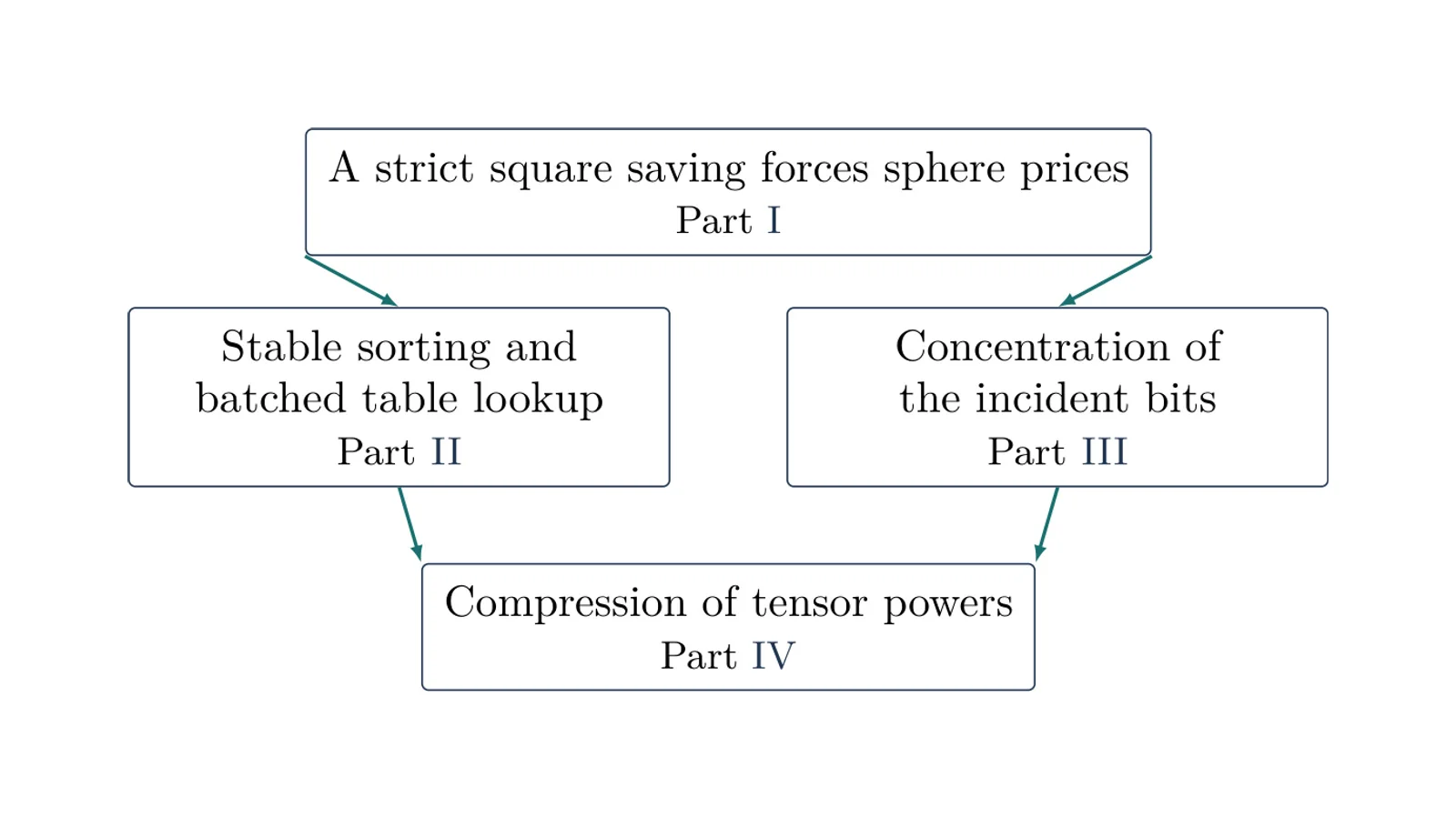
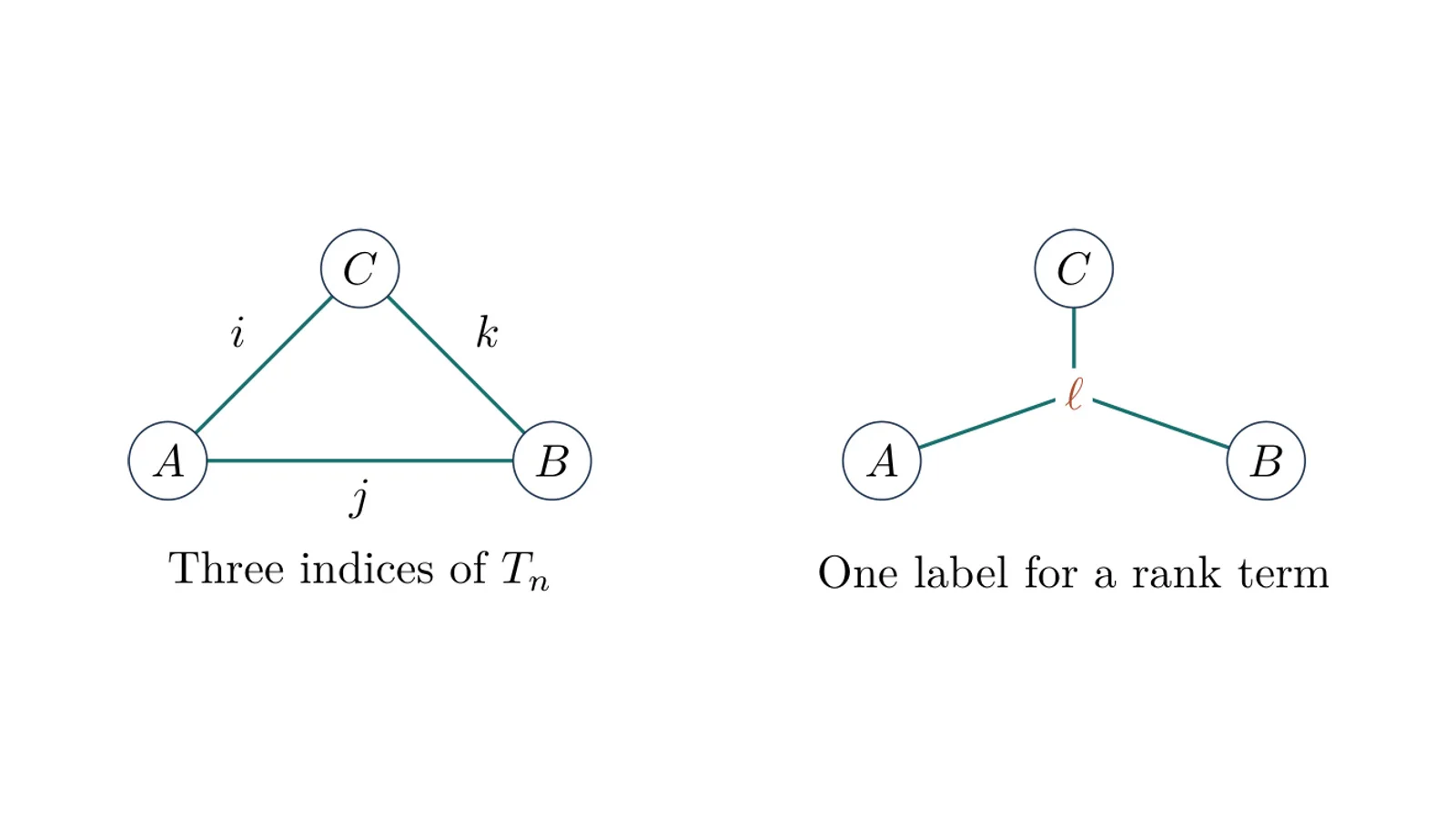
Family 379 introduces Euclidean tensor geometry across seven papers. The headline proofs claim that the square matrix multiplication exponent omega equals exactly 9/4 over every field (proving arithmetic circuits need at least n^(9/4)/2 multiplication or division gates), that finite abelian Fourier transforms require N(log N)^(1/2+o(1)) binary linear gates, and that multitape integer multiplication takes n(1+log n)^(1/2+o(1)) time. Companion papers separate Valiant’s VP and VNP hierarchy over every field, establish circuit lower bounds for Hamiltonian cycle and the permanent, and prove an exponential bound for the Erdos-Rado sunflower conjecture.
Family 380 adds two optimisation manuscripts: a deterministic strongly polynomial algorithm for linear programming answering Smale’s ninth problem, and a family of bounded simple rational polytopes with superpolynomial graph diameter refuting the polynomial Hirsch conjecture. OpenAI has not named or released the underlying reasoning model.
Study details
- Repository and catalogue scale
- github.com/openai/math (Apache 2.0); 730 manuscripts across 375 families; ~42% top-line Lean formalised
- Family 379 headline bounds
- Matrix multiplication exponent omega = 9/4; FFT gates N(log N)^(1/2+o(1)); VP ≠ VNP over every field
- Family 380 optimisation results
- Deterministic strongly polynomial linear programming (Smale’s 9th) and polynomial Hirsch disproof
- Verification caveat
- Partial Lean formalisations included; OpenAI calls manuscripts raw research data pending math community review
Release details & context
Formalised rational RAM guarantees and subsumed VP versus VNP work
OpenAI’s Family 380 Lean documentation specifies fixed rational RAM programs for linear programming feasibility and optimisation on Ax <= b with m constraints and d variables, keeping both instruction counts and stored rational bit lengths polynomial in the input parameters. The framework also extends to convex quadratic programming and finite turn-based mean-payoff games.
In Family 379, the new hierarchy and circuit lower-bound manuscripts subsume OpenAI’s separate VP and VNP separation paper posted on 23 November 2026. The repository README notes that unformalised manuscripts may contain errors and points to Comparator challenge configurations for independent Lean verification, alongside earlier formalisations such as OpenAI’s wet-lab protein validation work across automated science.
Common questions
Are all nine new OpenAI math proofs in Families 379 and 380 fully verified in Lean?
OpenAI included Lean formalisations of selected results from each manuscript and roughly 42% of top-line results across the full repository, while stating that unformalised parts remain raw research data subject to community review.
Sources
- PrimaryOpenAI: github.com/openai/math repositorygithub.com/openai
- OfficialOpenAI Math: Repository history (24 November 2026 update)github.com/openai
OpenAI release timeline (70 launches tracked)
- OpenAI validates intrinsic GPT-6 protein designs in wet-lab tests
OpenAI reports wet-lab binding across five targets for proteins designed by GPT-6.2 using reasoning and code without specialised biology generators.
- OpenAI tests combined Chat and Work view with ChatGPT Pro users
OpenAI begins rolling out a combined Chat and Work interface to an initial group of ChatGPT Pro subscribers ahead of a wider release.
- OpenAI adds banked reset and free fast mode to ChatGPT Business
OpenAI adds a banked usage reset and enables fast mode at no extra charge through 31 December 2026 for ChatGPT Business teams.
- OpenAI fixes GPT-6.2 billing error, tightening Astra and Sol limits
OpenAI fixes a launch billing error on GPT-6.2 Astra and Sol, making subscribers hit limits 40% and 25% faster while issuing one banked reset.