Spanning GitHub Copilot, Microsoft Foundry and private Azure MAI Licensed Weights alongside generally available Cobalt 200 VMs and Foundry IQ retrieval at Ignite on 17 November 2026.
Microsoft opened Ignite 2026 in San Francisco on 17 November 2026 with seven task-specialised MAI models, private Azure weight licensing, next-generation custom silicon, the Microsoft IQ context platform and autonomous Copilot modes. Across coding and security, MAI Code 2 and MAI Code 2 Flash reached general availability in GitHub Copilot, hitting 98% of GPT-6.1 Sol’s coding score at 40% of the cost and 96% of Claude Opus 5.5 at 5% of the cost, while MAI Cyber 2 Flash scored 92.3% on CyberGym-E2E at $0.10 input and $0.50 output per million tokens.
Multimodal MAI endpoints, Maia 300 silicon and Microsoft Retriever 1
MAI Image 2.7 ranked first on Artificial Analysis Image Editing v2.1 at $34.82 per 1,000 images alongside MAI Image 2.7 Flash ($10.24 per 1,000) and an interactive Canvas workspace. MAI Realtime 1 launched for speech-to-speech agents at $0.01 per audio minute, Dragon Copilot Transcribe built on MAI Transcribe 2 scaled across 10 million monthly clinical encounters, and multimodal microsoft-decision-1.1 hit general availability on Foundry, OpenRouter and Vercel.
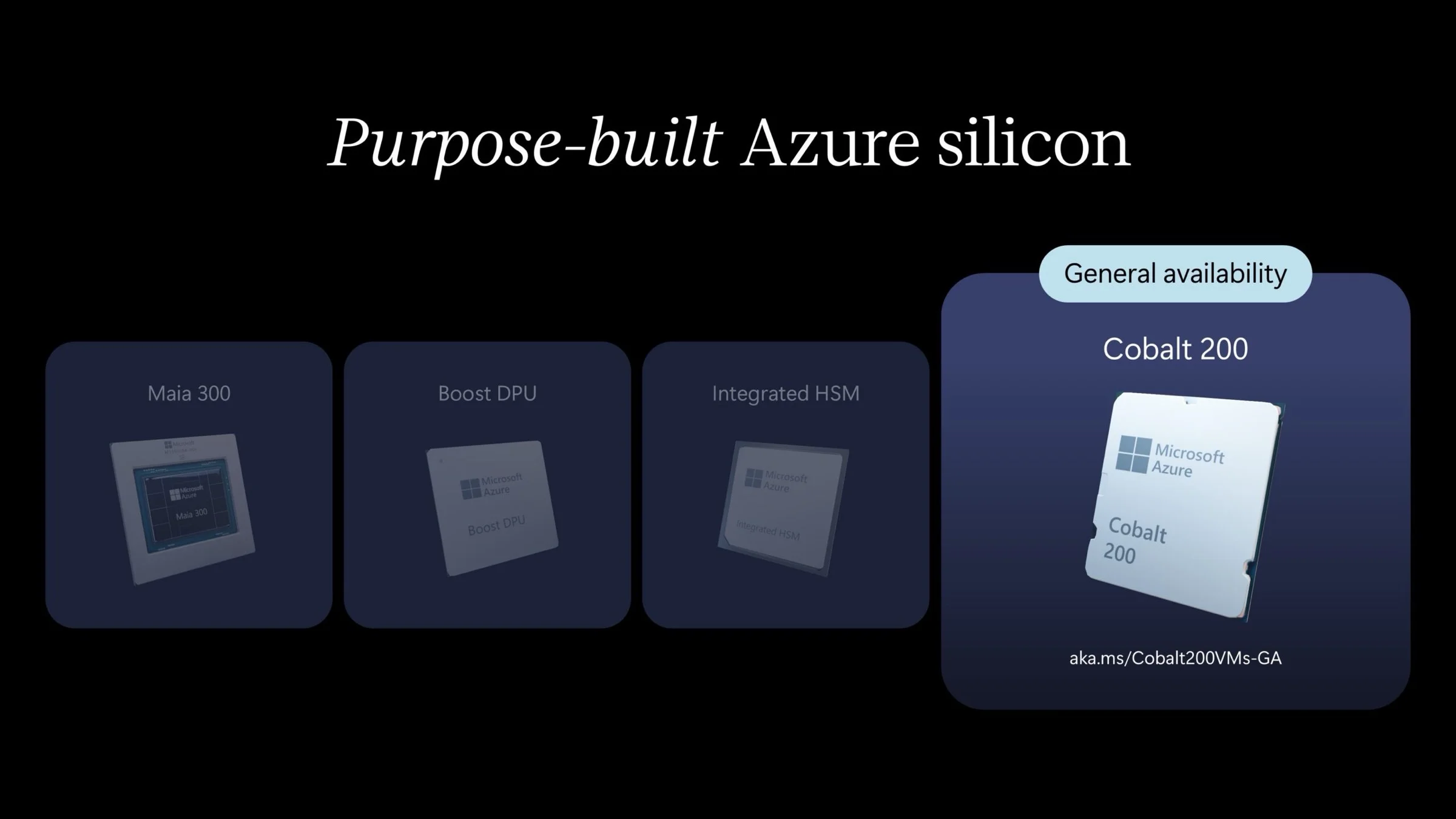
Microsoft unveiled Maia 300 alongside Boost DPU, Integrated HSM and generally available ARM-based Azure Cobalt 200 VMs.Image: Microsoft
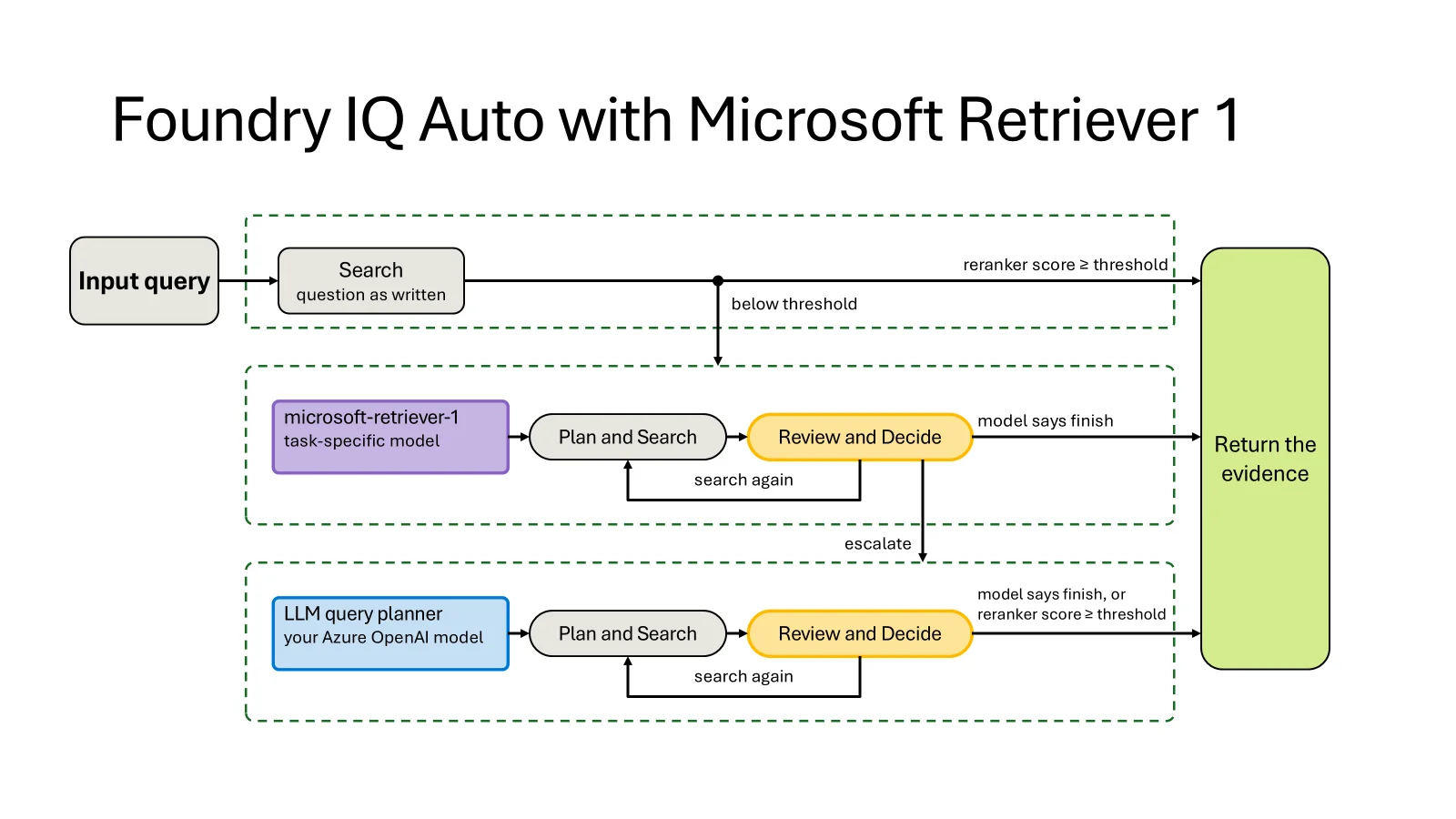
Under MAI Licensed Weights, enterprises fine-tune and host MAI checkpoints inside private Azure tenants. Chief executive Satya Nadella unveiled Maia 300 accelerators targeting 40% more tokens per watt than rival GPU clusters, confirmed Maia 200 in production at 1.7 times more tokens per watt, and shipped Cobalt 200 VMs and HorizonDB generally. Microsoft also launched Microsoft IQ with preview microsoft-retriever-1 cutting retrieval latency 85% to 0.76s, 24-hour Copilot Autopilot, Copilot Workspaces, Salesforce plugins and generally available Microsoft Perception security agents.
Foundry IQ Auto offloads 80% of multi-turn search planning to microsoft-retriever-1, cutting median latency from 5.09s to 0.76s.Image: Microsoft
Live on 17 November 2026 across the OpenAI API, Codex, ChatGPT Work, GitHub Copilot, Microsoft Foundry, OpenRouter and Perplexity with $0.40 cached Astra reads.
OpenAI released flagship GPT-6.2 Astra and everyday agentic model GPT-6.2 Sol on 17 November 2026 across the OpenAI API, Codex and ChatGPT Work for Plus, Pro, Enterprise and Edu workspaces, with day-one availability on GitHub Copilot, Microsoft Foundry, OpenRouter (including Pro tiers) and Perplexity Search and Computer. In the API, GPT-6.2 Astra drops 20% below GPT-6 Astra to $8 per million input tokens, $40 per million output tokens and $0.40 per million cached input reads (down 60% from $1), while GPT-6.2 Sol retains $2 input and $10 output per million tokens and expands ultrafast serving to Pro 200 plans.
Benchmark highs, token efficiency and coding-agenttrade-offs
OpenAI reports that GPT-6.2 Astra sets new highs on Agents’ Last Exam (5.2 points above GPT-6 Astra at under one-third the task cost, and 5.5 points ahead of Claude Fable 5.2), Terminal-Bench-Science 0.1 (up 9 percentage points), AA-AnalystAgent spreadsheet tasks (62.5% accuracy across five runs), Harvey LAB-AA v1.1 legal deliverables and internal GDPval v2 workflows (up 6.2 percentage points using 22% fewer output tokens), extending OpenAI’s healthcare computer-use push into CAD and Blender physics simulation.
Epoch AI scores GPT-6.2 Astra at 174 on the Epoch Capabilities Index (tied with Claude Fable 5.2), and Artificial Analysis ranks Astra second on its Intelligence Index and first on AA-3D (1318) and AA-Robotics v0.1 (79). GPT-6.2 Sol finishes within 0.5 points of Astra on Cognition’s FrontierCode 2.0 at one-fifth the cost, though Artificial Analysis measured flat Coding Agent Index scores for Astra and a 3-point drop for Sol driven by a 14-pointSWE-Atlas-QnA dip.
Rolling out free of charge on 17 November 2026 for eligible Gemini app users in the US, Japan, South Korea, Canada, Australia and India with AP2 Google Pay checkout.
Google expanded Tasks inside the Gemini app free of charge on 17 November 2026 to hundreds of millions of eligible accounts starting in the United States, Japan, South Korea, Canada, Australia and India. Powered by Gemini 4 Hydrogen, Tasks separates multi-step administrative projects and recurring background schedules from quick conversational Chat threads.
Email-to-calendar RSVPs, local business calls and AP2 Google Pay checkout
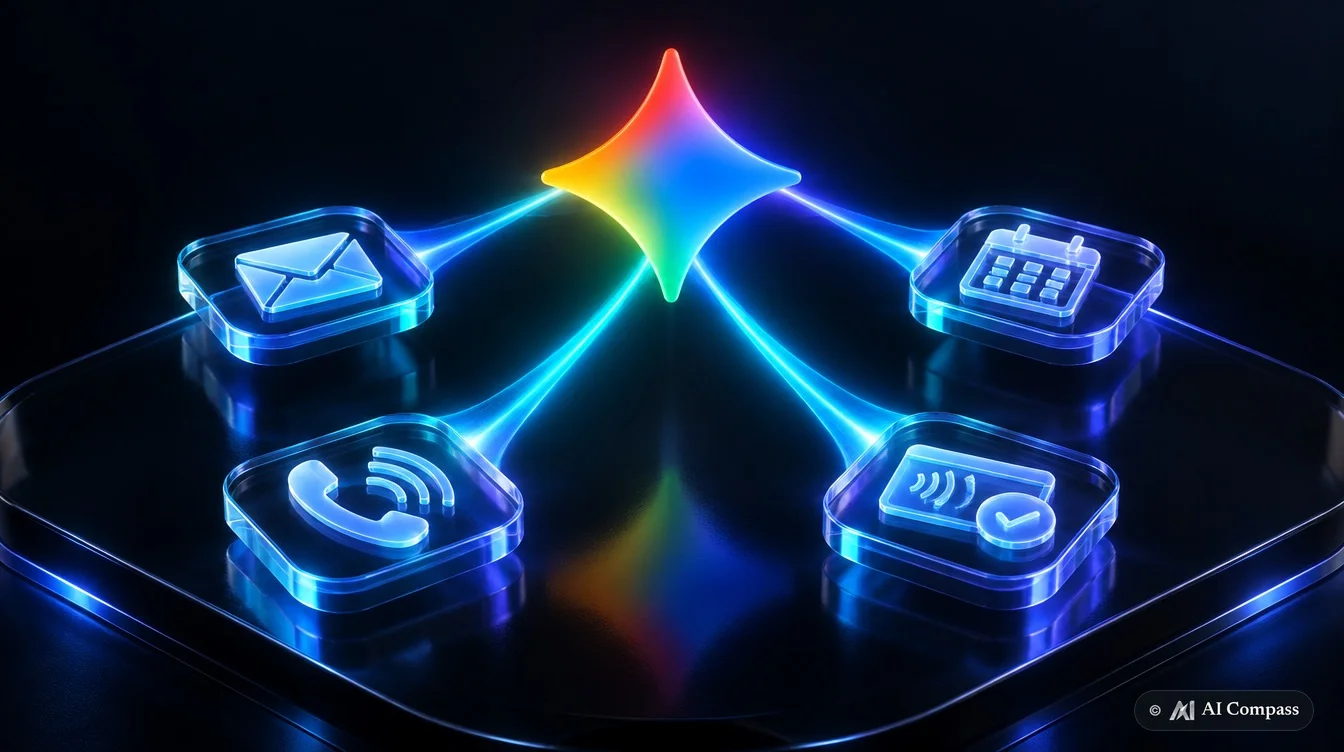
Chief executive Sundar Pichai detailed four action capabilities included in the free-tier rollout. Users can forward messages directly to gemini@google.com so Gemini processes event RSVPs and populates a shared family Google Calendar, or instruct Gemini to telephone local businesses to compare price quotes and check item stock, with mandatory user approval before dialling and full call transcripts afterwards.
For web transactions, Tasks signs into websites through credentials stored in Google Password Manager and completes purchases securely through Google Pay built on the Agent Payments Protocol (AP2). Pichai noted that Google is partnering directly with major websites and security vendors so authenticated agent sessions operate smoothly for site owners alongside users. Google has not announced rollout dates for European Union or UK accounts.
Live on 17 November 2026 with OpenAI Responses, Chat Completions and Anthropic Messages compatibility, consolidated billing and perplexity/auto failover.
Perplexity launched the Perplexity Orchestrator API on 17 November 2026, giving developers unified access to more than 45 open-weight and proprietary models from OpenAI, Anthropic, Google, xAI and open-source labs through one API key and consolidated billing. Following its 16 November Perplexity Monitor API launch, the gateway accepts OpenAI Responses, OpenAI Streaming Chat Completions and Anthropic Messages schemas and can attach Perplexity web search and inline citations in one call.
Task-aware perplexity/auto model selection and provider failover
Developers can pin an explicit model ID such as claude-fable-5-2 or target the perplexity/auto router, which inspects each request to balance task capability against cost and latency before selecting an underlying deployment based on live provider availability and capacity. If a primary deployment fails or throttles, Orchestrator automatically retries across healthy endpoints without client-side routing code.
Perplexity published per-model context windows, output token limits, prompt-caching rules, safety identifiers, Analytics API telemetry, AWS Marketplace billing options and Sonar migration guides across docs.perplexity.ai.
Shipped in AI Studio Build on 17 November 2026 with in-studio domain purchasing, Cloud Firestore state sync, user authentication and US Google Play publishing.
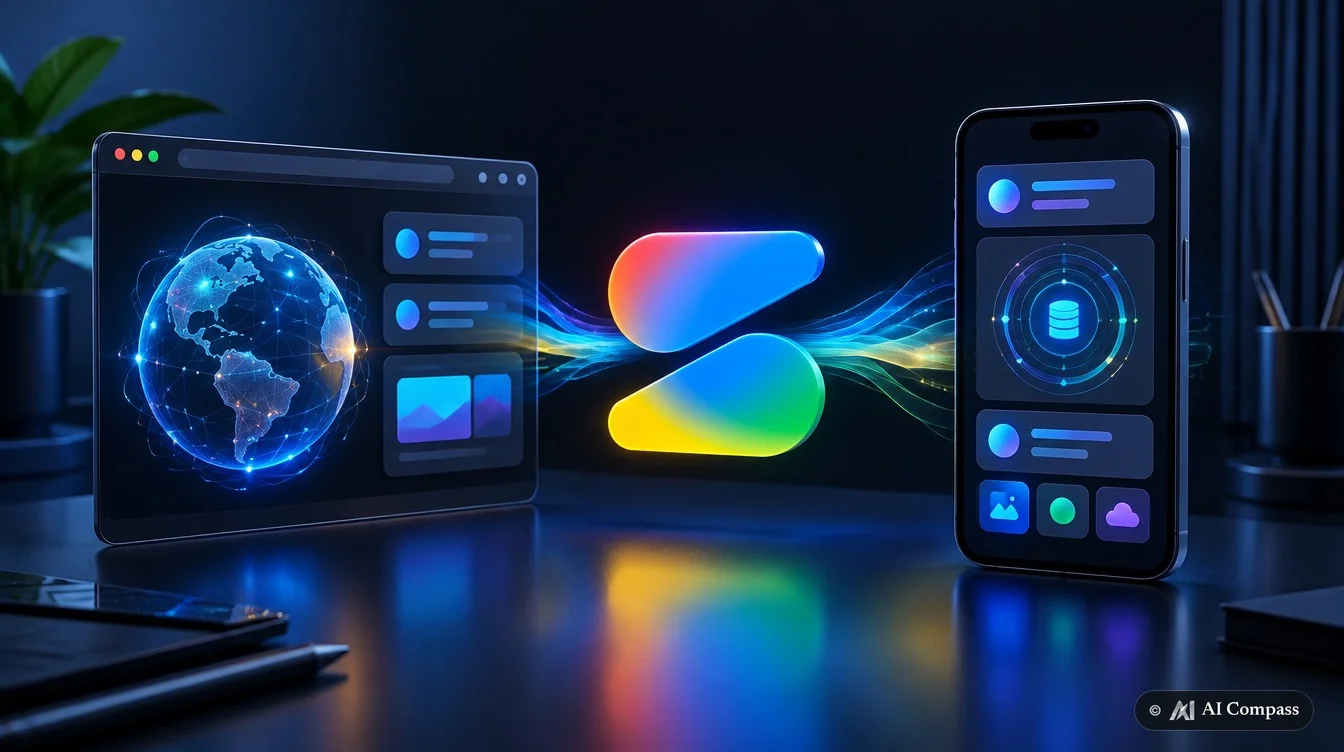
Google rolled out web and mobile deployment upgrades to AI Studio Build (ai.studio/build) on 17 November 2026, adding direct custom-domain purchasing and hosting alongside expanded Android app creation tools. Developers building web apps inside Google AI Studio can now buy a domain name in place and publish generated sites onto a branded custom domain without exporting repositories to an external registrar or hosting dashboard.
HD audio Android emulator, Cloud Firestore sync and Play library publishing
For mobile builders, Google upgraded the in-browser Android app builder first introduced at Google I/O in May 2026, pairing cleanly with Google’s free zero-setup Maps Platform toolkit in AI Studio. The embedded Android emulator inside AI Studio now renders at high-definition resolution with live audio output so multimedia and voice interactions can be tested directly in the browser.
Generated Android applications can also provision Cloud Firestore databases and user authentication to persist and synchronise data across devices, wire Gemini calls securely without exposing client keys, and publish builds straight to a user’s personal Google Play library on Android phones in the United States. Google has not announced custom-domain pricing tiers or international Play library rollout dates.
Available on 17 November 2026 from Antigravity’s Build With Google shelf, combining USB robot bring-up, MuJoCo simulation and 84.8 ERQA spatial reasoning.
Google DeepMind and Google Developers released the Robotics plugin for Google Antigravity on 17 November 2026, pairing gemini-4-hydrogen with built-in MuJoCo physics simulation to turn Antigravity into a conversational real-to-sim-to-real workbench. Installed from the Build With Google shelf under Customizations, the plugin bundles agent skills for USB driver installation, external depth-camera discovery, safe arm calibration, MuJoCo scene generation, grasp planning and closed-loop controller synthesis.
Ten-minute USB hardware bring-up and 84.8 ERQA embodied reasoning
Starting from an unconfigured desk, asking Gemini 4 Hydrogen in Antigravity to bring up a USB-connected I2RT YAM arm, a low-costSO-ARM101 arm or an industrial dual-arm FR3 Duo installs dependencies, locates cameras, calibrates joints and verifies test motions in roughly 10 minutes before running plain-language manipulation prompts.
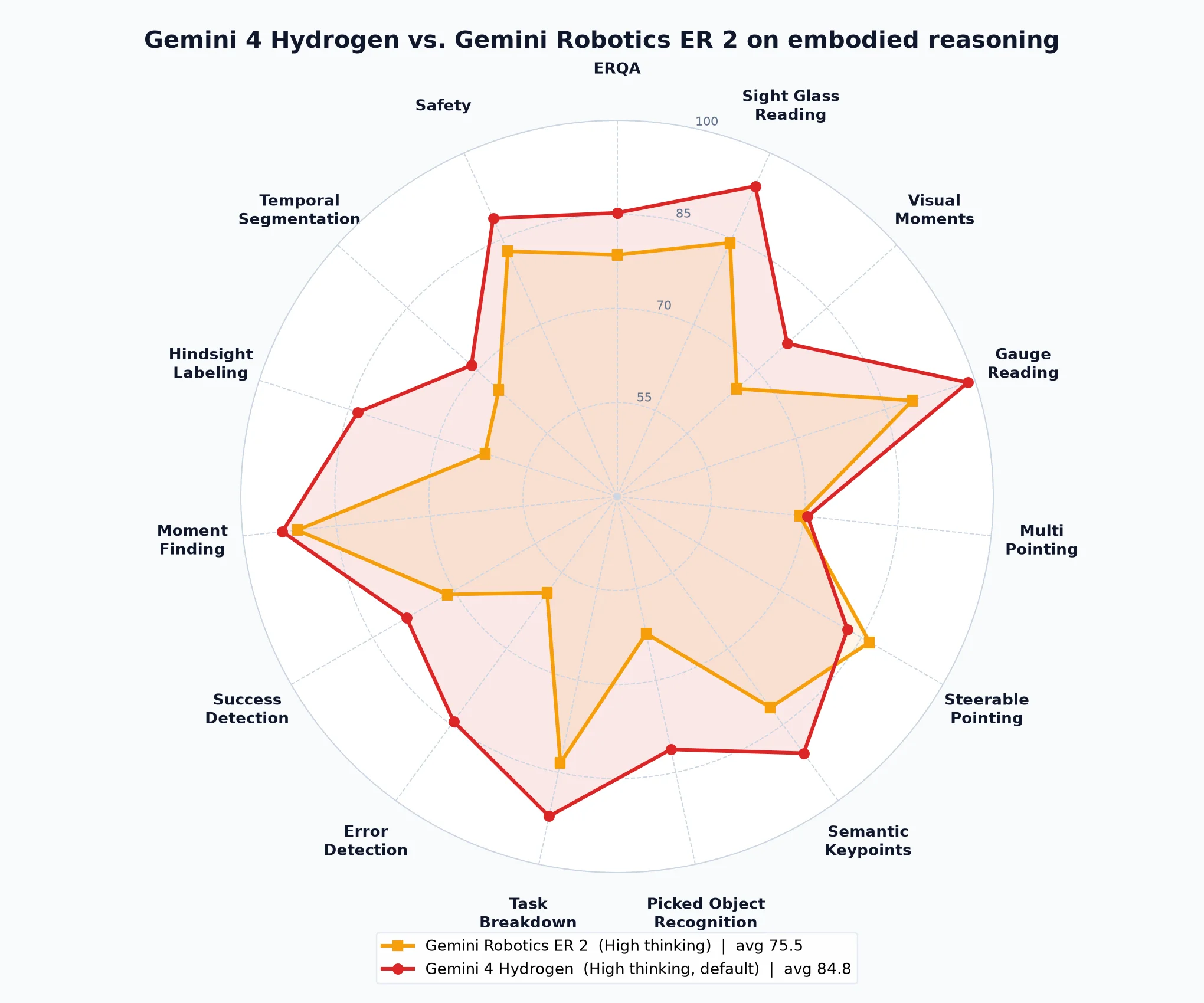
Following Gemini Robotics 2.5, Google folded Gemini Robotics ER 2 spatial capabilities directly into gemini-4-hydrogen, lifting average ERQA embodied reasoning from 75.5 to 84.8 at high thinking and scoring 58 on Artificial Analysis Robotics 0.1 across eight 6-axis tabletop tasks, matching Gemini 4 Argon at lower token cost.
Gemini 4 Hydrogen averages 84.8 on the 11-category ERQA embodied reasoning benchmark, ahead of Gemini Robotics ER 2 at 75.5.Image: Google
Persistent, memory-backed engineering leads inside Devin break ongoing goals into parallel agent sessions, review pull requests and run post-deploy QA from 17 November 2026.
Cognition introduced Devin Bots on 17 November 2026, adding persistent, goal-owning manager agents that coordinate multiple Devin coding instances in parallel. Building on Devin Apps and the upgraded Devin Teams plan, a Devin Bot retains cross-session memory, inspects repositories and production telemetry, decomposes long-running objectives into parallel Devin tasks and follows up on stalled work.
Autonomous PR reviews, post-deploy QA and building Devin’s Android app
Unlike single-ticket coding sessions that stop after opening one pull request, Devin Bots inherit workspace integrations and permissions out of the box to triage overnight incidents, review pull requests, run quality assurance after deployments to catch regressions, and deliver morning briefings listing only architectural or product choices that need human judgement.
Cognition reported that internal Devin Bots merged roughly 1,600 pull requests in one week across ongoing responsibilities such as open-source maintenance, release management and inference optimisation, and autonomously built Devin’s Android app after an engineer assigned an Android Bot the project on 28 September 2026 with zero dedicated Android staff. Cognition has not announced standalone Devin Bots pricing.
Available on 17 November 2026 in Claude Code v2.1.323+ for direct Claude and Anthropic Console accounts via the CLAUDE_CODE_EXPERIMENTAL_CODE_MODE=1 flag.
Anthropic launched experimental Code Mode in Claude Code v2.1.323 and later on 17 November 2026, opted into via the environment variable CLAUDE_CODE_EXPERIMENTAL_CODE_MODE=1 in the terminal. Rather than issuing one tool invocation per model round-trip, Claude writes a JavaScript program that chains multiple tool calls in one step, loops across files for repetitive edits, filters bulky search results before reading them and runs independent commands concurrently.
Background execution, 10-minute timeouts and direct API constraints
While background commands run, Claude Code can continue answering user prompts in the active terminal session, extending recent Claude Code workflow updates. Foreground scripts stop after a 10-minute timeout, Auto Mode’s safety classifier inspects the generated JavaScript program rather than individual calls, and PreToolUse or UserPromptSubmit hooks can refuse calls or withhold script output.
Code Mode requires a direct Claude subscription or Anthropic Console account on either release channel and cannot be resumed outside the terminal, moved to Desktop, forked into background sessions or used with Remote Control, Claude in Chrome, computer use, Bedrock, Vertex or Microsoft Foundry.
Launched on 17 November 2026 with a first-party OpenAI Sales plugin, persistent dot delegation and connectors for Salesforce, HubSpot, Gong, Clay and Docusign.
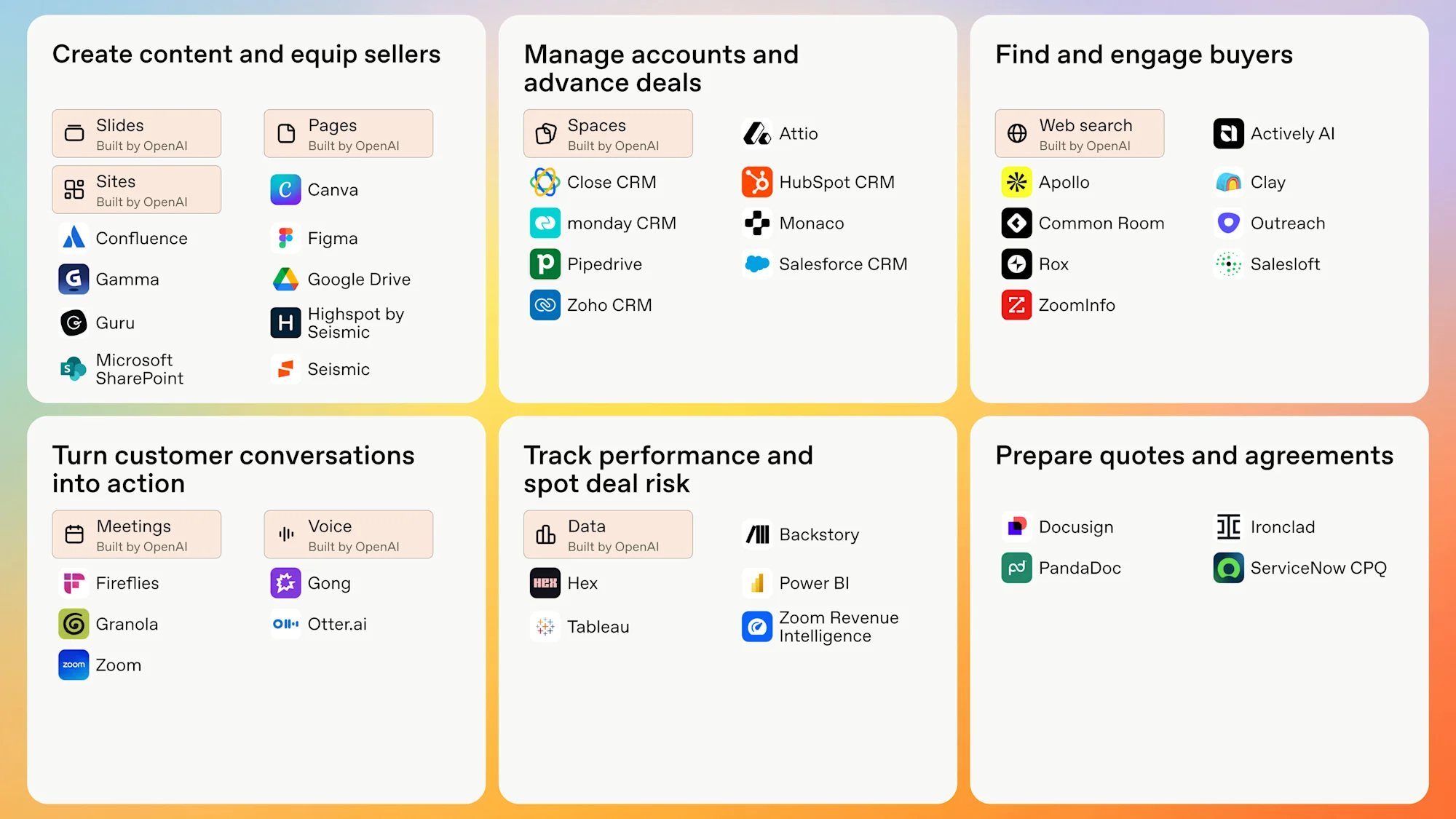
OpenAI introduced ChatGPT for Sales on 17 November 2026, pairing a new OpenAI-built Sales plugin with more than 30 new and updated partner plugins so revenue teams can query CRM records, call transcripts and buyer signals in one workspace. The first-party Sales plugin supplies structured skills for account prioritisation, discovery call prep, proposal drafting and follow-ups, while persistent dot agents can run those plugins between chats to surface deal changes.
Six workflow categories from CRM and prospecting to CPQ contracting
Partner connectors span Salesforce, HubSpot, Close CRM, monday CRM, Pipedrive, Zoho CRM and Attio for pipeline context; Apollo, Clay, Common Room, ZoomInfo, Rox, Actively AI, Outreach and Salesloft for buyer signals and sequences; and Gong, Fireflies, Otter.ai, Granola, Zoom and the ChatGPT Meetings plugin for call notes.
ChatGPT for Sales organises built-in OpenAI tools and 30+ partner plugins across six end-to-end revenue workflows.Image: OpenAI
Teams can analyse deal risk via Backstory, Hex, Tableau, Power BI, Zoom Revenue Intelligence and the ChatGPT Data plugin, rehearse objections in ChatGPT Voice, generate decks or ROI calculators via ChatGPT Slides, Sites, Gamma, Figma and Canva, and draft quotes in Docusign, Ironclad, PandaDoc and ServiceNow CPQ. OpenAI has not announced separate per-seat pricing for ChatGPT for Sales.
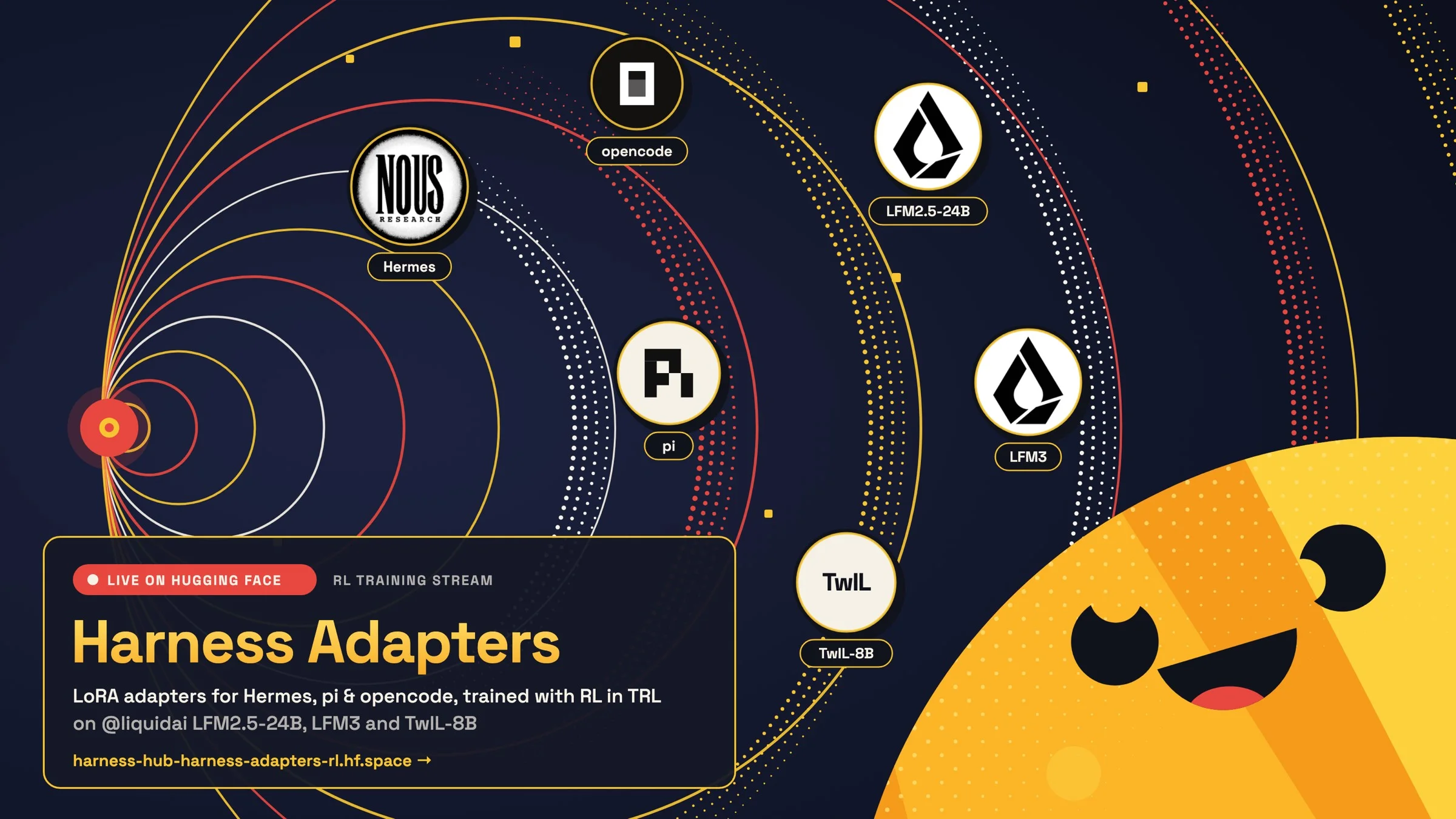
Open-weight TRL adapter from harness-hub on the Hugging Face Hub uses safeagents rule checks to lift SWE-bench Pro Hard 51 pass@1 from 29.4% to 62.7% on 17 November 2026.
Hugging Face’s harness-hub team released open-weight Qwen3.8-27B-pi-adapted and its safe reinforcement learning methodology on 17 November 2026, training lightweight per-harness LoRA adapters directly inside unmodified local coding harnesses including pi, opencode and hermes. Building on earlier LFM2.5-24B-A2B, LFM3-1.7B and TwIL-8B runs alongside Hub OpenRouter inference routing, one shared base server can host adapters for multiple agent harnesses simultaneously.
Repo2RLEnvs trajectory tasks, safeagents proxy and pi coding benchmarks
Training mixes SmolDataEnvs with Repo2RLEnvs, which converts open-source coding sessions shared on the Hugging Face Hub into verifiable build-heavy RL environments. Every tool call passes through safeagents, a deterministic rule-based proxy running in 10 to 20 ms that blocks reward-hacking shortcuts and assigns violating rollouts a zero score.
Served over the openai-completions endpoint via vLLM, Transformers or llama.cpp, Qwen3.8-27B-pi-adapted raised pass@1 on SWE-bench Pro (Hard 51) from 29.4% to 62.7% and on Terminal-Bench 2.1 from 39.5% to 55.8%, while cutting tool calls per task by 55% to 62%.
Alphabet spin-out Isomorphic Labs and founder Demis Hassabis announced on 17 November 2026 that the London AI drug discovery company has raised $5 billion in Series C funding co-led by Greenoaks and Sequoia Capital alongside Andreessen Horowitz, Alphabet and all existing investors to scale its Isomorphic Labs Drug Design Engine (IsoDDE) and advance internal therapeutic candidates towards clinical trials.
Five days after stepping down on 12 November 2026 when CFO Colette Kress became interim chief executive, NVIDIA founder Jensen Huang published a statement on X on 17 November owning serious mistakes in his personal life, pledging full cooperation with the Board of Directors’ independent investigation, and stating he would be honoured to return as CEO if the board decides it serves shareholders, employees, NVIDIA and the United States.
GitHub announced at Microsoft Ignite on 17 November 2026 that the GitHub Copilot app now supports Azure DevOps repositories in public preview (including branch creation, review-comment fixes and automated CI agent merge), a public-preview GitHub Copilot browser extension for Chrome and Edge running inside an isolated tab group, and generally available GitHub Enterprise Server integration.
Anthropic launched Linked billing in beta on the Claude Platform on 17 November 2026 via the user-profiles-billing-2026-10-01 beta header, enabling users of third-party tools such as Factory, Linear and Ramp to link their direct-billed Claude Platform organisation, set spend caps or unlink apps in the Claude Console, and pay for Claude API calls without sharing raw API keys.
Perplexity rolled out a Multiagent effort level on the web on 17 November 2026 for Perplexity Max subscribers using Computer and Teammates, allowing a lead orchestrator model such as Claude Fable 5.2 to split complex workflows across parallel subagents running models like Gemini 4 Carbon, GPT-6.1 Sol and Claude Opus 5.5 while sharing intermediate findings into one synthesised answer.
MachinePulse released the six-modelopen-weight Karpo Decision family (0.8B to 31B, built on Gemma 4 31B under Apache 2.0; research blog published 13 November 2026 and announced on X on 16 November), using branch attention and a direct readout head to answer multiple typed questions over text and images in one forward pass, scoring 73.9 on Decision Index Full at 95 ms median latency on one RTX PRO 6000.
ElevenLabs launched Scribe v3 Live Medical inside ElevenAgents on 17 November 2026, adapting its 150-millisecondreal-time Scribe v3 Live speech-to-text model for live patient, member and provider phone calls with custom vocabularies of up to 10,000 medication, procedure and clinician names and the lowest word error rate among medical models it tested on PriMock57.
GitHub and Microsoft Security detailed the Codename MDASH agentic code-security pilot at Microsoft Ignite on 17 November 2026, filtering 9,791 raw AI vulnerability findings across six open-source repositories into 99 human-verified private advisories complete with suggested patches so open-source maintainers can ship fixes without triaging unvetted AI bug-report spam.