Two OpenAI engineers designed a working handheld Codex voice prototype with GPT-6 Astra in under a week, while an internal model reached 0.875 on BenchCAD 2.0.
Image: OpenAIOpenAI’s mechanical CAD and hardware engineering workflow overview.
OpenAI shared results on 3 November 2026 from applying ChatGPT, Codex and GPT-6 Astra to mechanical design, circuit boards, firmware and engineering simulations. Internally, OpenAI’s robotics and compute infrastructure teams use the models to build and revise computer-aided design (CAD) files, draft manufacturing drawings and configure simulations, pushing hardware-team token consumption up 23 times since February 2026.
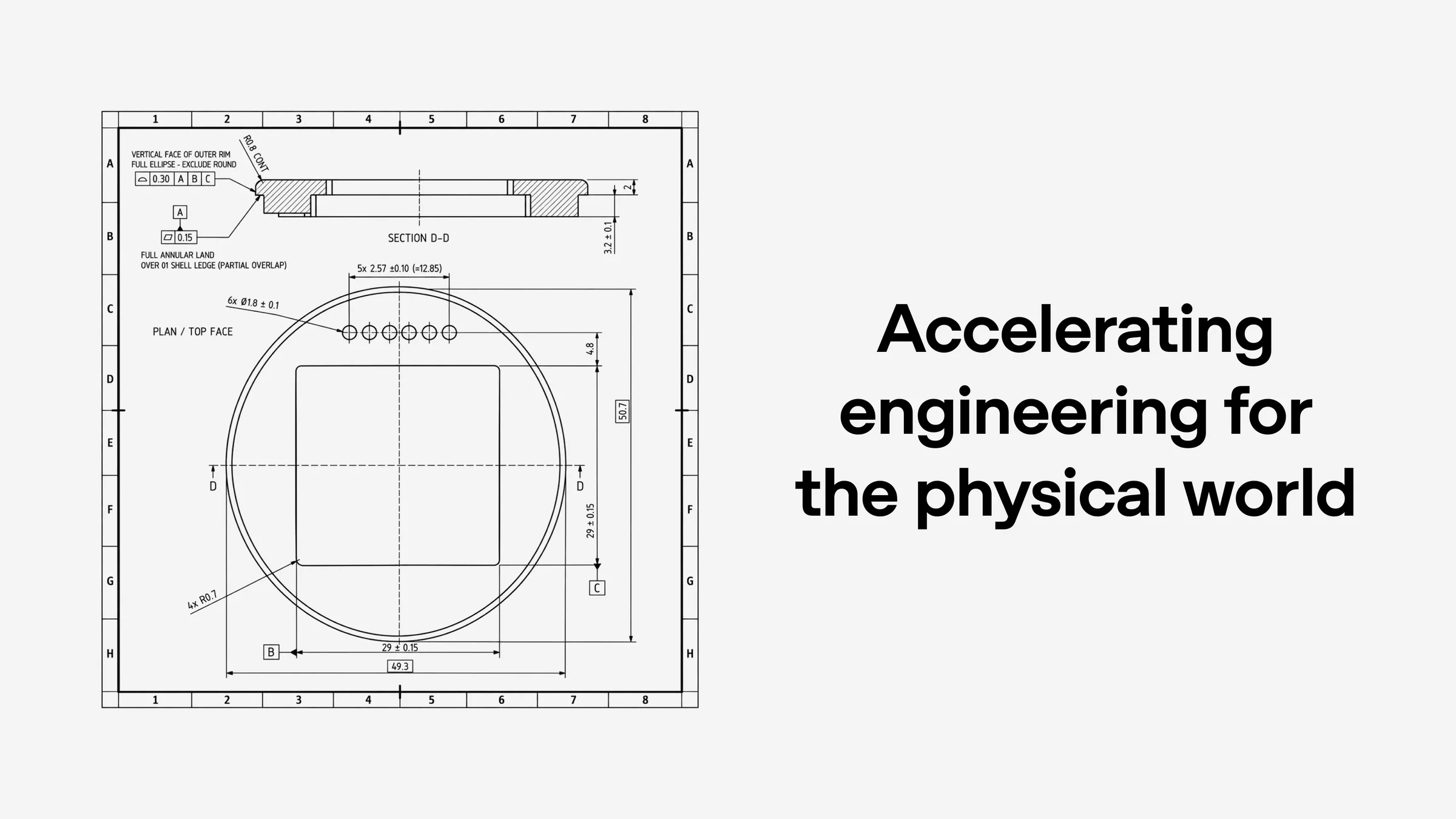
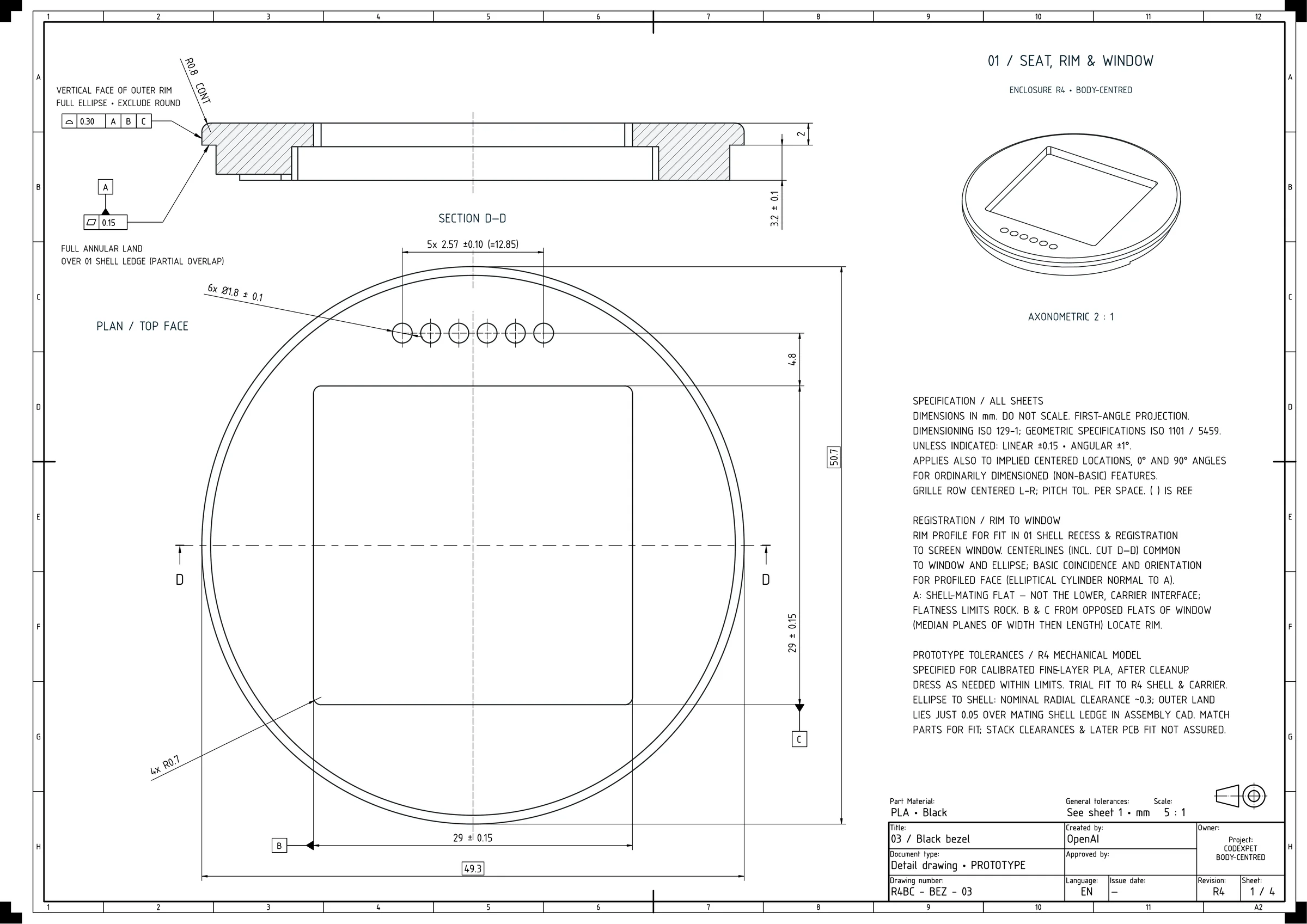
To test end-to-end multimodal and computer-use workflows without direct human edits, two OpenAI team members used GPT-6 Astra as a side project to specify requirements and design a handheld voice device for talking to Codex, inspired by OpenAI’s Work Louder collaboration. In under a week, Astra designed the external aesthetics, mechanical enclosure, internal mounting ribs, component selection, printed circuit board layout, firmware and user interface. A contract manufacturer produced working prototypes in under a month, though preparing the files for factory production still required human review across assembly details, tolerances and manufacturing limits.
Mechanical enclosure detail drawing generated by GPT-6 Astra for OpenAI’s handheld Codex voice prototype.Image: OpenAI
Benchmarks and industry collaborations
To track spatial and electrical reasoning, OpenAI introduced BenchCAD 2.0, an evaluation covering 3D part and assembly reconstruction alongside circuit-board connection tracing. A newer unnamed internal OpenAI model scored 0.875 on average, ahead of 0.594 for GPT-6 Astra at its highest reasoning setting.
Externally, OpenAI expanded its collaboration with Chip Ganassi Racing to convert 3D scans of legacy race-car parts without original CAD files into editable 3D models and 2D shop drawings. OpenAI also announced a research partnership with Mazda Motor Corporation, pairing forward-deployed engineers with Mazda’s aerodynamics and crash-safety teams to model nose geometries and simulate vehicle airflow to cut drag. OpenAI opened a collaboration intake form for external engineering teams and CAD software vendors, with no standalone pricing changes.
Adults aged 18 and over in India can generate daily visual story cards on Android, iOS and the web across 14 languages using selected Google app context.
Google Labs expanded Dreambeans, its experimental personalised storytelling app, to users aged 18 and over across India on 3 November 2026. Available free on Android through Google Play, on iOS through the App Store and on the web at labs.google/dreambeans, the release brings the US-launched Google Labs experiment to Indian users across 14 languages.
Instead of an open-ended social feed, Dreambeans assembles a bounded daily batch of visual story cards tailored to topics a user chooses or connects from opt-in Google services, including Calendar, Gemini, Gmail, Photos, Search and YouTube. Examples range from upcoming local events and travel ideas to hobbies, crafts and astronomy reminders. Users can expand any card to read deeper context, bookmark items for later or share cards with contacts, and submit feedback directly inside the app to steer future batches.
Supported languages in India span English alongside 13 Indian languages: Hindi, Bengali, Telugu, Marathi, Tamil, Urdu, Gujarati, Kannada, Malayalam, Odia, Punjabi, Assamese and Nepali. Google positions Dreambeans as an experimental Google Labs product and has not announced paid tiers or commercial pricing.
Built on Sarvam 105B under the Apache 2.0 licence, the calibrated decision model scores candidate options in one forward pass on a single NVIDIA B200 GPU.
Sarvam AI released Sarvam Prism on 3 November 2026 under the Apache 2.0 licence, introducing an open-weight System One decision model fine-tuned with LoRA on its Sarvam 105B-10Bmixture-of-experts base. Rather than generating tokens autoregressively, Prism reads a state, a question and candidate options within a 131,072-token window in one forward pass and outputs calibrated probabilities through a lightweight scoring head.
A split attention mask reads the state and question bidirectionally while isolating each option until the final answer token, adding roughly 3 points on the Jev Decision Index and running attention 2.6 times faster above 2,048 tokens. Label-smoothedcross-entropy and Brier losses keep actual mistakes below predicted uncertainty at 90% confidence (2.2% actual versus 3.3% expected in English), while canonical option sorting eliminates answer flips across 2,000 shuffled prompts (0.0%, versus 10.3% for Perplexity Decider v1.2). Converting weights to FP8 (106 GB on disk, 120 GB VRAM), grouping 128 experts into one kernel and capturing a CUDA Graph cut median latency from 664 ms on two 16-bit B200 GPUs to 44 ms on one B200, 15.1 times faster.
Sarvam renders its benchmark charts interactively in HTML rather than static images, ranking Prism first under 100 ms across 25 tested decision models. Hosted API access is live on Sarvam Indus; per-request API pricing was not printed.
Key numbers
71.8 average score at 44 ms (67.0 Jev, 65.9 Artificial Analysis recreation, 82.5 Indian languages), ahead of Perplexity Decider v1.2 (68.0 at 117 ms) and Jev 1.14 (64.5 at 196 ms).
78.5% accuracy judging 700 agent traces in roughly 0.5 s per run, versus 70.7% in 2.5 s for Claude Haiku 5.5.
89.0% accuracy on a 5,517-question cybersecurity guardrail benchmark, ahead of Clef (84.5%) and Jev 1.14 (78.6%).
Released on 3 November 2026 under stealth/crouton-alpha, the undisclosed provider’s reasoning model accepts text, image, audio, video and file inputs with zero prompt logging.
OpenRouter released stealth/crouton-alpha on 3 November 2026, making a new multimodal reasoning model from an undisclosed provider available at $0 per million input and output tokens during alpha testing. OpenRouter routes every request directly to the single upstream host, which neither logs prompts and completions nor trains on user traffic.
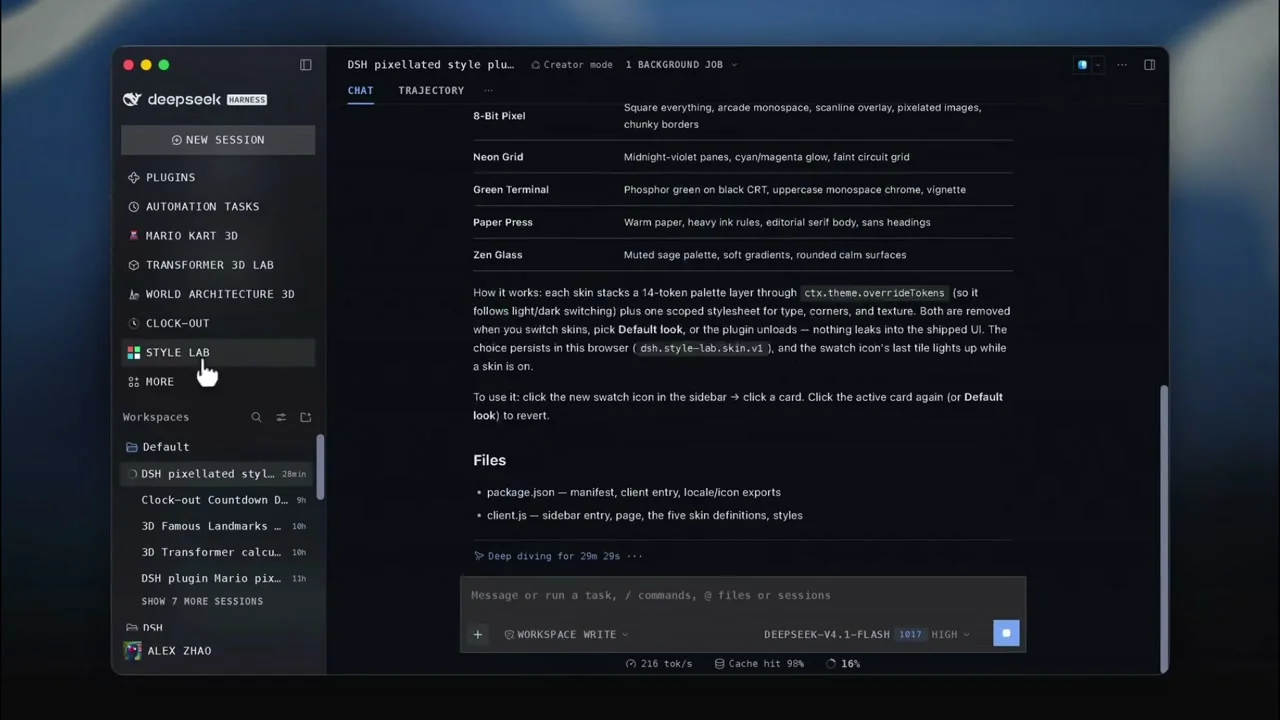
According to OpenRouter’s model specification and API metadata, Crouton Alpha targets high-volume, repetitive agentic subtasks, tool calling and multi-document analysis. It supports a 1,048,576-token context window and up to 943,718 maximum completion tokens across five input modalities: text, images, video, audio and files, returning text outputs with structured output schemas and tool-choice controls. Reasoning tokens are mandatory on every call, defaulting to max across six configurable effort levels (minimal, low, medium, high, xhigh and max) across OpenRouter’s chat completions, completions, messages and responses endpoints.
OpenRouter’s live telemetry dashboard, which renders interactive HTML charts rather than downloadable static figures, reports a median throughput of 52 tokens per second and a median time to first token of 2.07 seconds, with coding harnesses such as Hermes Agent, Claude Code and DeepSeek Harness already driving billions of tokens of early traffic. Neither OpenRouter nor the upstream lab has disclosed the model’s creator, parameter count or post-alpha pricing.
Connecting to 27 commerce, ad, email and analytics tools, the e-commerce suite automates competitor audits, creative generation, media buying and storefront landing pages.
Perplexity launched a dedicated e-commerce workflow suite for Perplexity Computer on 3 November 2026, linking its persistent workspace agent directly to 27 storefront, advertising, email, analytics, payment and support platforms. Supported connectors include Shopify, WooCommerce, BigCommerce, Meta Ads, Google Ads, TikTok, Klaviyo, Mailchimp, Canva, Stripe, Snowflake and Gorgias.
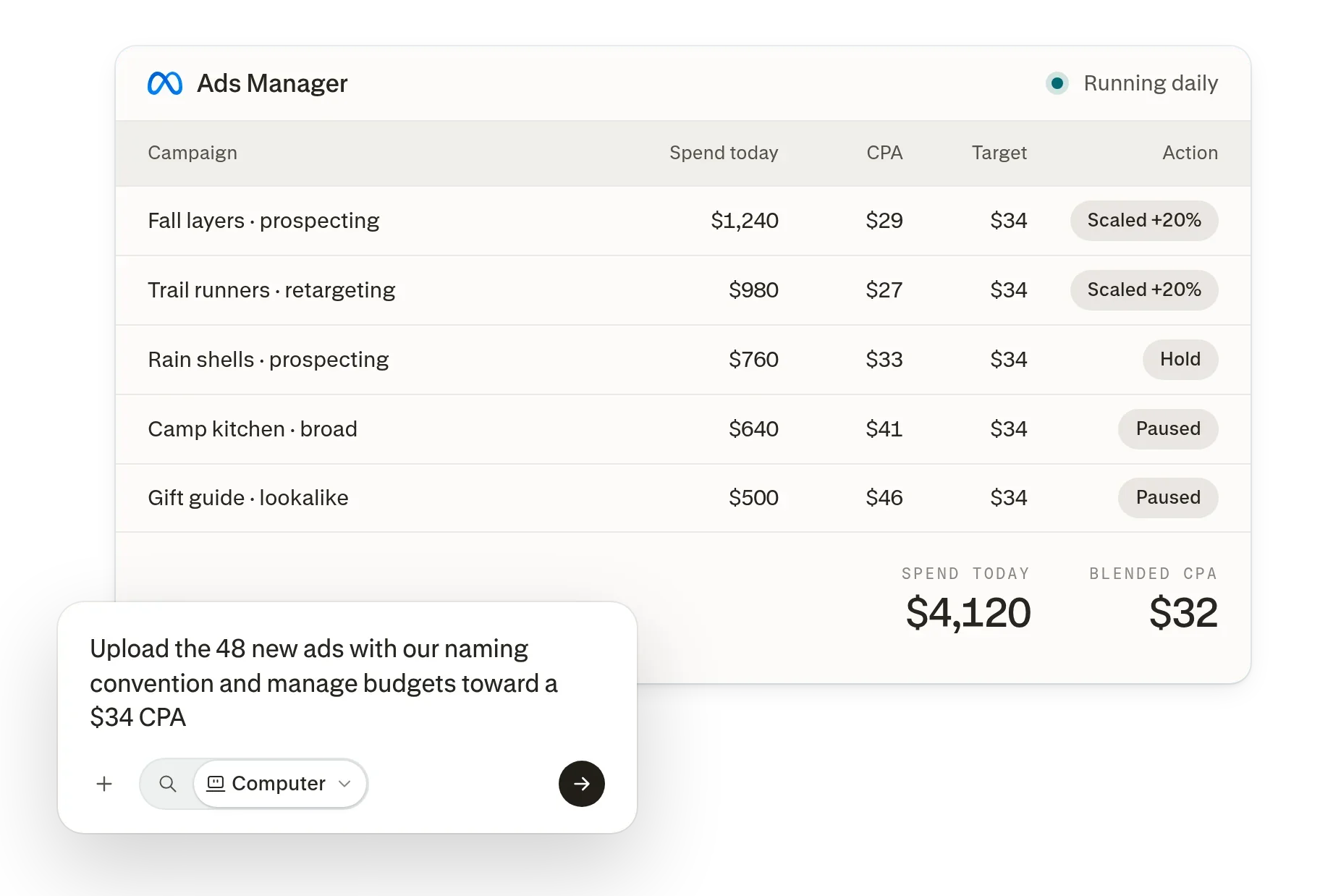
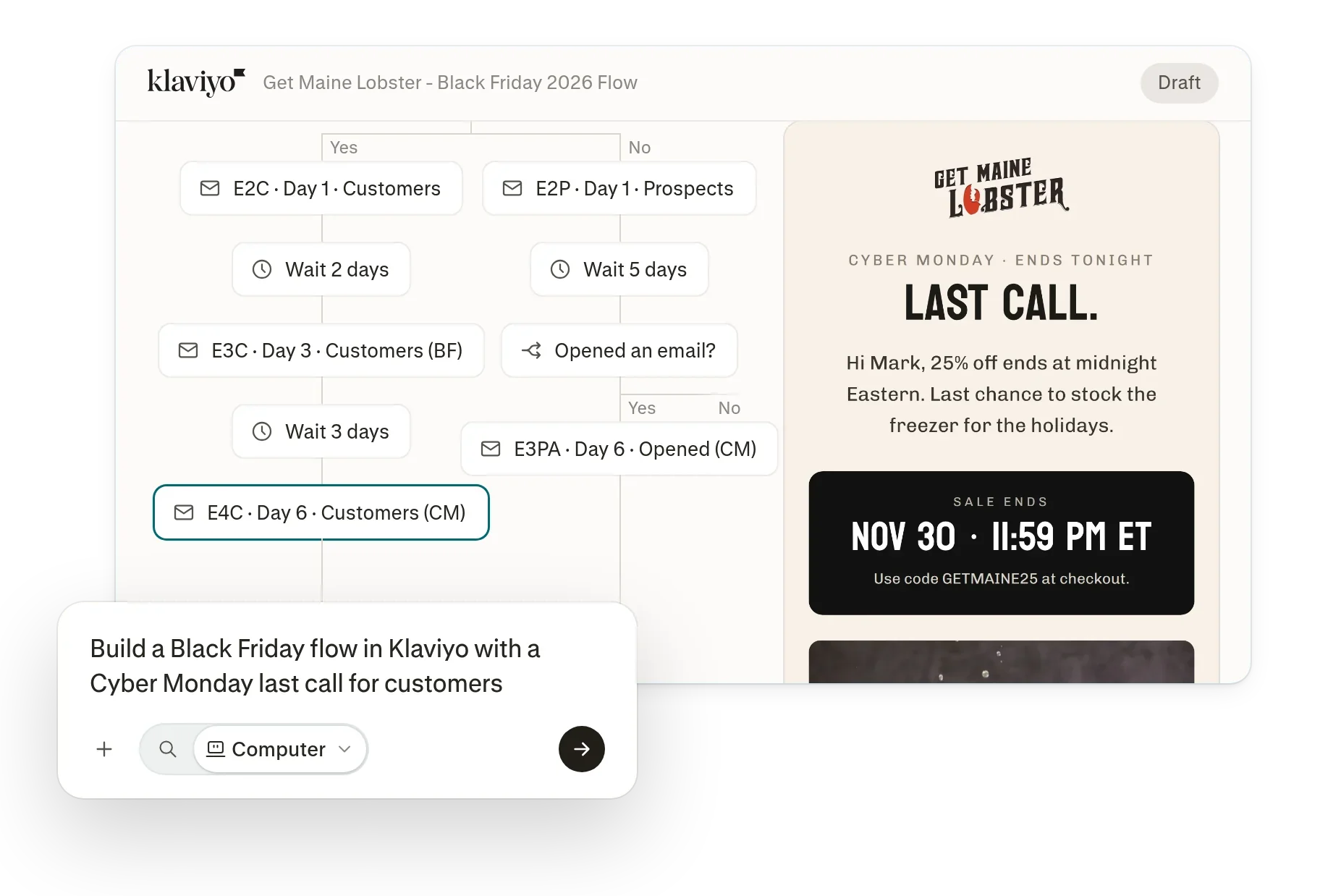
Merchants can trigger tasks from the web, mobile app, Slack, Microsoft Teams or forwarded emails inside shared Perplexity Projects across seven recurring loops: daily competitor ad and pricing tracking, product-accurate static ad design, AI-creatorshort-form video variations, daily ad-spend pacing against cost-per-acquisition targets, direct Shopify landing-page publishing, lifecycle email flow construction and cross-platform revenue attribution.
Automated daily Meta Ads Manager budget pacing and CPA enforcement inside Perplexity Computer.Image: Perplexity
In customer case studies on the launch page, apparel brand True Classic used Computer to audit and rebuild 19 Klaviyo customer-experience flows in hours. On a $30k Get Maine Lobster Meta campaign, Perplexity’s summary card reports 3.5 times more revenue than an agency-run campaign alongside a 63% higher return on ad spend, while CEO Mark Murell’s adjacent quote cites a 3 times Meta revenue increase. The workflows ship inside existing Perplexity Computer subscriptions with no separate e-commerceadd-on fee listed.
Perplexity Computer building conditional Black Friday and Cyber Monday lifecycle branches directly in Klaviyo.Image: Perplexity
Announced at its first Forge conference on 3 November 2026, the lineup spans 1,500 token-per-second previews, $8 desktop model routing, trace-driven evals and customer-hosted GPU control planes.
Fireworks AI used its inaugural Forge conference on 3 November 2026 to launch inference, desktop routing, post-training and enterprise governance products aimed at running customised open-weight models in production.
In public preview on NVIDIA Blackwell GPUs, Fireworks Ultra-fast reaches up to 1,500 tokens per second on DeepSeek V4.1 Flash, trimming a 30-turn agent loop from 1 minute to 8 seconds. For non-urgent jobs, Background Mode halves standard token rates ($0.30 input and $1.20 output per million tokens standard for DeepSeek V4.1 Flash on the pricing page), paired with Multi-day Prompt Caching, generally available Elastic Burst rate limits and serverless LoRA serving via Specialized Model Inference starting with GLM 5.3 Flash.
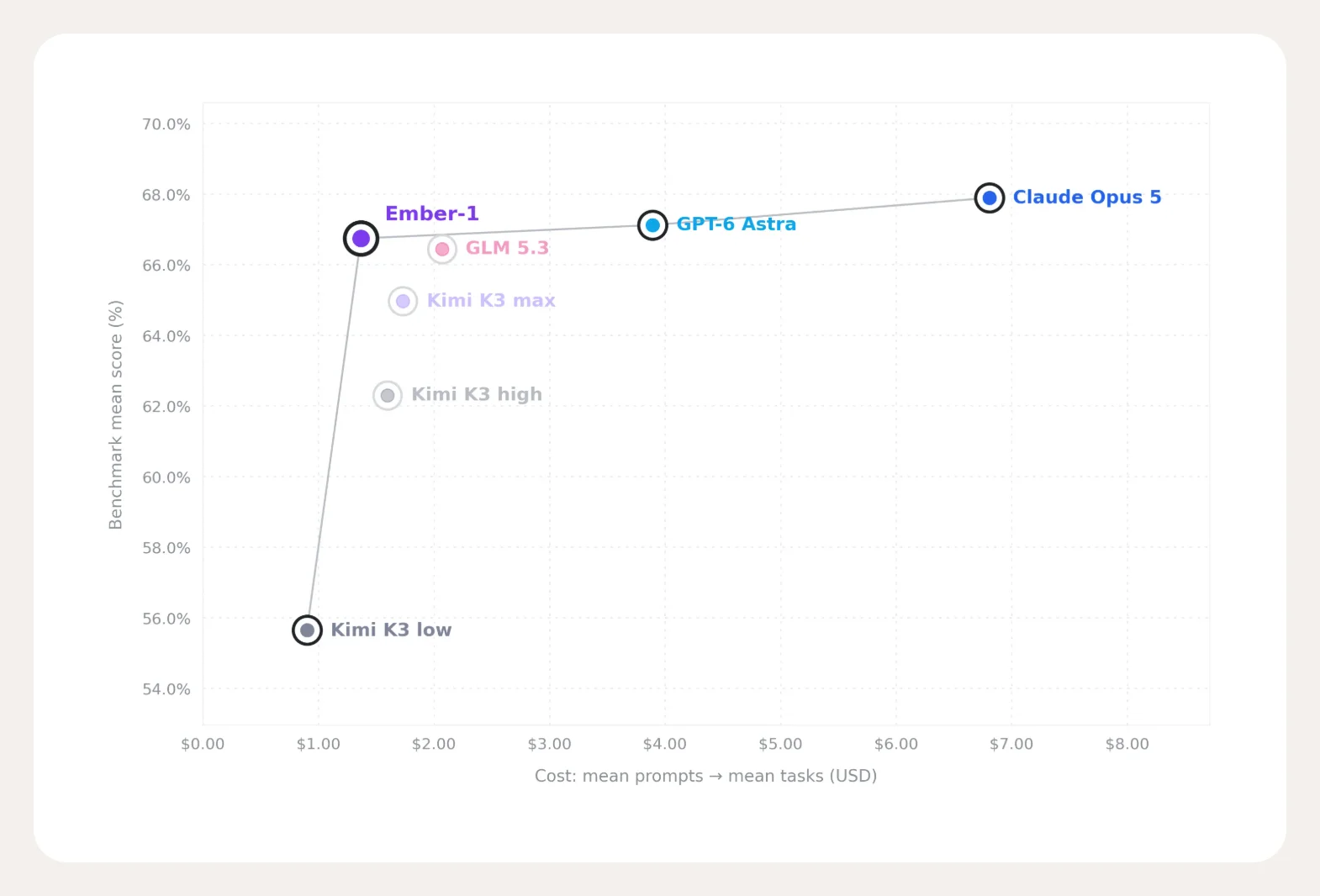
Fireworks’ Ember-1 quality-versus-cost frontier across five industry benchmarks against GPT-6 Astra and Claude Opus 5.Image: Fireworks AI
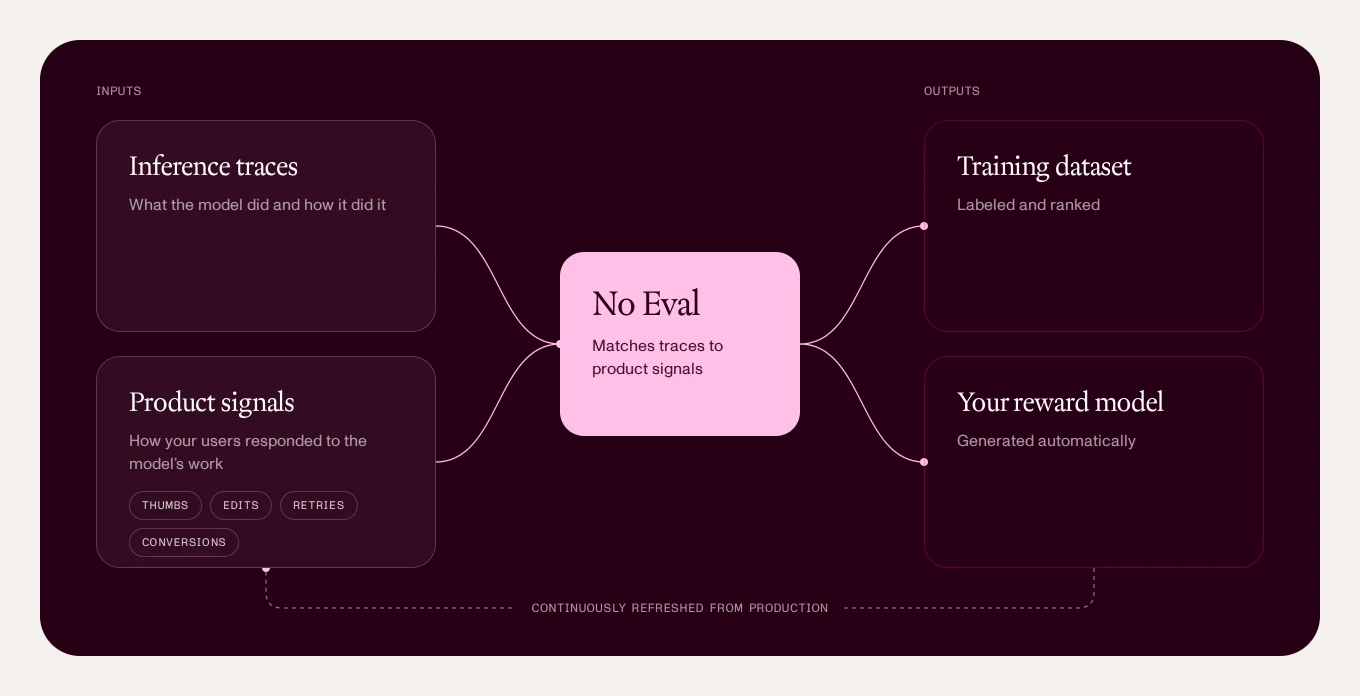
For everyday tool routing, Nexus Desktop joins the Nexus CLI inside the Codex app, Claude Desktop and OpenCode, combining open and closed models with spend tracking at $8 per month for Pro and $10 per seat per month for Teams (Team on the pricing page). On the training side, private-preview No Eval converts live inference traces and user feedback signals such as edits and retries into task evaluations and reward models, alongside free supervised, DPO and reinforcement-learning runs on Muse Glimmer 30B through 30 November 2026. For regulated organisations, private-preview Fireworks Sovereign deploys Fireworks’ control plane directly onto customer-owned cloud or data-centre GPUs, building on more than 25,000 customer-environment GPUs already under management.
No Eval matches production traces with user thumbs, edits, retries and conversions to refresh training data and reward models.Image: Fireworks AI
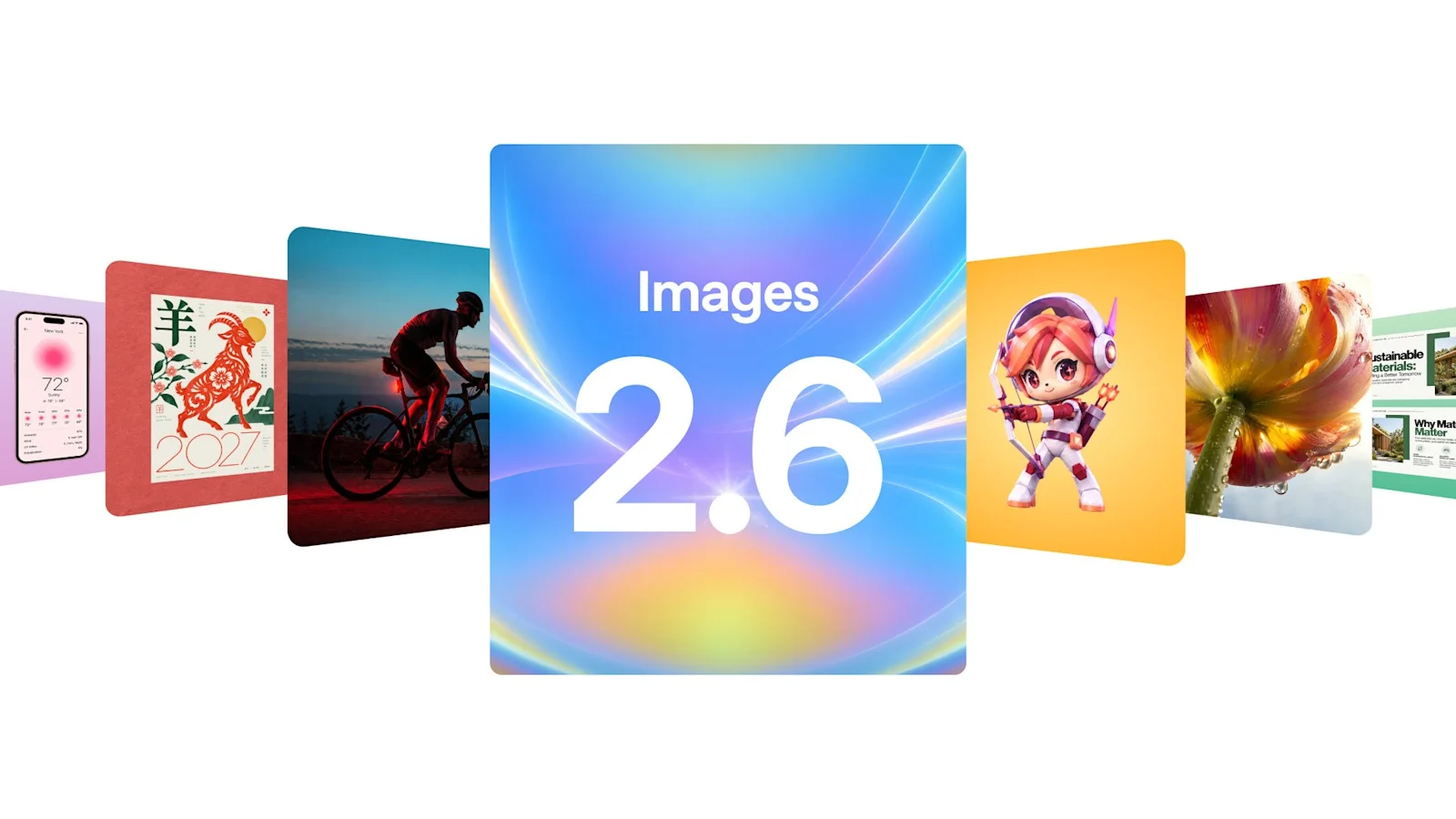
Quantised to 20 GB in 4-bit for ComfyUI and Modular Diffusers, the model generates and edits 2 to 16 MP images in 21 GB of VRAM under regional licence restrictions.
Pruna AI released P-H3-Image on 3 November 2026, turning MiniMax’s open-weightMiniMax-H3 video model into a dedicated text-to-image and multi-reference editing pipeline spanning 2 to 16 megapixels. Starting from a video backbone gives the model strong multi-angle lighting and subject consistency, while Pruna reworked every stage to eliminate single-frame blur and high memory overhead.
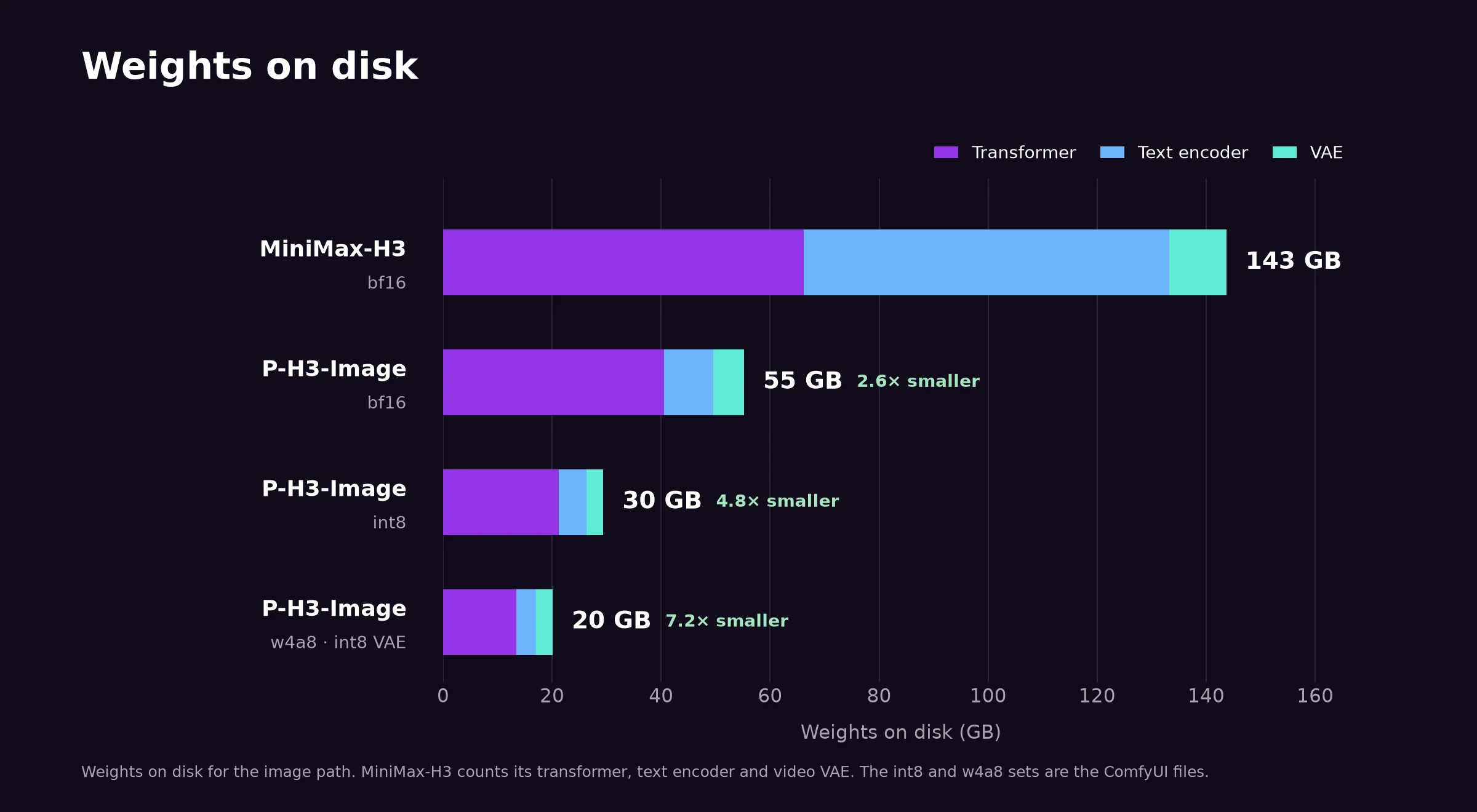
Pruna added an Apache 2.0 prompt upsampler built on Qwen3.5-9B, distilled H3’s 32B text encoder (67 GB) into a 4B Qwen3-VL-4B encoder (9 GB), adapted the noise schedule to 8 classifier-free-guidance-free steps via distribution-matching distillation, trained a sharp single-frame image decoder, and shipped 8-bit and 4-bit quantised weights natively supported in ComfyUI. Note that Pruna’s launch post says replacing the timestep block trimmed the transformer from 33B to 20B parameters (55 GB in bf16) and mentions up to 9 input images in its opening paragraph, whereas the Hugging Face model card lists a 33.1B-parameter transformer (100 GB full Diffusers pipeline in bf16) and 1 to 8 input images.
On-disk weight breakdown across transformer, text encoder and VAE from 143 GB on MiniMax-H3 down to 20 GB in 4-bit ComfyUI format.Image: Pruna AI
On one NVIDIA B200 in bf16, 4 MP generation drops from 12.4 s (50 steps on MiniMax-H3) to 2.6 s (5.8 s versus 30.6 s at 8 MP), while the 4-bit ComfyUI set runs 8 MP generation in roughly 21 GB of VRAM (6.3 s at 4 MP on a 48 GB L40S). Weights carry the MiniMax H3 Community Licence, which excludes use in the European Union, the United Kingdom, South Korea and the United States without a separate commercial licence from MiniMax and requires “Powered by MiniMax H3” attribution.
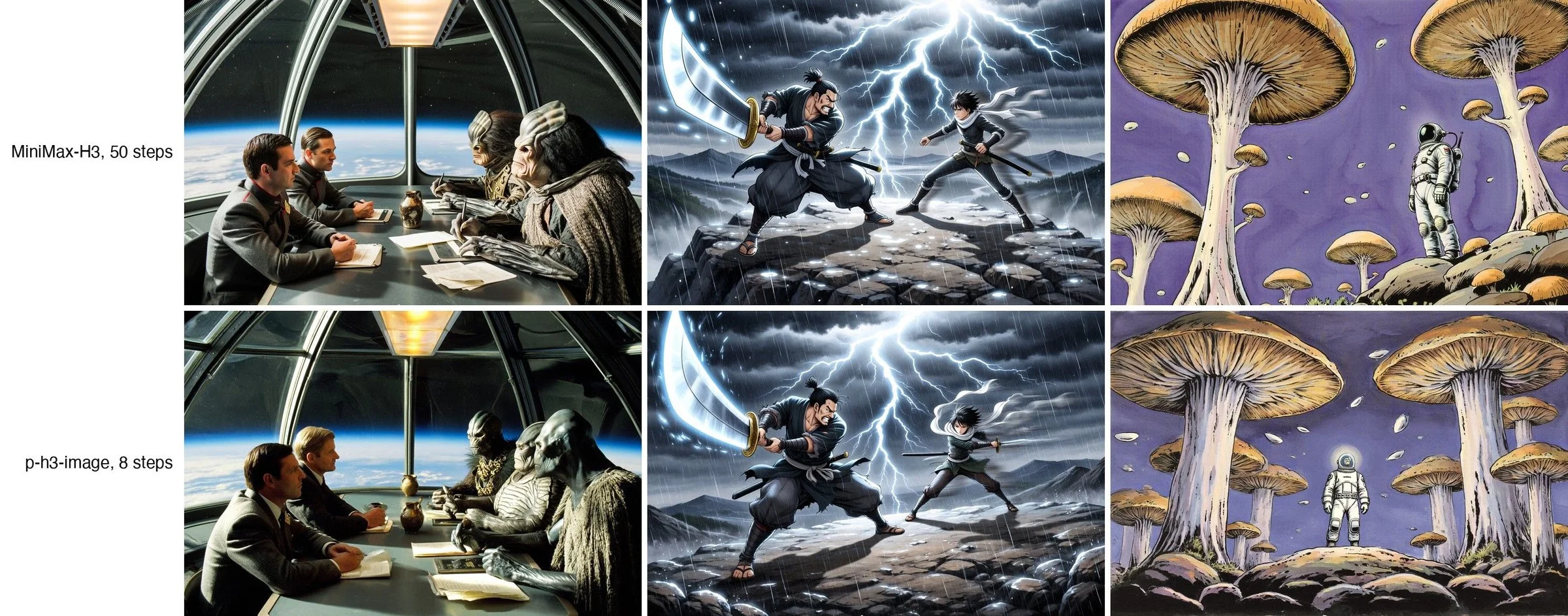
Same prompt and seed at 8 MP comparing 50-step MiniMax-H3 (top) against 8-step P-H3-Image (bottom).Image: Pruna AI
Published on 2 November 2026 under the Apache 2.0 licence, the zkSNARK prototype proves 400B-parameter Llama 4 Maverick outputs at 110 tokens per second on one H100 GPU.
Anthropic and academic collaborators from EPFL, MIT, StarkWare and Succinct published FlashProve on 2 November 2026 (shared on X late on 3 November UTC), releasing an Apache 2.0 software prototype for provable LLM inference alongside a technical report and machine-checked Lean security theorems. Without trusted hardware enclaves, FlashProve uses zero-knowledge succinct arguments (zkSNARKs) built from interactive oracle proofs, code proximity tests and lookup arguments so a provider can prove a response came from specific committed weights without revealing those weights or which experts fired.
FlashProve splits verification into two stages and scales prover compute only with active mixture-of-experts parameters rather than total model size, streaming layer segments from ~290 GB of host RAM onto a single 80 GB H100 GPU. In a one-time39-minute offline phase, the server publishes a ~6.5 MB cryptographic commitment valid across roughly 16 million requests. In the post-hoc online phase on 4-bit Llama 4 Maverick (400B total parameters, 17B active per token), one H100 GPU plus 24 CPU cores proves batches of 24 requests (1,024-token windows) in 223 seconds, or 110 tokens per second.
Each proof measures 18.78 MB and verifies on a client CPU with no GPU in 17 seconds across 24 threads (21 s single-threaded) using the C++ verifier, alongside a formally verified Lean verifier. Per GPU, proving still takes roughly 72 to 94 times longer than unverified FP8 vLLM inference, making FlashProve suited to statistical auditing, safety evaluations and tamper detection rather than inline real-time serving.
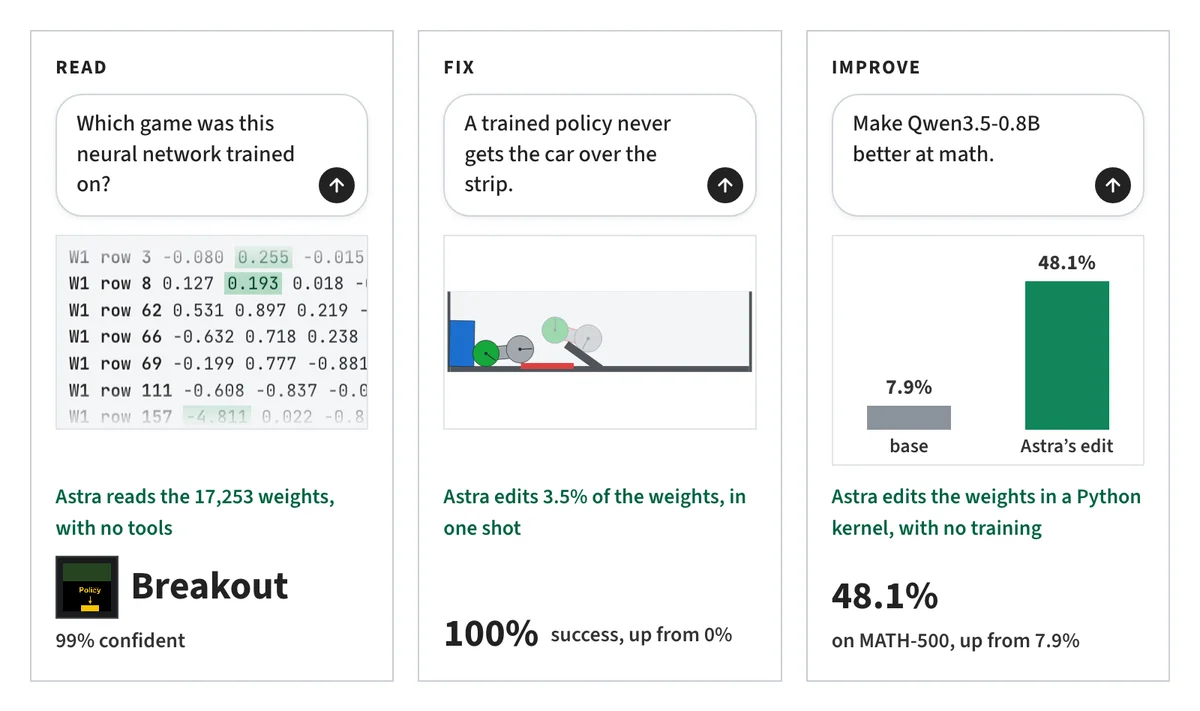
Published on 2 November 2026, Weight-Space Programming diagnoses a reasoning loop inside Qwen3.5-0.8B and edits 0.016% of its weights without gradients to lift MATH-500 from 7.9% to 48.1%.
MIT CSAIL researchers Rikiya Takehi, Jayden Teoh, Alex Zhang and Omar Khattab introduced Weight-Space Programming on 2 November 2026, testing whether frontier language models can inspect, synthesise and repair neural networks directly in parameter space without gradient-based training loops.
Reading raw text dumps of 17,253 MLP weights with zero tools, GPT-6 Astra identified all four Atari-style games (Breakout, Pong, Pac-Man and Freeway) that separate policies were trained to play, and recovered language capabilities and induction heads from stripped transformer middle blocks. Asked to write game-playing networks from scratch with no environment rollouts, Astra produced zero-shot MinAtar weights that outscored policies trained with proximal policy optimisation (PPO) for 100 million steps, and fixed a stuck car-on-ramp PPO policy from 0% to 100% success across 1,024 episodes by editing 3.5% of its weights in one shot.
MIT CSAIL’s three Weight-Space Programming tasks reading, fixing and improving neural network weights without training loops.Image: MIT CSAIL
Given a Python kernel and 50 forward passes (no gradients) on Qwen3.5-0.8B, Astra traced repetitive thinking truncations to MLP neurons in layers 15 and 19 and edited 131,072 parameters (0.016% of weights). Under identical sampling settings, MATH-500 rose from 7.9% to 48.1%, GSM8K rose from 13.8% to 67.1% and out-of-distribution instruction following on IFEval climbed roughly 3 times from 21.0% to 62.3%. On Gemma 3 270M, which rarely looped (8.5%), weight edits could not instil absent mathematical knowledge (6.8% to 7.0%). Edited checkpoints and full agent logs are open-sourced on Hugging Face and GitHub.
Under matched GPU budgets, Locus outperformed Codex, Claude Code and Boltz-2.1 baselines across bespoke property prediction, low-data IC50 potency adaptation and antibody binder design.
Intology published an evaluation on 3 November 2026 applying its autonomous AI R&D platform Locus to three computational drug-discovery problems marked by small noisy datasets and costly simulations: molecular property prediction from scratch, low-datasmall-molecule potency adaptation and in silico antibody binder workflow design. Locus proposes hypotheses, runs parallel GPU experiments and updates its search strategy from validation feedback.
On a proprietary molecular property task where single-molecule CPU simulations take hours, Locus autonomously generated nearly 1 million simulation-labelled synthetic molecules and scaled custom architectures to billions of parameters, clearing the held-out test error target where Codex (GPT-6 Astra High) and Claude Code (Opus 5.5 Max) fell short. Adapting Boltz-2 across six ChEMBL IC50 targets (BChE, CYP19A1, EGFR, MAO-B, MAP4K1 and PLK4) under a 12 H100 GPU-hour cap per run, Locus achieved a 0.622 mean Spearman rank correlation on structurally and temporally held-out ligands, ahead of Codex (GPT-6 Astra Max, 0.569), Claude Code (Opus 5 Max, 0.450) and the closed Boltz-2.1 API (0.225), with smaller validation-test generalisation gaps.
On in silico antibody binder design scored by OpenDDE ipSAE (run with GPT-5.6 Sol High after biological safety classifiers blocked Opus and GPT-6 Astra), Locus improved BoltzGen/Boltz-2 and ESMC/ESMFold2 pipelines without fine-tuning weights, reaching 0.797 mean top-two ipSAE on ESM targets (0.758 Codex, 0.704 ESMFold2) and matching ESMFold2’s full-pool peak in 16.7% of the candidate budget (6 times more candidate-efficient). Intology’s 12 evaluation charts are rendered interactively in HTML; wet-lab validation and commercial pricing were not announced.
Anthropic announced on 3 November 2026 via its official Claude Developers account that users can automatically connect plugins upon signing in to Claude when underlying Model Context Protocol (MCP) servers accept Claude as a trusted issuer, letting plugin builders keep users authenticated across sessions without repeated manual re-authorisation prompts.
OpenAI announced on 3 November 2026 via its official ChatGPT account that ChatGPT Voice is live inside ChatGPT Finances (chatgpt.com/finances), allowing users who securely link their financial accounts to ask spoken questions about spending patterns, savings goals and personal money decisions in real-time voice sessions.